The Voices We Must Not Ignore
Part I: The Voices That Stay With Us
Content note: This article discusses the 1994 genocide against the Tutsi in Rwanda and includes survivor testimonies and descriptions of violence, death, and loss.
The survivors' voices still echo in my mind.
Even now, I find myself returning to their words, their stories, and the unbearable losses they described. I keep asking myself the same question: Why did all this happen? How did human beings reach a point where entire families could be destroyed, children could lose their childhood overnight, and people who once lived side by side could become the source of one another’s deepest suffering?
I left Rwanda, but the voices stayed with me.
Some experiences do not end when a visit is over. They follow us into our thoughts, interrupt our ordinary moments, and force us to confront questions for which there are no easy answers. What I heard in Rwanda was not simply a record of something that happened in 1994. It was a reminder of what human beings can endure, what hatred can destroy, and what remains when those who carried a family’s memories are no longer there to tell its story.
I have chosen to tell this experience in two separate parts. This first part is devoted to genocide, memory, loss, reconciliation, and the difficult questions that emerge when we encounter the human consequences of violence. The second will explore another dimension of Rwanda: its living heritage, culture, communities, landscapes, and the ways life continues to grow and express itself.
I made this choice deliberately. I did not want the voices of survivors and the pain of genocide to be interrupted by a different narrative of cultural discovery, only for us to return to suffering again. The two stories are connected, but each deserves its own space. The first asks us to confront what happened and what it means to remember. The second will explore how a society continues to live, create, and carry its heritage forward.
Before we entered the Kigali Genocide Memorial, we watched a short film featuring survivors recounting their experiences. It was the first encounter of the day, and it became one of the most difficult to leave behind.
One voice said: “After the genocide, I could no longer be a child.”
Another said: “I’m the only survivor.”
And another recalled: “That was the last time I saw my family alive.”
Another testimony that stayed with me was that of a surviving son who remembered the last time he saw his family alive. His infant brother had also been killed. In the account shared during our visit, his mother uncovered the baby and used her clothing to cover him, while telling her surviving son to remain calm and, if he had to die, to do so with dignity. There was no hope of safety, and he did not want to leave his family. This was the last time he saw them alive.
I cannot claim to know the full weight of such a moment. I can only recognise the unbearable tenderness and terror held within it: a mother facing the death of her infant, a child forced to confront the possible loss of everyone he loved, and a family whose final moments became part of a survivor’s memory. These are the details that statistics can never contain.
These are not simply sentences in a testimony. Each one opens a world that has been shattered. A childhood interrupted. A family almost entirely erased. A final moment that becomes permanently fixed in a survivor’s memory.
What does it mean to say that you could no longer be a child? What happens to a person when the people who protected them, raised them, and gave meaning to their world are suddenly gone? What becomes of a family’s history when there is no one left to tell it?
One testimony expressed the longing to remember loved ones as an act of love, a way of acknowledging how deeply they were missed and how soon they had been taken away. Another described a place of remembrance as home, a space belonging to those who had survived and to the memories they continued to carry.
The film did not allow me to approach the history as a distant observer. It brought me face to face with individual lives, with people who had survived, and with losses that cannot be understood through numbers alone.
The voices stayed with me as we entered the memorial.
A Place of Remembrance, a Responsibility to the Future
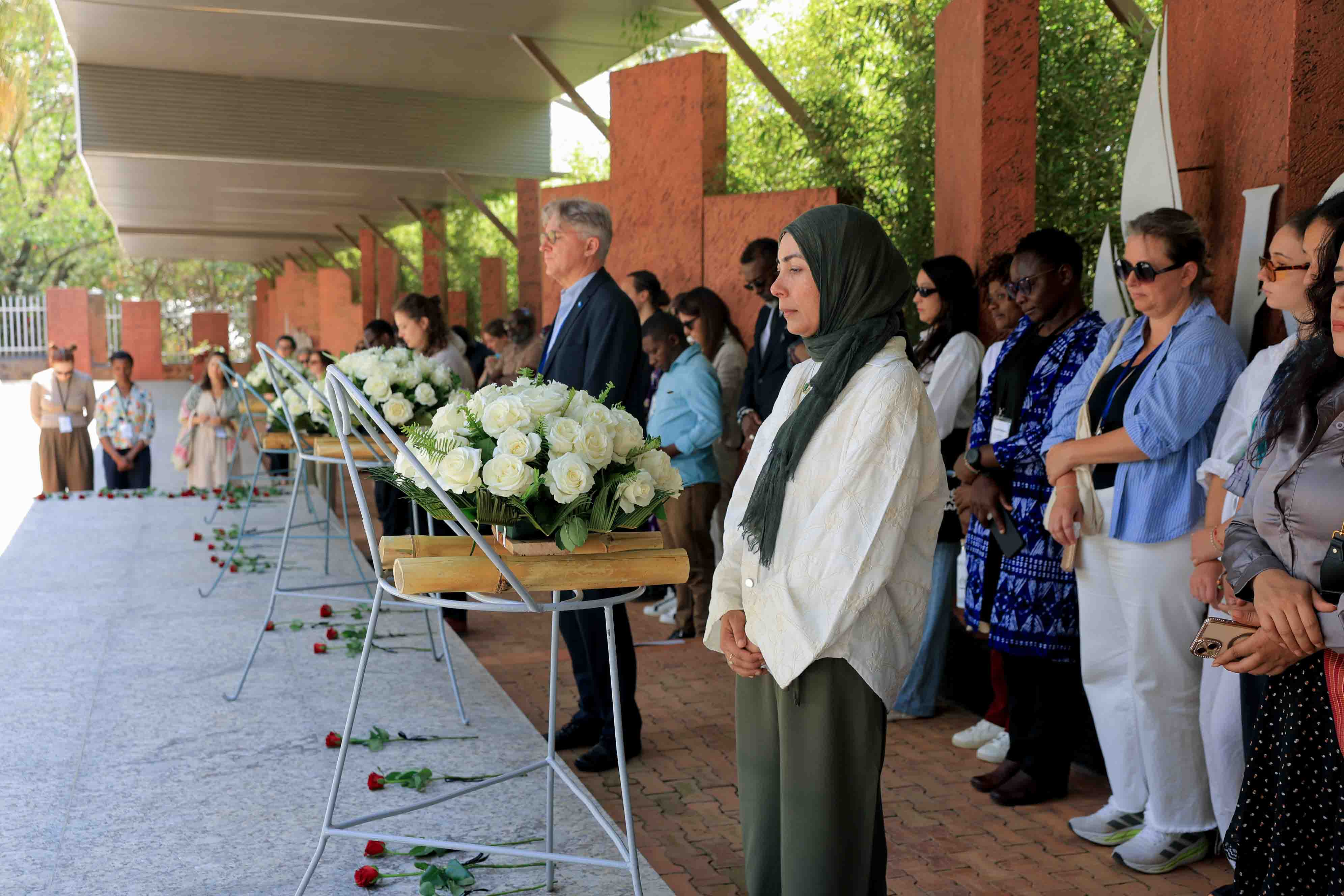
The Kigali Genocide Memorial is both a place of remembrance and a place of learning. It is also the final resting place of more than 250,000 victims. Our guide explained the purpose of the memorial and its exhibitions, which take visitors through the historical background of the genocide against the Tutsi, place it in relation to other genocides, and remember the children who were murdered.
As we moved through the exhibitions, the history became more difficult to separate into individual events. The guide explained how colonial classification and identity categories contributed to division, how discrimination and propaganda escalated, how preparations for mass violence developed, and how ordinary objects and familiar places could become part of the machinery of killing. Places that should have offered safety, including churches, became sites of mass murder. Families disappeared. Women and children were targeted. Survivors were left to confront not only bereavement, but the enormous task of rebuilding their lives in the aftermath.
One detail from the guide’s explanation has remained with me: more than 15,000 families had been wiped out, leaving no one to tell their stories.
There is something especially devastating about this thought. When a person dies, those who loved them may preserve their memories. They tell their stories, recall their gestures, and pass their names to the next generation. But what happens when an entire family is destroyed? Who remembers the small details of their lives? Who speaks of their childhoods, their ordinary conversations, their hopes, their disagreements, and the futures they never had the chance to live?
Genocide destroys lives, but it can also destroy the people who would otherwise carry those lives into memory.
This is why the work of remembrance matters. Yet remembrance alone cannot be our final destination.
The memorial’s purpose was described to us as a place of remembrance and learning for the future. That idea became increasingly important as the day unfolded. The question was no longer simply how we preserve evidence of what happened. It was how we transform that evidence into knowledge, and how knowledge can help future generations recognize the conditions that allow hatred and violence to grow.
A memorial cannot bring the dead back. It cannot return a childhood or restore a family that has been lost. But it can preserve evidence, make space for testimony, challenge denial, and invite visitors to consider their own responsibility toward the world they inhabit.
That responsibility begins with listening. It must continue with learning.
When Memory Becomes Personal
After encountering the testimonies and the history of the genocide, we participated in a workshop focused on forgiveness and reconciliation.
The workshop was designed to help participants consider how communities deal with the consequences of genocide and conflict. It formed part of a broader approach to peace education, one that emphasized empathy, trust, critical thinking, personal responsibility, and the ability to make positive choices.
The activity asked us to step into roles and consider situations from another person's position. Participants received different roles and were asked to respond to statements about forgiveness.
Depending on their assigned circumstances and responses, they moved forward or backward.
We began on the same line. We did not end in the same place.
That simple physical exercise became a powerful image of the complexity of human experience.
Two people can begin at the same point and move in different directions because their experiences, memories, losses, and capacities are not identical.
The facilitators also emphasized that the purpose of the activity was not to convince people to forgive. It was to help participants understand what can happen within individuals and communities after tragedy, genocide, war, or conflict. It was an invitation to recognize that people respond differently, and that those who cannot forgive should not automatically become objects of judgment.
Then the questions ceased to be abstract for me.
I became overwhelmed by the exercise and the emotions it brought to the surface. I cried. I could no longer approach the discussion as a theoretical conversation about the meaning of forgiveness. The testimonies I had heard earlier were still present in my mind, including the words of a young woman in the film who spoke about the loss of her family. Her words belonged to her experience, not mine, but they had stayed with me and deepened the emotional weight of the day. During the workshop, I expressed my own response to the question of forgiveness. I wanted to make a distinction between reconciliation and forgiveness: I could consider the possibility of living beside someone again, but I could not accept being told that I must forgive.
The words that expressed the pain of that moment were:
“You tore my heart out.”
My response was not an academic argument or a universal answer to the question of forgiveness. It was an emotional reaction to an exercise that had brought the human cost of loss and violence painfully close. It is easy to speak about forgiveness from a distance. It is much harder to consider what that request means to someone whose life has been torn apart.
Reconciliation may describe the possibility of living together again, rebuilding relationships, or sharing a community without returning to violence. Forgiveness is deeply personal. It cannot be imposed by a facilitator, a government, an institution, or a society eager to move forward. Nor should a survivor be made to feel that their inability to forgive is a failure of healing. A society may need to rebuild. Its people may need to find ways to coexist. But the need for social reconstruction does not erase the individuality of grief.
A community cannot be healed by pretending that every wounded person is ready to heal in the same way.
Moving Forward Does Not Mean Moving at the Same Speed
As the workshop continued, the facilitators returned to the image of participants scattered across different positions. Some had moved forward. Others had moved backward. Some remained where they had begun. They explained that this could also help us think about Rwanda after the genocide. People do not all arrive at the same understanding of the past, nor do they move toward reconciliation at the same speed.
The message was not to judge those who remained behind, but to support one another and offer a hand to those who struggled to take the next step. This idea stayed with me because it shifts the meaning of resilience. Resilience should not be understood as a demand that people recover quickly, stop grieving, or demonstrate that they have moved beyond their suffering. It must also include the willingness of communities and institutions to accompany those whose pain remains.
The discussion also raised questions of responsibility. Can one person ask forgiveness on behalf of another? Can a parent, a relative, or a leader take responsibility for a wrong committed by someone else? The conversation suggested that one may help another person recognize the need to apologize, but cannot replace that person's own acknowledgement and remorse.
This matters because reconciliation cannot rest entirely on the shoulders of those who were harmed. It also requires responsibility from those who caused harm, honesty about what happened, and a willingness to confront the consequences. Forgiveness, reconciliation, trust, and accountability are related, but they are not interchangeable. Treating them as though they mean the same thing risks overlooking the very people whom a process of healing is meant to serve.
My Question: How Do We Preserve Memory Without Turning Pain into a Spectacle?
After the workshop, the discussion continued in a question-and-answer session. By then, I was thinking not only about the emotional response of the individual, but also about the responsibility of the institutions that preserve and present such histories.
I asked a question that had become increasingly important to me:
How do we balance preserving the memory of genocide with creating an environment where visitors can heal, learn, and reflect, without turning a site into a spectacle of trauma?
For me, this was not simply a question about exhibition design. It was a question about ethics. How much suffering should a visitor be asked to confront? What is the difference between bearing witness and being exposed to suffering in a way that overwhelms or retraumatizes? How can a memorial preserve the evidence of violence without reducing the people who suffered to images of pain? How can institutions invite reflection while respecting the dignity of victims, survivors, and their families?
The discussion brought attention to the fact that people respond differently to difficult histories.
Some may be deeply affected immediately; others may experience their emotions later. Teachers may hesitate to discuss genocide because they fear the impact on students, or because they themselves do not feel prepared to address such painful questions. This reinforces the importance of training, psychological support, and longer-term accompaniment.
It also reminds us that the work of memory cannot end at the museum door. The discussion touched on the relationship between collective memory and the particular histories of individual families. A society may need a shared account of its past, but no collective narrative can fully contain every family's experience. The challenge is to create a space for shared remembrance without erasing individual histories, silences, or differences.
Memorials and commemorations can support education and prevention. They can preserve evidence, create opportunities for mourning, and help new generations understand the consequences of hatred and discrimination. Yet institutions must also remain attentive to how memory is presented, who controls its interpretation, and what responsibilities come with inviting others to witness suffering.
These questions are not limited to Rwanda. They matter wherever museums and memorials confront violence, persecution, and mass death. They matter whenever institutions ask visitors to encounter difficult histories. And they matter because remembrance, when handled carelessly, can become spectacle; when approached responsibly, it can become an opportunity for understanding.
My question did not have a simple answer, and perhaps it should not. The balance between remembrance, education, and healing requires continuous reflection. It requires listening to survivors, recognizing the limits of what institutions can do, and accepting that there is no single response that will serve every person equally.
But one thing became clear to me: preserving memory is not only about what we choose to display. It is also about how we care for the people who encounter it, and what we ask them to carry away.
When Memory Meets Political Responsibility
The questions I carried from the Kigali Genocide Memorial and the workshop followed me to the Campaign Against Genocide Museum. There, the story moved from the lives destroyed to the political decisions, propaganda, military actions, and international failures that shaped the course of the genocide.
The museum’s account of the Arusha peace process, the failure to implement the peace agreements, and the growth of extremist ideology showed how violence is prepared long before it reaches its most visible form. The language used to portray the Tutsi as outsiders was not harmless rhetoric.
In his speech, the Rwandan politician Léon Mugesera promoted the racist idea that Tutsi should be sent back towards Ethiopia by way of a river flowing into the Nile. This was part of a wider effort to deny people their belonging and make exclusion appear legitimate.
Genocide does not begin only when people are killed. Its warning signs can appear in dehumanizing language, discrimination, propaganda, and the deliberate weakening of efforts to share power peacefully. When leaders portray a group as less worthy of protection, when media turn people into targets, and when hatred is repeated until it sounds ordinary, the ground is being prepared for violence.
The museum also made it impossible to avoid the question of international responsibility. Warnings about the danger facing the Tutsi were communicated before and during the genocide, yet the international response failed to provide the protection that was needed. The limitations of the United Nations mission, decisions by member states, and the absence of sufficient political will all form part of this history. This failure cannot be reduced to one person or one decision; it requires us to examine the institutions, mandates, and political calculations that shaped the response.
But complexity must not become an excuse for silence. When warnings of mass violence are available, what responsibility do governments and international institutions have to act? What is the value of documenting danger if the people at risk are left without protection? Remembering the genocide means examining not only the people who carried out the violence, but also the choices that delayed or failed to provide protection—and the people who took risks to rescue others.
The campaign to stop the genocide also reminds us that human choices matter. Military action to halt the killing and rescue people belongs in this history too. Recognizing those efforts does not erase the failures that preceded them; it shows that responsibility includes both the courage to act and the consequences of failing to act when lives are at stake.
Ntarama: When a Place of Refuge Becomes a Place of Killing
At Ntarama, the history became physical in a different way. A church, a place associated with faith and refuge, became a site where people seeking protection were killed. The preserved remains, clothing, identity cards, school materials, and personal belongings make it difficult to think of the victims as distant figures in a historical account.
These objects belonged to people with ordinary lives: children who should have returned to school, parents who cared for their families, and individuals who had possessions, routines, relationships, and hopes for tomorrow. An identity card is especially painful to encounter in this context, given how identity categories were used to divide people and facilitate their targeting. A school item reminds us of a future that a child should have been allowed to live.
The site also raises an ethical question for anyone working with museums and memorials: how can we preserve the evidence of atrocity without turning suffering into a spectacle? The purpose of displaying material evidence cannot be merely to shock visitors. It should help us understand what happened, recognise the humanity of those who were killed, and reflect on the conditions that made the crime possible.
For me, this is where the responsibility of museums becomes especially clear. Preservation is not enough on its own. We must preserve context, listen to survivors, communicate evidence honestly, and protect the dignity of the people whose lives and deaths are represented. A memorial should not ask visitors simply to look at suffering; it should help them understand what they are witnessing and what responsibility follows from that understanding.
Ntarama is not only a place where we encounter evidence of a past crime. It is a reminder of what happens when people are denied their dignity and when the places expected to offer protection fail to do so. Leaving the church, I returned to the question that had followed me throughout Rwanda: what does it mean to remember if memory does not change the way we act?
A Message to the World—and to You
I know that writing about these experiences will not bring back those who were killed. It will not restore the childhoods that were stolen, reunite families that were destroyed, or undo the decisions that allowed the genocide to happen. I know that my words cannot repair the past. But if we cannot change what happened, we can still change what we learn from it—and what we choose to do next.
I wish for a world in which no community has to fear extermination because of its identity, in which children can grow up without inheriting the hatred of previous generations, and in which leaders understand that their decisions carry consequences measured in human lives.
Why do we continue to leave so much hatred behind us when every one of us will eventually die?
What can violence achieve that is worth the lives it destroys? Why should communities not be allowed to live in love and peace? Why should a child inherit fear instead of hope?
Imagine closing your eyes for a moment and seeing these tragedies not as distant events in a memorial, but as if you were living through them—as if you were one of the children, one of the parents, or one of the people desperately searching for safety. Imagine hearing the voices, witnessing the loss, and wondering whether anyone will come to help.
Would you be able to bear it? Would you not open your eyes quickly, almost instinctively, to reassure yourself that you were not there? And yet, for those who experienced these events, there was no moment when they could simply open their eyes and return to safety. The violence was their reality, and its consequences did not end when the killing stopped.
This is why memory must reach beyond memorials. It must reach classrooms, communities, institutions, and the places where decisions are made. It must remind those who hold power that behind every political calculation are human beings whose lives cannot be restored once they have been taken.
A message to you—to every person who has the power to make decisions that affect other lives:
You may not be able to change the past, but you can influence what happens next. You can choose whether to deepen divisions or build understanding, whether to remain silent in the face of hatred or challenge it, whether to allow suffering to continue or work to prevent it. You can choose whether the future will inherit the same wounds or whether you will help build something different: a future shaped by dignity, justice, compassion, and peace.
Where are we leading the world?
How much suffering must we witness before we learn?
Memory must become learning. Learning must become responsibility. And responsibility must protect the future.
The Author
Dr. Samar El Khamisy
Curator and Archaeologist
Egyptian Museum – Ministry of Tourism & Antiquities
TheMuseumsLab Fellow 2026
Related Articles
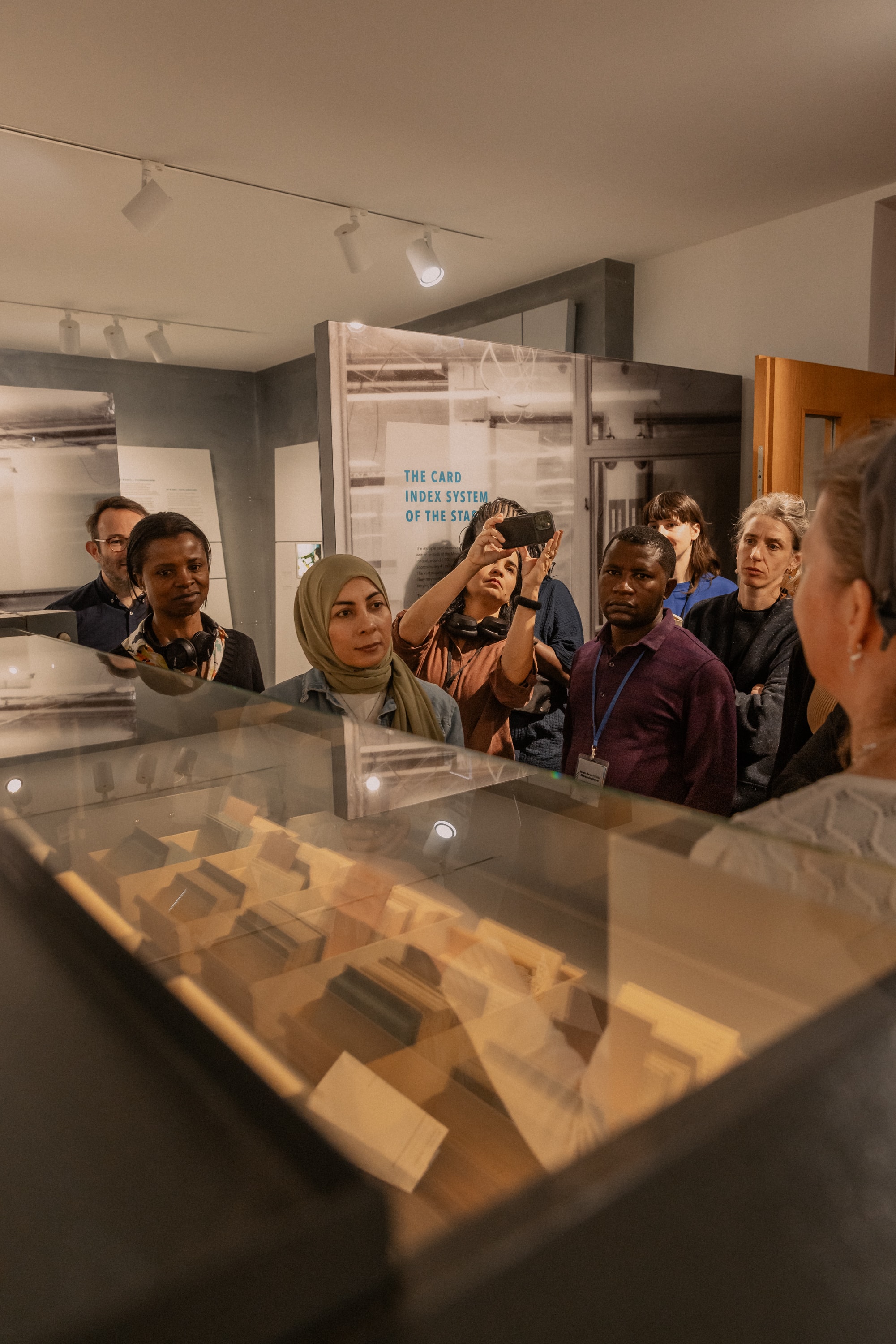
Who Is Missing from History? Museums cannot change the past, but they can change who becomes visible within it.
In her reflections on Module 2, Fellow Dr. Samar El Khamisy explores how museums preserve overlooked voices, confront difficult pasts, and shape public understanding.
Read more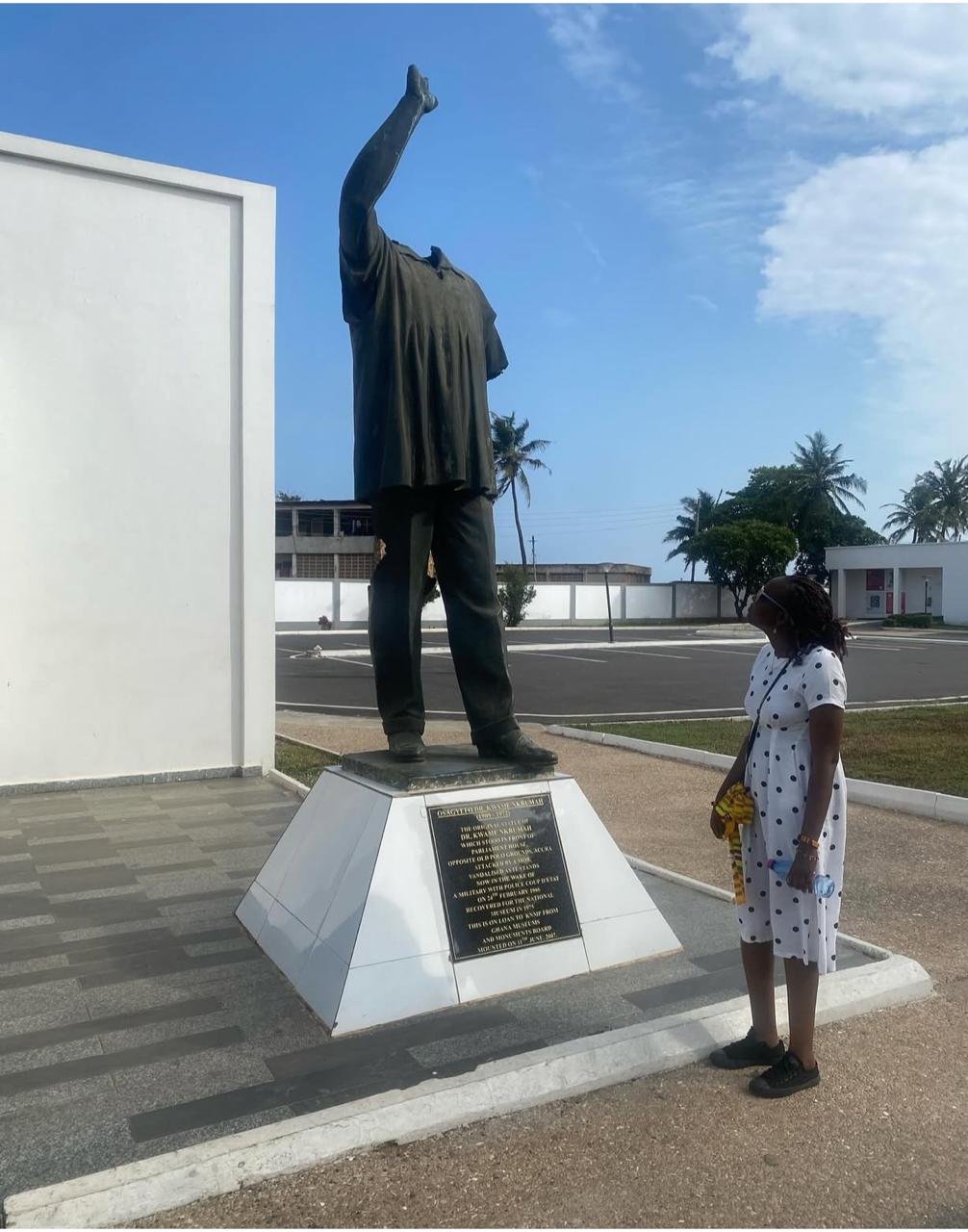
Between Communities, Collections, and Memory: Reflections from TheMuseumsLab 2025 by Monicah Nkina Sairo
A reflection that navigates the 'layered lives' of objects, the necessity of slow, negotiated community co-creation, and the resilience found in living history. It is a story not of finding final answers, but of learning to ask better questions about our shared responsibility to the past and the future of museums globally.
Read more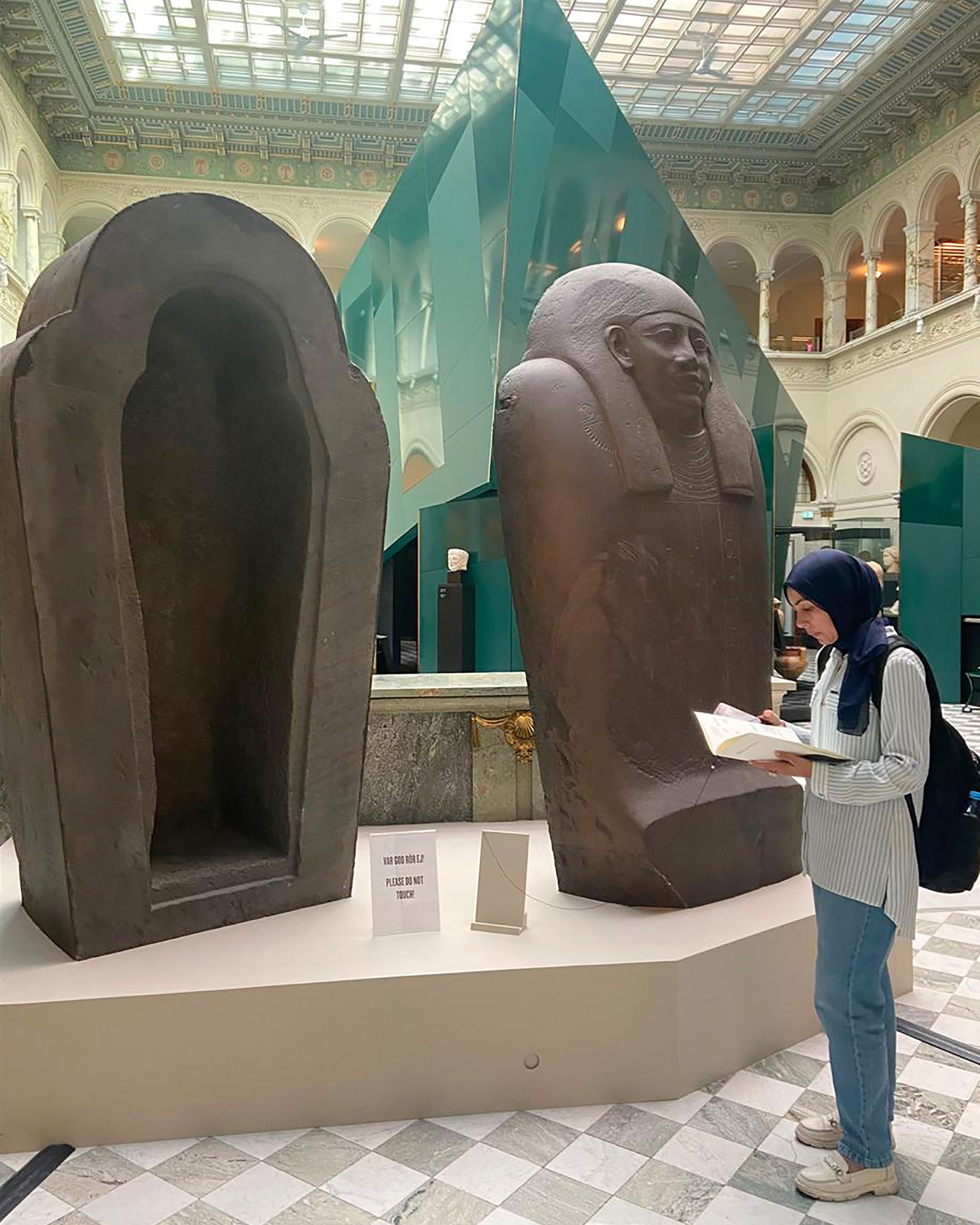
Beyond Museums: A Story of Trust, Stories, and Shared Stewardship
In her reflections on her Residency at the Världskultur Museerna, Fellow Dr. Samar El Khamisy looks back at how a week in Stockholm became an inspiring journey of professional discovery and personal growth.
Read more