Echoes Along the River Gambia: Reflections on Borders, Memory, and the Unfinished Crossings of Our Time
The Airplane and the Horizon
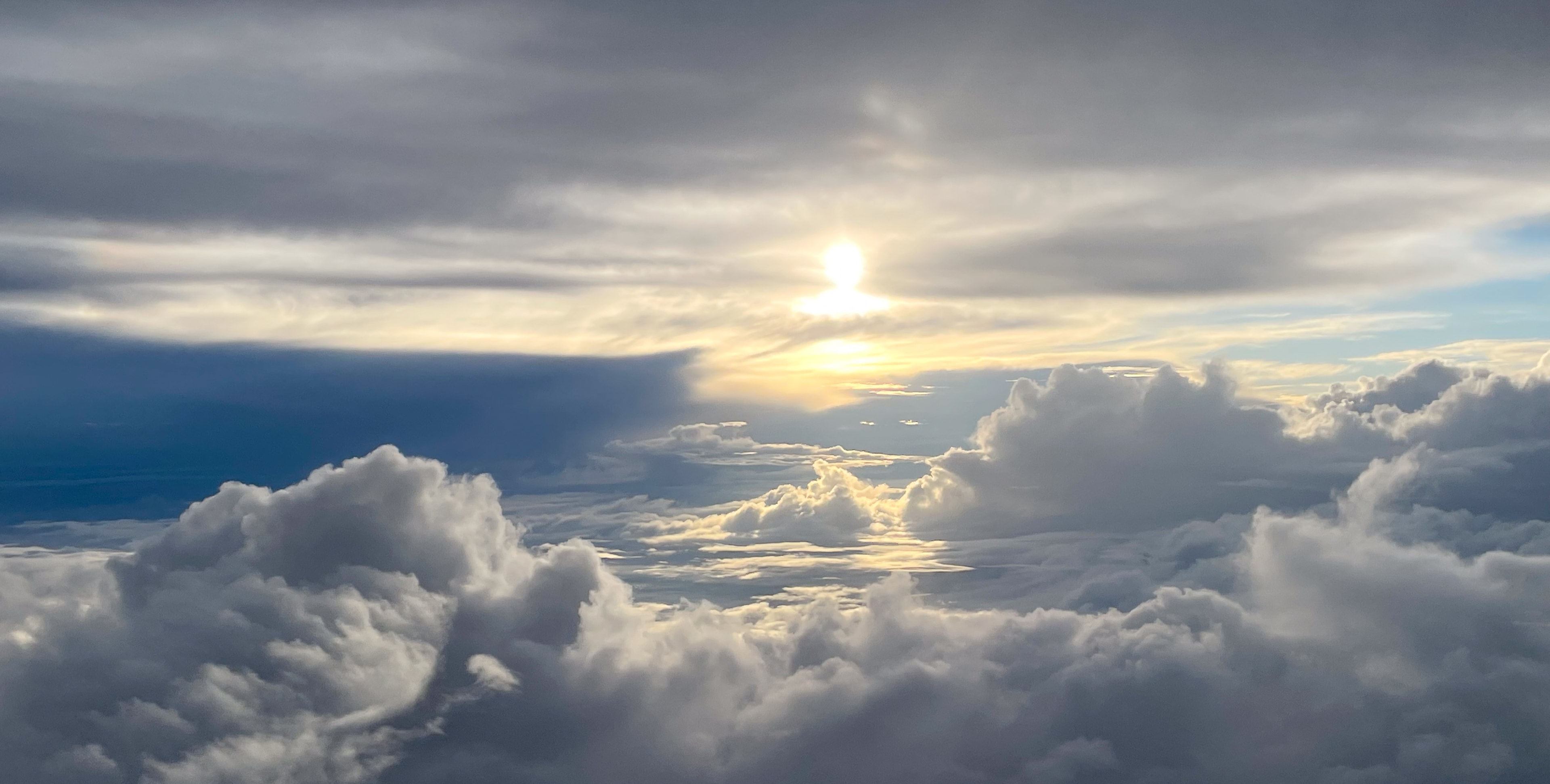
Konradin: I am travelling from my home base in Berlin to Banjul via Brussels Airport. Once again, I am leaving the metropolis where, 141 years ago, white men marked out the colonial spheres of influence on the African continent. The consequences of the Berlin Conference are still tangible. There are just a few seats left in the back rows on the Brussels Airlines flight via Banjul to Conakry. Most of the passengers seem to be of African descent, travelling home for family visits or business. Only the crew and a few other passengers are white, like me (or 'toubab' – a word used to describe white foreigners in some parts of West Africa).
Everyone has found their seats, stored their luggage and fastened their seatbelts when, suddenly, cries are heard from the very back of the plane. “Please, don’t do this to me! Let me go!” Everyone turns to see six or seven heavily built white men with tattoos and beards gathered around someone in the centre of the last row. The passengers cannot see the person as they are surrounded by the men, who appear to be plain-clothes officers. The voice sounds like that of a young man in tears. After a few short phrases exchanged in English and French, everyone understands what is happening: this is a deportation. But the cries of the person being deported and the image of the white officers surrounding him are equally disturbing.
Although we cannot see exactly what the officers are doing to him, they are probably using a standard restraint technique to keep him seated. Our brains layer similar images on top of this, of violence by white men against Black people, from today and from decades and centuries in the past. At least, this is what I assume about the other passengers. Some might just see a brother in pain. Many of the passengers in the back rows start commenting and arguing, leaving their assigned seats to gather around the officers and the source of the cries. The few male crew members try to intervene, urging the passengers to take their seats. However, as long as the cries of the man in the centre of the back row continue, the smaller half-circle of white men surrounding him and the larger circle of Black passengers will not disperse. After a few long minutes, the aeroplane begins to move to its starting position and the crew members, in a tone of friendly urgency, insist that everyone take their seats. The cries stop. Even the officers sit down next to the young man, who is now both invisible and silent. The passengers' voices become quieter and eventually fade away. The plane lifts off, taking us all into the air. Everything is in order. But everything is not in order.
Tourism, Paradise, and the Counter-Movement
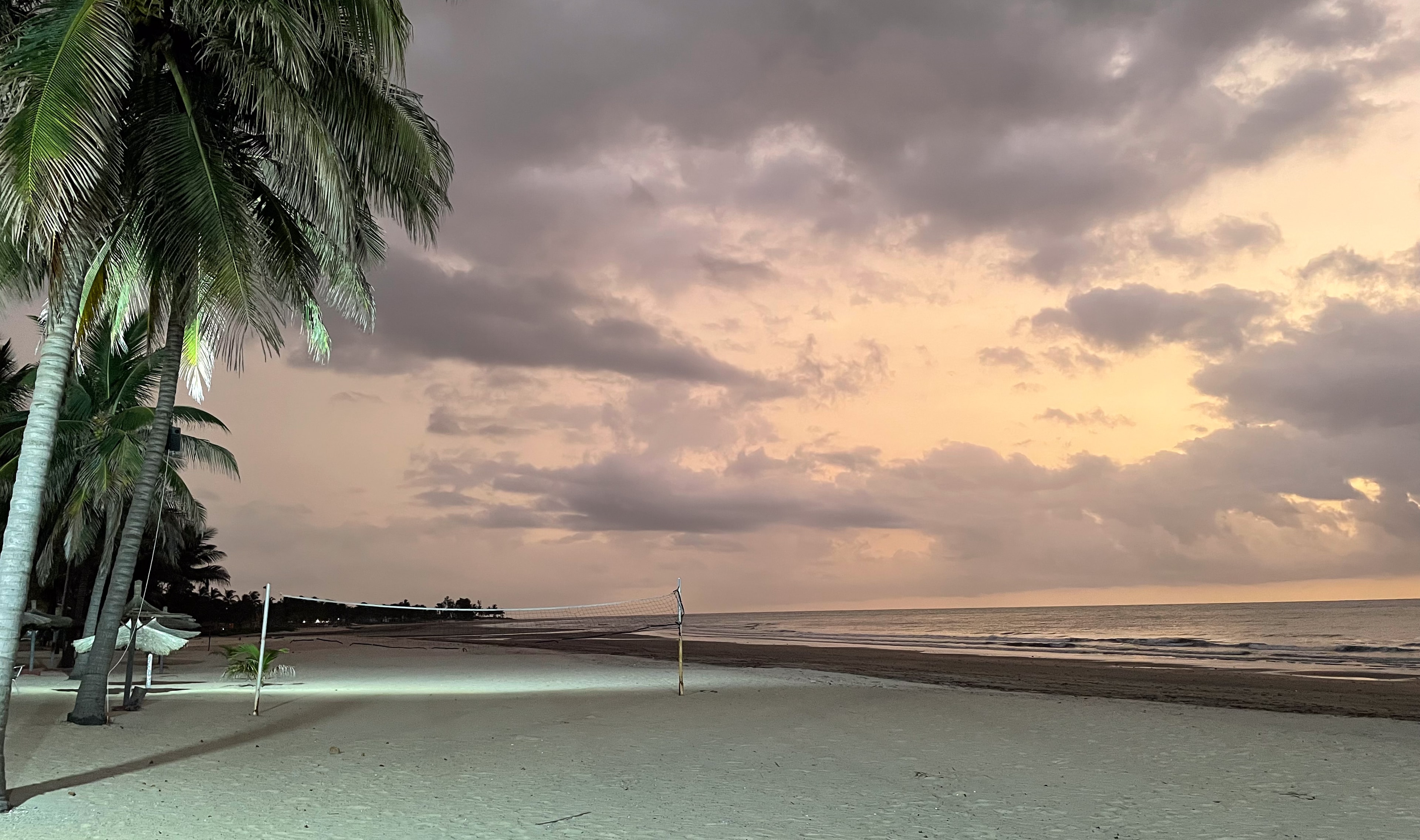
Konradin: I have to pay 20 US dollars in cash at immigration; euros are also accepted. I will have to pay another 20 dollars when I leave the country. That’s it. I don’t even need a visa to visit. The Gambia is a popular tourist destination. It is still low season now. In the coming months, the aeroplanes will be full of 'toubabs', heading to a place we Europeans consider paradisiacal: white beaches, coconut palms and the Atlantic Ocean. The Gambia's infrastructure is geared towards this regular seasonal inflow of tourists.
However, from the same beaches a little further south, away from the beach resorts, a counter-movement takes place, hidden from the tourists' eyes. Every year, hundreds of small boats set to sea, following the coastline northwards in an attempt to reach the Canary Islands and thus European territory. Many of the passengers lose their lives on the way. I once witnessed a boat reaching the sandy beaches of Tenerife. Not everyone on board had survived the journey. For those risking their lives to cross an invisible border, Europe might also seem like paradise from a distance. But while we 'Toubabs' temporarily and superficially enjoy 'our' earthly paradise and then return to our homes, jobs and security, they seek a better life in 'their' paradise (our homelands) without a return ticket. While the label 'tourist' guarantees a warm welcome and all kinds of tailored pleasures, the label 'immigrant' triggers hostility and racism in Europe, and paradise might soon feel like hell.
In their recent book on the violence of tourism, Sinthujan Varatharajah brilliantly exposes how colonialism set the stage for tourism, how past colonial massacres are concealed by images of tropical paradises, how cultures are exoticized to control them, and how history is reimagined to hide the scars of the past, making it appealing to white travellers. [1] The author also describes the painful moment when, for the first time since fleeing their homeland, the Tamil Eelam family re-enter Sri Lanka as German 'tourists'. But this label does not disguise their origins, which leads to them being intensely questioned at immigration.
The Gambian Reality: The Roots of the "Backway" and the Climate Crisis
Maimuna: While Konradin’s reflections capture the stark asymmetries of global mobility, living this reality from the ground reveals layers that transcend the tourist brochure and the deportation flight. When young Gambians embark on the perilous clandestine migration known locally as the "Backway," they are not simply chasing an abstract illusion of European paradise; they are fleeing a pressure cooker of systemic constraints.
The Economic Void: The Gambia faces staggering youth unemployment and underemployment. With limited industrial development, restricted local markets, and few viable pathways for upward mobility, young people watch their potential atrophy. Education often fails to translate into employment, leaving a generation feeling stranded in their own homeland.
The Ecological Collapse and Climate Realities: This economic desperation is deeply intertwined with environmental degradation. As a low-lying nation heavily reliant on agriculture, artisanal fishing, and river ecosystems, The Gambia is on the frontlines of climate change. Erratic rainfall, salinization of agricultural lands from rising sea levels, and the overexploitation of coastal fish stocks by foreign industrial trawlers have eroded traditional livelihoods. When a farmer's harvest fails year after year, or a fisherman pulls up empty nets where coastal waters have been depleted, the ecosystem itself pushes them out. The "Backway" is frequently a climate migration route disguised as an economic one.
Echoes of History: From Shackles to Skiffs
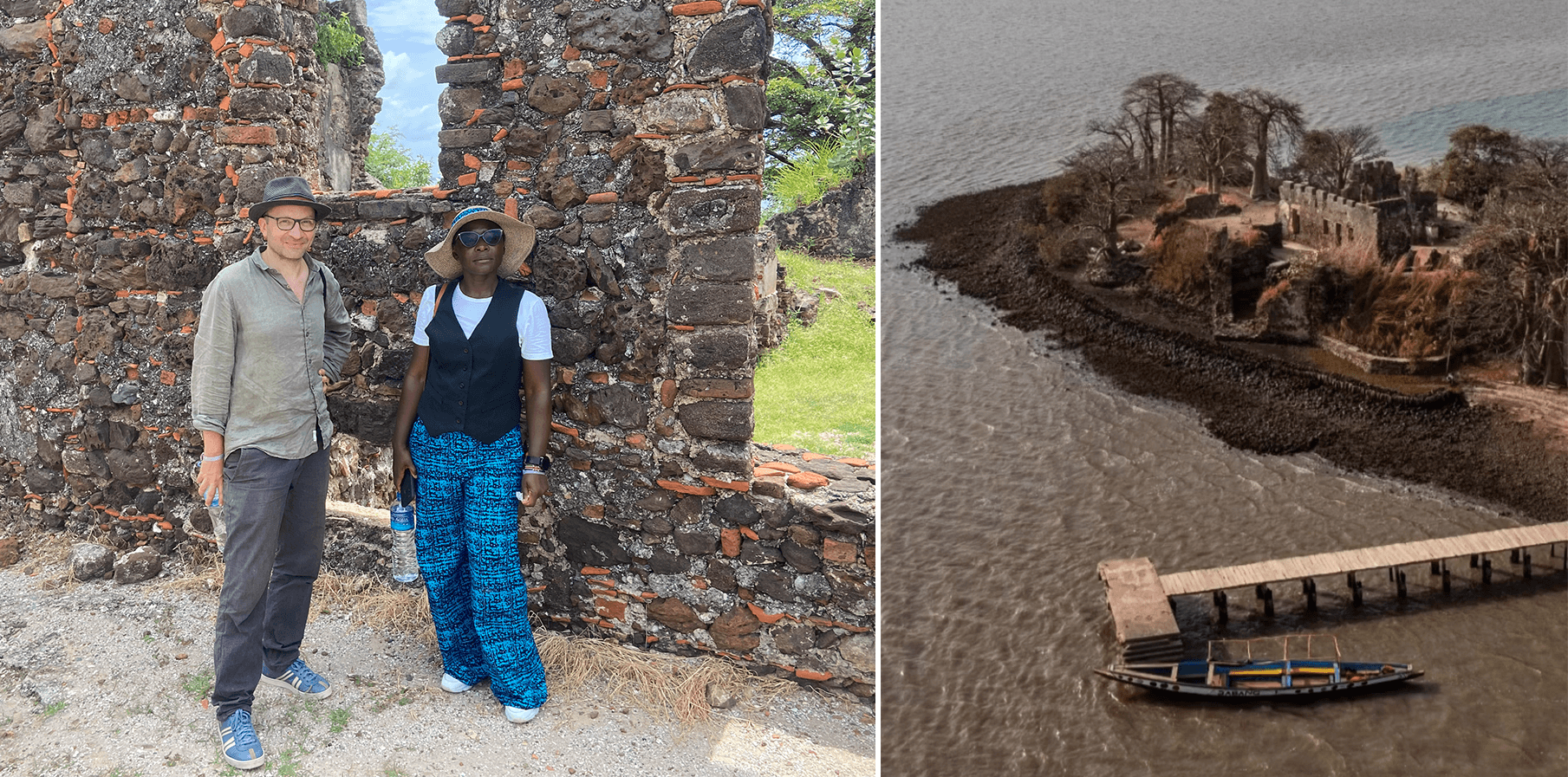
Maimuna: The tragedy of the Backway cannot be understood in isolation from the ghosts of history. Later during his stay, Konradin visits Kunta Kinteh Island in the River Gambia, a monument to the transatlantic slave trade where millions were severed from their ancestral roots. This island was used by several colonial invaders to control trade on the river, including the trade of enslaved people. Known as James Island for a long time, it was renamed fifteen years ago after Kunta Kinteh, a historical figure who gained popularity through Alex Haley's novel ‘Roots’ [2]. Yet, the parallel goes deeper than historical tourism.
Centuries ago, human beings were commodified and packed onto European ships against their will to fuel foreign economies, while the colonizers moved freely across borders exploiting land and labour. Today, a modern inversion takes place: young Africans watch Europeans travel effortlessly across the globe for leisure, while they themselves are locked behind impenetrable visa regimes. Denied legal pathways to mobility, they pack onto wooden caiques and pirogues, risking drowning in the Atlantic.
Konradin: Our guide to Kunta Kinteh island speaks German. He tells me that he lived in Germany for five years, in Mannheim and Karlsruhe, that he was first trained, and then worked, as a care worker for the elderly before returning home. He says he is happy, but his reddish eyes will tell a different story. He is not happy when someone mentions his deportation. One evening, we sit together on the banks of the River Gambia. In his opinion it is against human rights that Europeans can travel everywhere, while Africans cannot. I agree. I don't ask him about his deportation. When it is dark and a thunderstorm is approaching from the opposite riverbank, I thank him, say goodbye and leave.
Maimuna: As our guide expressed, there is a fundamental violation of human rights in a world where freedom of movement is a birthright for some and a capital offense for others. The deportation flight at the start of Konradin's journey and the clandestine boats leaving Gambian shores are two sides of the same coin: a global governance system that controls, discards, and compartmentalizes human lives based on geography and race.
Memory, Justice, and the Unbroken Shoreline
Maimuna: During the residency, visits to spaces like The Memory House in Serrekunda established by the civil society organisation Aneked to document the atrocities of the Yahya Jammeh dictatorship (1994–2017) remind us that societies carry deep, unresolved traumas of violence and state impunity. [3] One section of the exhibition ‘The Duty to Remember’ adds another layer to the multiple migrations stories from The Gambia’s shores.
Konradin: As a result of the national Truth, Reconciliation and Reparations Commission, the Memory House presents impressive large-scale black-and-white photographs of family members alongside selected personal belongings of victims, displayed in glass cabinets, meeting the highest international museum standards. The focus on the ongoing pain of those who have lost family members to killing or enforced disappearance is staggering, deeply personal and intimate, yet the exhibition also becomes a space for the people, by the people and about the people. A part of the exhibition is dedicated to the so-called ‘Ghana 44’, a group of more than 50 migrants, 44 of whom Ghanaian, who were detained on a Gambian beach in 2005. Suspected by paramilitary forces of being mercenaries, they were killed presumably on the orders of President Jammeh. Only eight of the victims' bodies were eventually repatriated to Ghana, leaving many families unable to bury their loved ones to this day. This exhibition strongly resonates with both the theme of this year's TheMuseumsLab (Building Futures from Memory: Museums and Memorial Sites as Agents) and my own work, which focuses on identifying ancestral remains from Tanzania that were shipped to Germany for racist 'scientific' research purposes during the German colonial period.
On the last day of my residency, as I dip my toes into the sand and sip water from a coconut that young men have sold to me while waiting for tourists to flood Kombo Beach, I try to imagine the layers of this country's history and present as layers of sand: The sand shifts endlessly with the tides of the River Gambia out into the ocean, only to be thrown back onto the shore, each layer covering the previous one. And again, they will be taken by the waves and churned up before forming a new mixed layer of sand on the beach.
Maimuna & Konradin: We realize that no matter how meticulously we build museums and sites to remember past atrocities, or how sincerely we honour those who have died, we will never achieve true justice and healing as long as structural violence continues to claim young lives on beaches and in oceans. True reckoning requires dismantling the unequal global architectures that turn climate refugees and job-seekers into criminals, ensuring that dignity, opportunity, and the freedom to stay or to move safely, belong to all people alike.
[1] Varatharajah, S. (2026): wo zeit stehen bleibt. vom tourismus und seiner gewalt. Hanser Verlag.
[2] Haley, A. (1976). Roots: The saga of an American family. Doubleday.
[3] ANEKED. Memory House. https://www.aneked.org/memory-house. Accessed 7 October 2026.
[4] Marejesho Research and Information Centre. https://mric.hypotheses.org. Accessed 7 October 2026.
The Authors
Konradin Kunze
Artist, Researcher
Fellow 2026
Maimuna Jawara
Curator at Juffureh Village Heritage Museum
Residency Facilitator
Related Articles
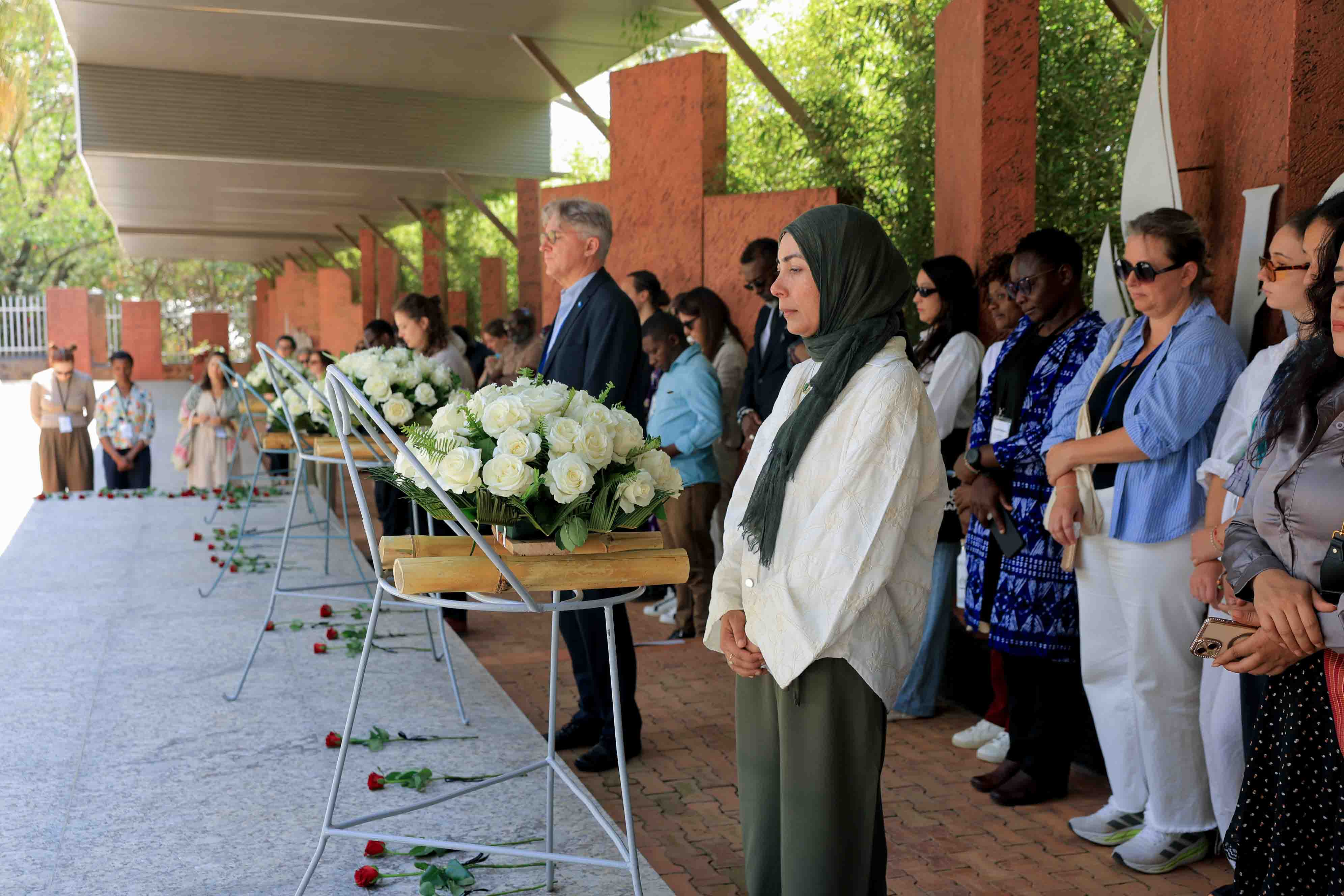
The Voices We Must Not Ignore
In her reflections on Module 3 in Rwanda, Fellow Dr. Samar El Khamisy looks back on encounters with survivor testimonies and visits to genocide memorials, exploring questions of memory, forgiveness, reconciliation, and our responsibility to learn from the past.
Read more
Did You Remember to Water Your Houseplants?
Drawing on her observations from Kigali, Yevheniia Moliar reflects on how colonial histories remain embedded in everyday life, from domestic spaces to the public realm.
Read more
From Fellow to Co-Curator: Reflections on TheMuseumsLab 2026
In 2025, Thomas C. Ngwabije joined as a Fellow. In 2026, he returned as a Co-Curator. A reflection on how the same programme became a completely different experience.
Read more