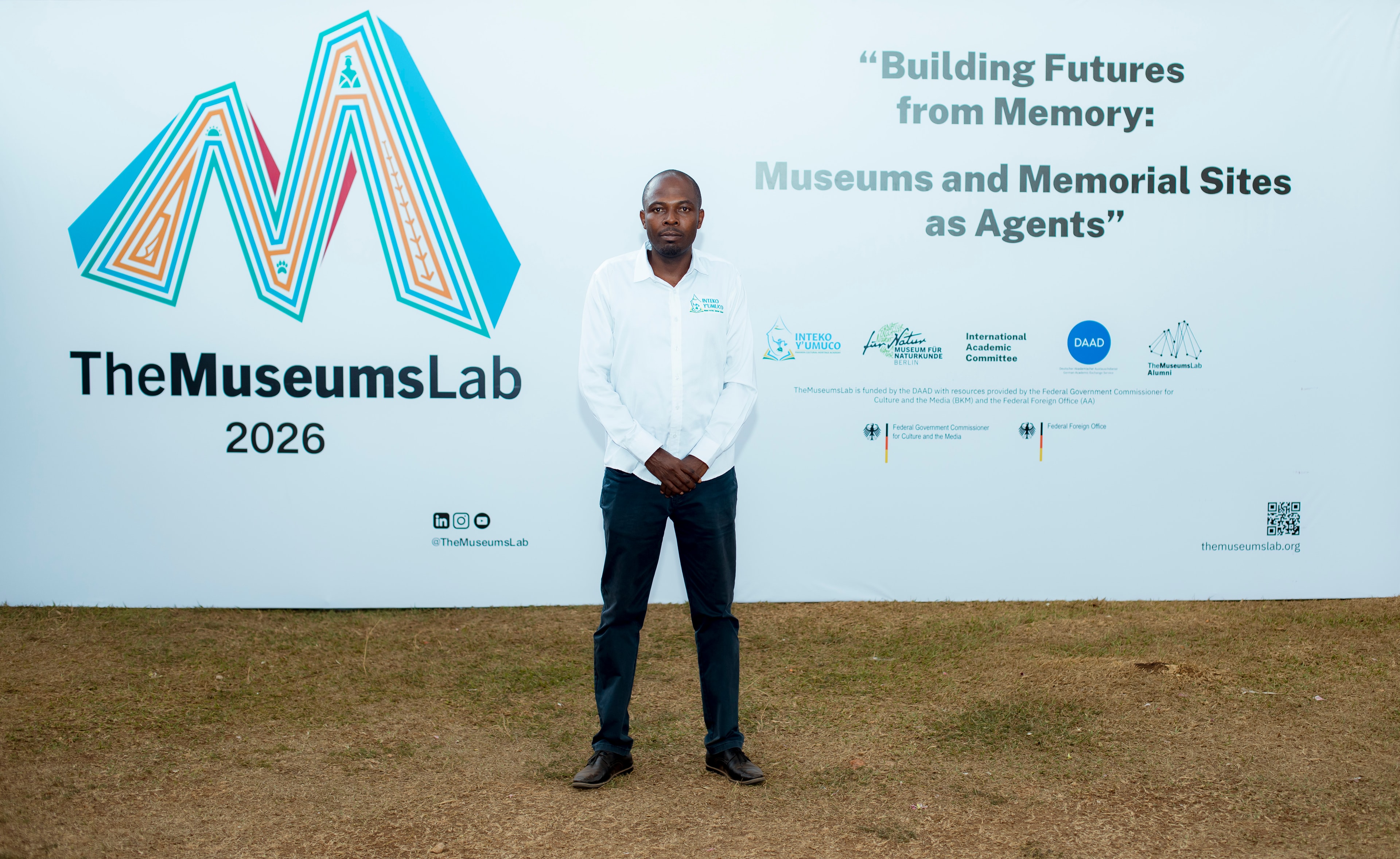
From Fellow to Co-Curator: Reflections on TheMuseumsLab 2026
I work at the Rwanda Cultural Heritage Academy (RCHA). My experience as a teacher, before I joined the heritage sector, taught me that knowledge becomes useful only when it is shared, and that the people who gather it, organize it, and pass it on deserve as much attention as the knowledge itself. That belief stayed with me throughout this year, and it shaped how I approached my role.
In this article, I want to reflect on what it meant to move from one side of the programme to the other. I want to describe what I contributed, what I learned, and what I believe Rwanda and our heritage sector have gained. I also want to say something about the people, the quiet work behind the scenes, and the moments around the table that no agenda can capture. These are personal reflections, written with gratitude and with hope for what comes next.
A different seat at the same table
When you attend a programme as a Fellow, things are simply there. The sessions are planned, the speakers are invited, the rooms are prepared, and the schedule moves from one activity to the next. You arrive with your own questions and your own expectations, and your task is to take part, to listen, to contribute and to learn. It is a generous and enriching position, and I remain thankful for the time I spent in it.
Co-curating is a different experience altogether. You are no longer only receiving the programme; you are among the thinkers, developers, organizers and implementers who build it. You sit in the conversations that happen long before the first session begins. You ask what a module should help participants to understand, who is best placed to speak, how one session should connect to the next, and what colleagues will carry home when it ends. You begin to see how many small decisions sit behind a single hour that participants experience as effortless.
This changed how I understood my own earlier experience as a Fellow. I realized that every detail I had once taken for granted was the result of someone's careful thought and patient effort. It made me a more attentive participant in every meeting and a more grateful colleague. I believe that anyone who has moved from attending to organizing will recognize this feeling: once you have seen the work from the inside, you can never again look at a well-run programme without noticing the people who made it so.
Each person's experience of TheMuseumsLab is their own, and each is entirely new. Mine as a Fellow was one story. Mine as a Co-Curator is another. Neither replaces the other, and I think the programme is stronger because it holds both kinds of experience.
A programme unlike any other
Before TheMuseumsLab, I had attended a number of trainings, workshops and professional meetings. Many were useful, and some were excellent. But this programme stood apart from all of them, and I want to explain why.
First, it is built on the idea that every participant is a practitioner with something to give. Professionals from Africa and Europe are not divided into those who teach and those who learn. Everyone does both. A colleague from a small community institution can offer insight that changes how a colleague from a large national museum thinks, and the reverse is equally true. This is rare, and it is not easy to achieve. It requires planning, humility and a shared commitment to equality from the very start.
Second, the programme is international in a real sense. It does not simply invite people from different countries to sit in the same room. It creates conditions in which they can work through shared questions together, over time, and across several modules. The relationships that form are therefore deeper than those of a one-off conference. Participants return to one another's work, ask for advice, and share progress long after a module ends.
Third, the programme pays attention to people as well as to content. The way participants are welcomed, the way sessions are moderated, the way meals and visits are organized, all of this reflects a belief that good professional exchange depends on trust and comfort as much as on expertise. I saw this clearly as a Fellow, and I understood it far better as a Co-Curator.
What it meant to shape the programme
Shaping a programme means taking responsibility for its direction. As a Co-Curator, I contributed to the thinking behind the modules and to the way they were put together. I helped to consider how different voices could be brought into the conversation, how themes could be introduced so that participants from different backgrounds would feel equally included, and how the practical side of each module could support its intellectual aims.
My creative contributions were often found in details that may seem small but that carry real weight. They included the choice of words used to welcome and thank people, the tone of formal correspondence, and the care taken to make invitations feel personal and not just administrative.
I also found that co-curation asks for a particular kind of listening. You work with colleagues from different institutions and different countries, each with their own way of thinking and their own priorities. Good ideas do not always arrive in the form you expect. Sometimes the best contribution you can make is to help a colleague's idea become clearer, or to find the point where two different views can meet. I learned to value that skill as much as the ability to propose something of my own.
Confidence, trust and what a Co-Curator learns
One of the most important things this experience gave me is trust in myself. As a Fellow, I knew that I had something to contribute, but I did not yet know how far my judgement could reach. As a Co-Curator, I was asked to make decisions, to give opinions that would be taken seriously, and to take responsibility for outcomes. Each time I did, my confidence grew.
I learned that trusting yourself does not mean being certain about everything. It means being prepared to offer an idea, to explain your reasoning, to listen to objections, and to change your mind when someone shows you a better way. It means accepting that mistakes will happen and that they can be corrected with honesty and good humor. These lessons are valuable in any career, but they came to me most clearly in this setting.
A Co-Curator also learns how much depends on others. No part of this programme could be delivered by one person or one institution. It relies on the work of partners, speakers, moderators, administrators, interpreters of culture and many others who rarely appear in photographs. Seeing this made me far more aware of how I treat the people around me and how I recognize their contributions.
Finally, I learned patience. Large international programmes move at their own pace. Letters must be written and answered, schedules must be adjusted, and plans must be revised when circumstances change. I came to see this patience as part of the expertise. It is what allows a complicated programme to arrive at a good result without losing the goodwill of the people involved.
Rwanda in the programme from the beginning
It would be easy to think of Rwanda's role in TheMuseumsLab 2026 only in terms of hosting Module 3. That would miss an important part of the story. Rwanda was involved from Module 1, which took place as an online session. Rwandan speakers and moderators contributed to it, bringing our experience, our questions and our perspectives to colleagues across Africa and Europe.
This early involvement mattered. It meant that Rwanda entered the programme as a contributor and not as a guest who arrives late. When the programme later came to Kigali, our colleagues had already been part of its conversation, and the participants already knew something of our voices and our work. The hosting felt like a continuation and not a beginning.
Hosting Module 3 at RCHA in late September 2026 was a proud moment for our institution. The opening ceremony at the Rwanda Art Museum on 21 September gave our guests a welcome that was both formal and warm, and it placed the programme in a setting that speaks to Rwanda's cultural life. For many participants, it was an introduction to the country's museums and heritage. For us, it was a chance to show what we do and to receive honest and generous feedback from colleagues who understand the field.
What the Rwandan heritage sector gains
The benefits of this involvement for Rwanda's heritage sector are real, and they go beyond the days of any single module.
The first is visibility. Our work becomes known. Practices, questions and ideas that might otherwise stay within national borders are shared with professionals across the world. When a Rwandan colleague speaks or moderates in an international setting, they present not only their own views but the thinking of a sector that is active and thoughtful.
The second is professional exchange. Our colleagues learn how others approach challenges that we also face, including the care of collections, public engagement, training, documentation and the interpretation of difficult histories. We bring our own experience in return. This exchange runs in both directions, and it is balanced. I have seen our colleagues gain new ideas, and I have seen visiting colleagues take away ideas from us.
The third is networking and collaboration. Programmes like this lead to lasting relationships between institutions. A conversation at a dinner can become an exchange of documents, a joint project, or an invitation to another event. These connections are among the most valuable results of the programme, and they continue to grow after the formal modules are over.
The fourth is confidence. When Rwandan professionals see their work received with respect by international colleagues, it strengthens their belief that the sector has something important to offer. I see this as a lasting benefit for the people who work in our museums, and cultural institutions, and for those who will follow them.
The work behind the scenes
Much of what makes a programme succeed is invisible to those who attend it. When a participant arrives to a well-prepared welcome, they rarely think about the letters, approvals and conversations that made it possible. Yet this unseen work is at the heart of every good programme.
In preparing Module 3, I was involved in coordination with Rwandan government institutions, with MfN, with DAAD and with other partners. This included formal correspondence to different bodies, invitation letters for participants, and detailed exchanges about scheduling, accommodation and practical arrangements. Each of these tasks required clarity, accuracy and respect for the procedures of the institution concerned.
What I want to emphasize most is the openness I met. People were willing to collaborate. Institutions responded to requests with attention. Partners offered time and flexibility. Colleagues treated each task as a shared responsibility and not as a favor or an obstacle. This spirit of cooperation made the module possible, and it reflects well on everyone involved, in Rwanda and abroad.
I also learned that this kind of work builds relationships of its own. Each exchange of letters or messages is a small act of trust. When a request is understood and answered promptly, it strengthens the working relationship for the next time. Over the course of the preparation, I felt that a network of goodwill was growing around the programme, and that it would remain useful long after the module was complete.
I would like this part of the programme to be recognized. Those who write the letters, confirm the details and solve the small problems do not usually receive applause. But a programme like this stands on their efforts, and I wish to thank every person who contributed to it in this way.
The value of shared moments
TheMuseumsLab is not only about sessions, lectures and workshops. Its social programme is an important part of how the programme works, and I want to give it the attention it deserves.
The forum day at the Museum für Naturkunde Berlin brought participants together in a setting that is itself a great institution of knowledge and collection. Being in a museum of that standing, among colleagues from different countries, gave the day a particular seriousness and a particular sense of occasion. It showed participants that their conversations belonged to a wider and longer tradition of work.
The welcome and farewell dinners, held in Berlin and in Kigali, marked the beginning and end of shared time. A welcome dinner allows people who may only know one another by name to meet as human beings. It reduces the distance that formal introductions cannot always close. A farewell dinner gives the group a chance to look back, to thank one another, and to say goodbye in a way that acknowledges what has been built together. In both cities, I saw how much these evenings mattered.
The reception at the residence of the German Ambassador in Rwanda added a further dimension. It showed the support of the partners for the programme and recognized the work of participants and organizers in a gracious setting. For many guests, it was also a memorable evening in Kigali, where professional conversation mixed easily with warmth and hospitality.
The effect of such events is hard to measure but easy to feel. Over shared meals, conversations become more honest. People ask questions they might hesitate to ask in a session. Participants discover common interests, laugh at shared experiences, and form friendships that make later collaboration natural. Ideas that begin in a workshop continue over dinner and grow into plans. I believe these moments are as important to the lasting impact of the programme as any formal session, because they build the trust on which professional cooperation depends.
Building futures from memory
This year’s theme was: “Building Futures from Memory: Museums and Memorial Sites as Agents”. At its core, TheMuseumsLab invites African and European practitioners into dialogue about building futures from memory. I find this a powerful way to describe the purpose of heritage work. Museums and memorial sites hold what societies remember.
What we choose to preserve, how we interpret it and whom we invite to take part in that work all shape the futures that people are able to imagine.
The programme gives this idea practical form by creating space for practitioners from both continents to learn from each other as equals. This is not a simple matter. Histories of unequal relations shape the way institutions on both continents relate to one another, and they cannot be ignored. A programme that wishes to build real partnership must be willing to acknowledge them. In TheMuseumsLab, I saw this done with care. Difficult subjects were not avoided, and they were also not used to divide people. They were approached with honesty, with respect and with a shared wish to do better.
This is where I believe the idea of Co-Curation has its deepest meaning. To co-curate means listening to those whose voices have not always been heard in the heritage field, and it means accepting that no single institution or region holds all the answers. Co-curating this programme gave me a practical experience of what that means.
I also came to appreciate how much we have in common. Colleagues in Africa and Europe face many similar questions. How do we make our institutions relevant to young people?
How do we care for fragile collections with limited resources? How do we involve communities in decisions about their own heritage? How do we train and support the next generation of practitioners? In discussing these questions together, participants discovered that they could help one another, and that the differences between their contexts were a source of learning and not of division.
Memory lives not only in objects but also in written and spoken words. The stories that societies tell, record and teach are part of how they build their futures.
The people
In the end, a programme is its people. The participants and partners of TheMuseumsLab 2026 came from different countries, institutions and professional backgrounds. They had different experiences, different languages of work and different ways of thinking. Each one was unique.
And yet, all were similar in what mattered most. They shared a commitment to heritage, a willingness to learn, and a generosity in sharing what they knew. They came with curiosity and left with new connections. They asked thoughtful questions and listened carefully to the answers. They were patient with the challenges of travel, time and unfamiliar settings, and they treated one another with courtesy.
It is this combination of difference and common purpose that makes the programme special. If everyone had been the same, there would have been little to learn. If everyone had been entirely different, there would have been no ground on which to meet.
TheMuseumsLab finds a balance between the two, and the participants are the ones who make that balance real.
As a Co-Curator, I had the privilege of seeing this from a particular point. I watched people who had met only recently speak about one another's work with real interest. I saw colleagues offer help without being asked. I saw how much it meant to participants to feel that their institution, however small or large, was welcomed as an equal. These are the memories I will keep.
Looking ahead
As this edition draws to a close, I think about what I hope participants carried back to their institutions. I hope they carried knowledge and ideas that they can use. I hope they also carried confidence: the sense that their experience matters, that their questions are worth asking, and that they belong to a wider community of practitioners who are willing to support them. I hope they carried the contacts and friendships they have made, and that they use them. And I hope they carried the habit of dialogue, which means listening first, speaking honestly and learning across difference.
For TheMuseumsLab itself, my hope is that it continues to grow as a space of equal exchange. I would like it to welcome new voices from both continents, to include colleagues from institutions of every size, and to keep strengthening the partnerships on which it is built. I would like it to remain a place where practical learning and thoughtful reflection go together, and where participants feel that the programme belongs to them.
For Rwanda, I hope to see more of our professionals take part, contribute and lead. I would like our heritage practitioners to see TheMuseumsLab as a place where they have a voice, and I hope the experience of hosting Module 3 encourages RCHA and our partners to remain closely involved.
For myself, I hope to keep learning. Moving from Fellow to Co-Curator showed me that there is always another seat from which to see the same work, and that each new seat teaches something that the previous one could not.
With gratitude
I am deeply thankful to DAAD and to the Museum für Naturkunde Berlin for their partnership and their trust. I thank my fellow Co-Curators for their ideas, their patience and their friendship. I thank the Rwandan speakers, moderators, institutions and colleagues who gave their time and effort, from the first online module to the final days in Kigali. And I thank every participant, whose openness and energy made this edition what it was.
Moving from Fellow to Co-Curator has been one of the most meaningful steps of my professional journey. It has strengthened my trust in myself, deepened my respect for the people who make programmes possible, and renewed my belief in what African and European heritage professionals can achieve when they work together as equals.
I look forward to what comes next.
The Author
Thomas Cadeau Ngwabije
National Library Services
Rwanda Cultural Heritage Academy (RCHA)
Alumnus & Co-Curator of TheMuseumsLab
Related Articles
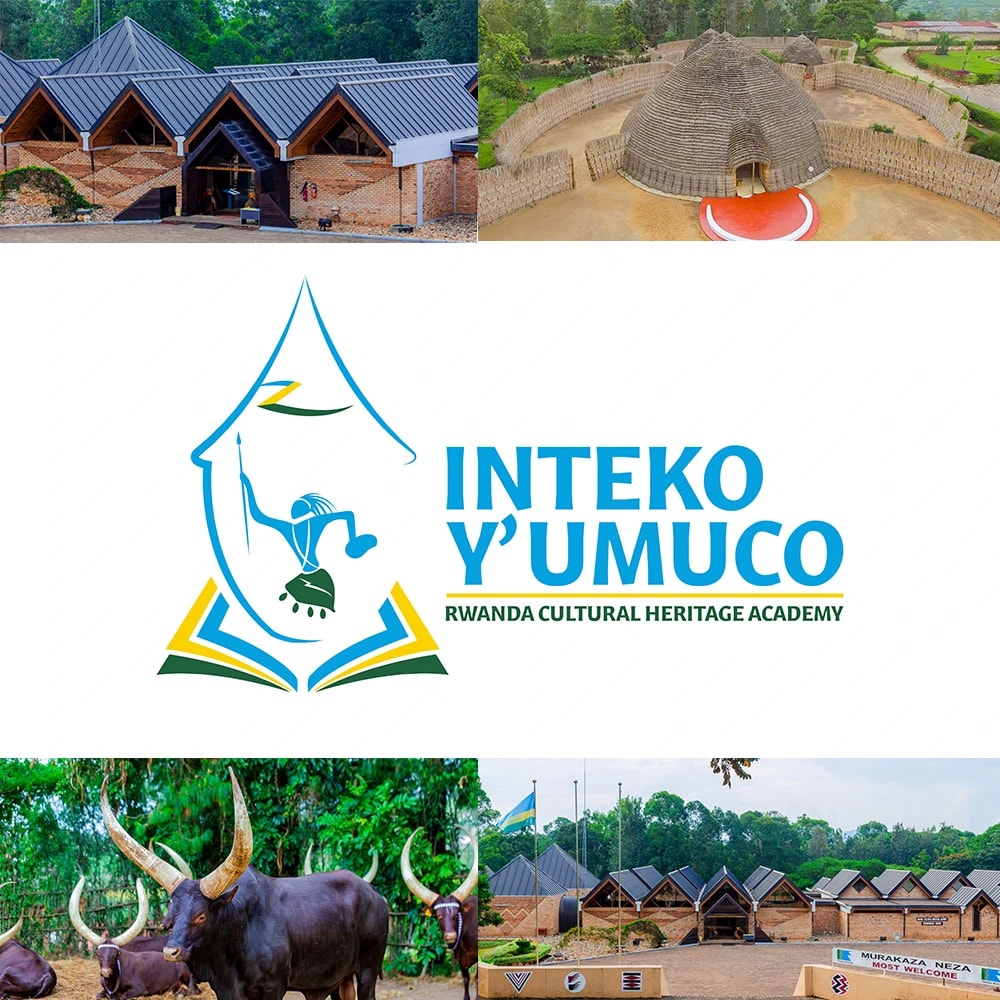
Curatorial Partner 2026: Rwanda Cultural Heritage Academy
We are pleased to welcome the Rwanda Cultural Heritage Academy (RCHA) as partner of TheMuseumsLab 2026. As curatorial lead and implementation partner for Module 3, the RCHA will play a key role in shaping the programme in Kigali while contributing across all modules as part of the curatorial team.
Read more
Curatorial Update
Behind the scenes with TheMuseumsLab’s Curatorial Team: Insights from our Co-Curators on programme developments, thematic focuses, and the making of this year’s Fellowship.
Read more
Module 3: A First Glimpse by the Co-Curators
As the Fellows prepare to reunite in Rwanda, the Module 3 Co-Curators offer a first glimpse of what lies ahead and what they hope the Fellows will take home from their week together.
Read more