Collage for Care: A Methodological, Intentional, CareFULL, Weaving of Perspectives across Africa and Europe | CollabFund
An insight into the CollabFund project Collage for Care by Mutanu Kyany’a & Lena Stammarnäs.
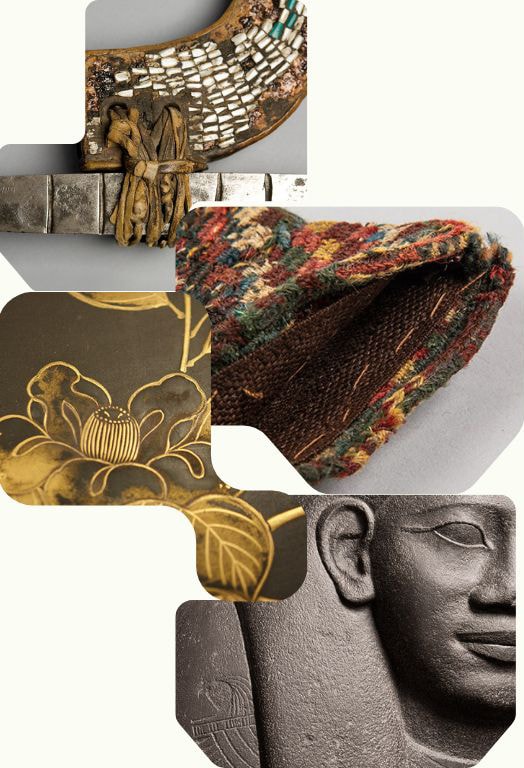
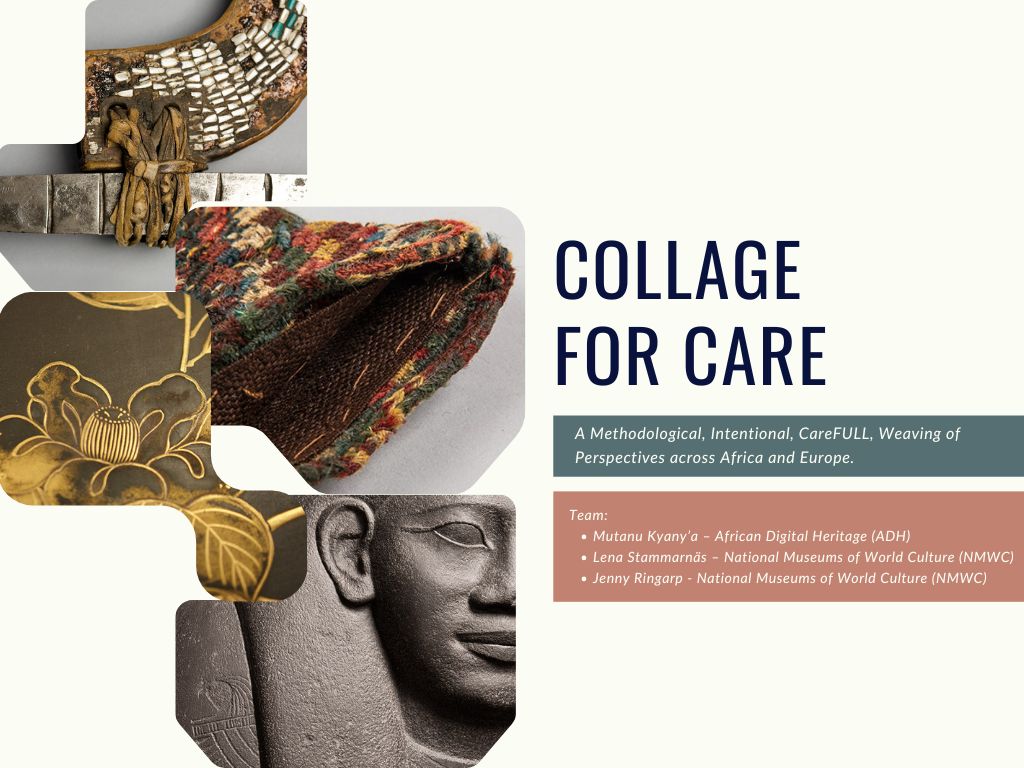
What does it mean to gather twenty different voices from across Africa and Europe and place them into a single collage, carefully? We have lived inside this question for months now, and working through it has expanded our sense of how you actually embody care in practice. It sounds like an editing question, a matter of sequence and running order. Turns out, it's more of an ethical, curatorial issue. A collage, by its very nature, does not ask for uniformity. It asks you to place things next to each other so that the polysperspectivity not only shows, but works together, and so that the whole says more than any single piece could. Doing that with close attention, carefully, as both the subject and the method, was one of the most mind-opening, most rewarding things we have done this year.
It started in a cab in Nairobi. Lena was in town for a residency, and somewhere between one place and the next we got talking about care, about what happens to it when museum workers are caught in colonial histories and frameworks of practice, and about how rarely practitioners in the space talk about the uncomfortable process of doing the work, because what we see and laud are the end products. No one gets to celebrate the million decisions that inform the work. The curatorial practice itself. We were curious what other TheMuseumsLab alumni would say if we asked them plainly. So we asked.
We want to be honest that the modesty of it was the point. We set out to gather a collage that would draw in roughly twenty alumni across Africa and Europe. Each recorded a short reflection from wherever they felt grounded, in whatever language felt natural, answering four simple questions: Why is care important? What does it look like? Who gets to do the care work? How does it actually manifest in practice? We did not hand out a script. Each person carried their own answer. We wanted the reflections that people hold in real time, the ones that they grapple with within their practice.
What came back was, for lack of a better term, golden. People treated care as labour, as politics, as a daily choice, far from a soft word. Somebody in Senegal talked about the exhaustion of documenting an absence, an inventory card that pointed to an empty space. Somebody in Sudan talked about heritage as survival, community kitchens standing in for a state that had fallen away.
Somebody in Tanzania went back more than a hundred years to the African porters who carried tonnes of fossil bone on their shoulders for sixty kilometres and were recorded only as labels on the specimens.
We had invited reflections and received arguments, grief, and a fair amount of quiet fury. Sitting with all of it at once was the first hint that assembling it would be a matter of holding the roughness intact.
The making of the collage was less romantic than the idea. Twenty people filming themselves means twenty different phones, twenty rooms, several languages, and audio recorded next to whatever was happening that day. Some came in sideways, shot in portrait for a screen that wanted landscape. Some were too quiet, some clipped. A few were in languages we first had to work to fully hear before we could hold them properly. All of this was simply the texture of a decentralised, low-budget, cross-continental project. This also was a reminder that the care we were talking about had to be the care we practised. Chasing files gently instead of constantly firing off reminders to people who we know very well are over-stretched in their day to day deliverables.
The budget made some of these questions sharper than they are comfortable to sit with. We were working with a strained budget, and inside that we kept asking ourselves how much is enough. How much is enough to pay a contributor for their time, their thinking, their authorship? Surely, a project about care must in good conscience avoid the extraction that is characteristic of the cultural heritage space. How much for the people doing the work of putting it all together, often stretched across other jobs and other deadlines? The answer stays messy, but asking it of ourselves matters. Paying whatever is left over and calling it fair would have been easy. Holding the question honestly demanded more of us, and that is part of what care as a method required.
Running alongside the money was a quieter question that stayed with us throughout: how do we present each person's work carefully, in the best way possible, in a way that shows their point while preserving its full shape? Cutting everyone to a single tidy line would have been simple, and it would have lost the texture that made each contribution theirs. Holding each voice close to its full weight while still making a whole was its own daily discipline. Then came the part that is invisible in the final cut and took the most out of me: the assembly itself. Once you have twenty honest pieces, you have to decide how they touch. This is where a collage is made or lost. We spent a long time on adjacencies, on which voice should sit against which, for a careful assembly.
And there were the harder calls about balance, which are the whole ethics of a collage in miniature. How do we make sure we balance how many times people appear, so that we share the space between them? Whose voice opens a section and who gets to close the argument? We worked to balance the piece across gender, across religion, across Africa and Europe, so that many kinds of authority carried the film together, and so that every voice among us, including our queer voices, was woven through the whole from beginning to end. The balance remained imperfect. The pool of contributors itself carried its own imbalances, and there is a limit to how far weighting can carry you before distortion replaces balance. Care as a curatorial method is not a slogan you print in a report. It is a hundred quiet decisions about who gets weight, who gets context, and who gets to close the argument, and every one of them is a choice about power and visibility.
We kept a commitment to disagreement, too. People in the collage hold different views, and we preserved all of them. Some pushed the politics of return forward with urgency, others insisted on the slow, unglamorous groundwork that has to come first, capacity, conservation, trust. A collage built entirely on agreement would hide more than it reveals, and the exhibition this film lives inside, Crossroads at the Museum of World Culture in Gothenburg, is built precisely on the idea of contact zones, places where people meet, compromise, build coalitions, or collide. The friction between the voices does essential work. It is the assembly working.
What we keep returning to is the convergence underneath all that difference. These twenty people worked independently. They recorded alone, on different continents, in different languages, and yet the same phrases surface again and again. Shared authority. Living cultures.
Connection. The collective. A curator in Ljubljana and an archivist here in Nairobi turn out to be tending the same ground without ever having met. That, more than any single contribution, is what the project proved to us. That care is a common language rather than a local preoccupation and we had to simply gather it into one place. The collage held up a surface where you could finally see it repeating, voice after voice, room after room, like a pattern that reveals itself once the fragments are laid down together. That, in the end, is what it means to make a collage carefully. The goal is to place each piece with enough attention that it keeps its own edge while adding to the whole, letting the seams remain visible.
Work continues. Colour and sound still have to be worked on, subtitles made, the film readied for both the exhibition wall and the platform. But the difficult part, the part that mattered, is done. Twenty people put something down, from twenty rooms, and it holds together as one thing. In Swahili, we say kila mwanafasihi na uhuru wa ufasihi which roughly translates to every art consumer has the freedom of interpretation. That freedom belongs to everyone who will meet this collage, just as it belonged to each of the twenty voices who made it. A collage is truly finished only once someone else stands in front of it and starts to read their own connections across the fragments. We are eager to share the final output and to hear your interpretations of the collage. That part now belongs to you, and it is the part we are looking forward to most.
The Authors
Mutanu Kyany’a
Director Research and Programs at African Digital Heritage
Alumni
Lena Stammarnäs
Exhibition Producer at The National Museums of World Culture
Alumni
The initiative TheMuseumsLab CollabFund is funded by the Kulturstiftung des Bundes (German Federal Cultural Foundation).

Related Articles
Community Collaboration and Provenance Research in Tanzania | CollabFund
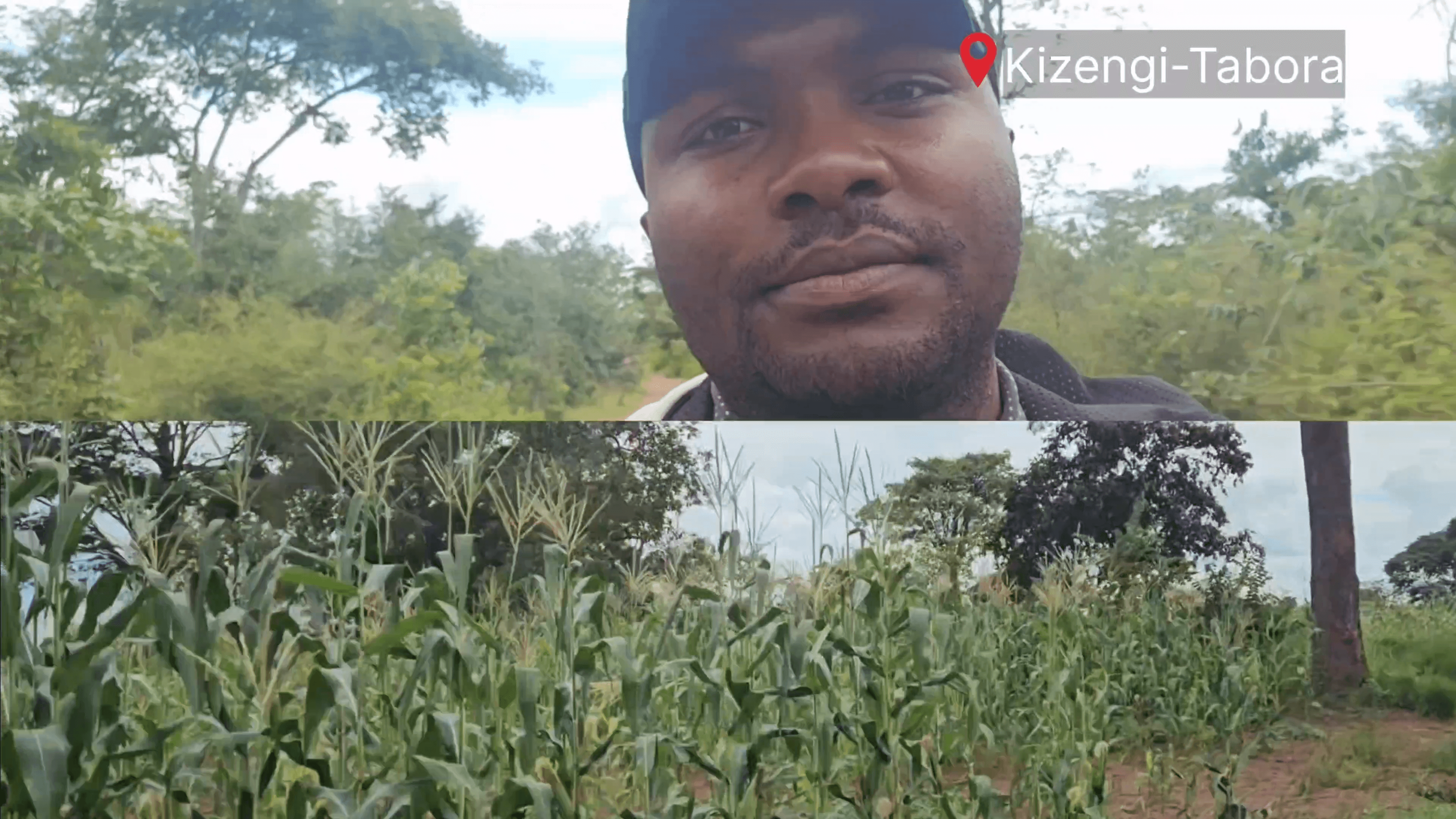
A video insight by Eliabu Mbonimpa on a field journey through Tanzania retraces the routes of Slovenian collector Stanko Grom. Through conversations with local communities, museum professionals, and artists, the project Tracing Colonialism opens new perspectives on the collection and its contemporary relevance.
Read more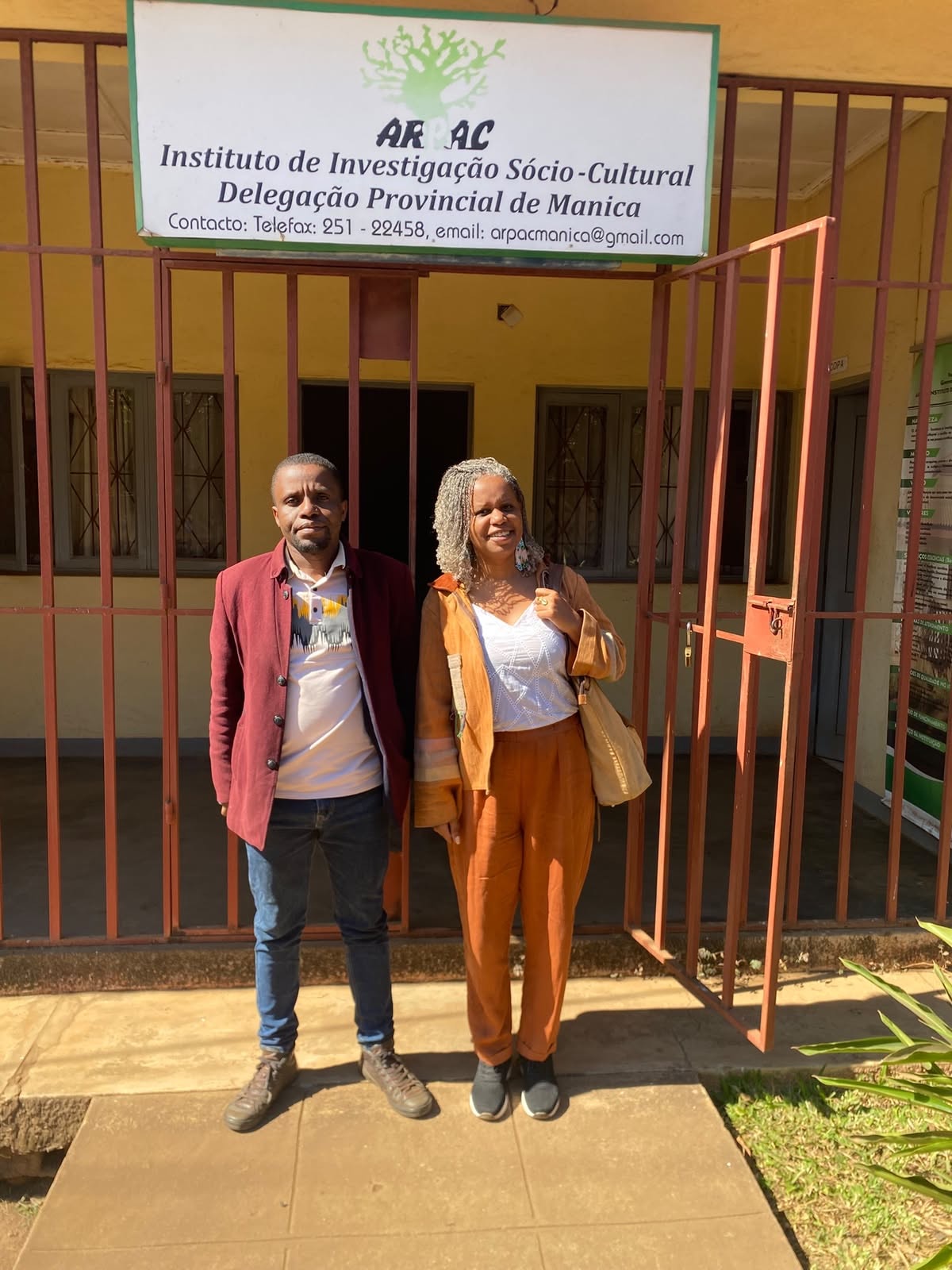
Groundwork in Motion: Artist Notes | CollabFund
An insight into the CollabFund project Re-Rooted by Eno Inyangete, following artists Fatma Elzahraa and Wacelia Zualo as they lay the crucial groundwork for their respective projects.
Read more
Building a Queer Digital Archive: First Steps | CollabFund
The Queer Digital Archive Project moves into its next phase, working with selected contributors, a designer, and museum partners to develop a digital space for queer histories, identities, and cultural narratives across Africa and the African diaspora.
Read more