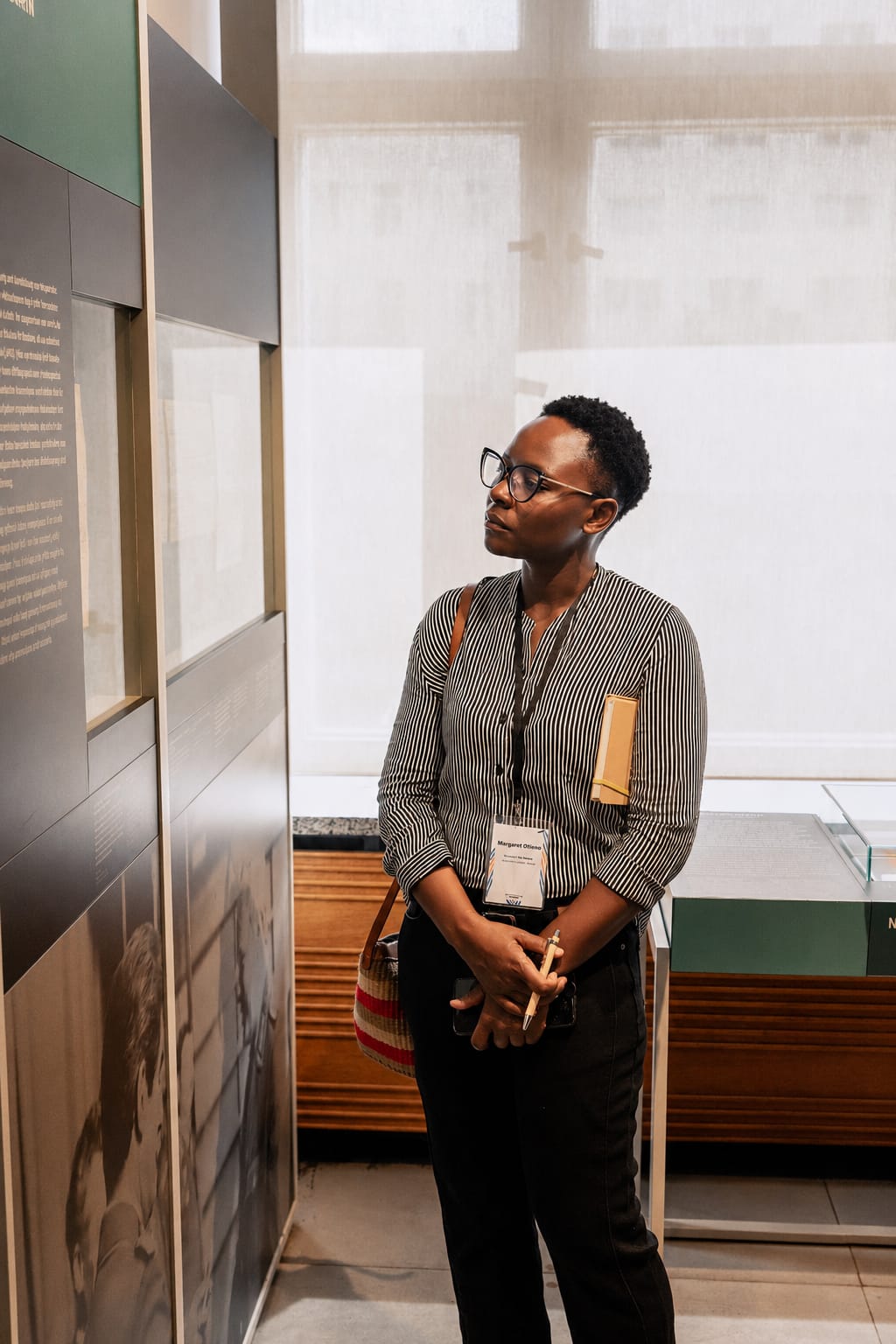
From Repositories to Relationships: Rethinking the Future of Museums
When I began TheMuseumsLab 2026, I came with questions I had been carrying through my own work in museums and heritage: Who gets to tell our stories? Who decides what is remembered and how it is represented? Where do communities sit within the processes through which heritage is collected, interpreted, preserved and shared?
These are not new questions for me. As an anthropologist and museum professional working at the National Museums of Kenya, I have increasingly become interested in what it means to move beyond object-centred approaches towards museums and heritage spaces that are more inclusive, relational and community-centred.
I believe museums can be more than repositories of heritage. They can be spaces of care, dialogue, healing and belonging—places where communities see themselves reflected, where different perspectives can coexist and where shared futures can be imagined. TheMuseumsLab did not give me this conviction. Rather, it gave me new spaces in which to test it, question it and see it through other eyes. The 2026 programme, Building Futures from Memory: Museums and Memorial Sites as Agents, invited participants to consider memory not simply as something to preserve, but as something that can shape dialogue, responsibility and the futures we build. It brings together professionals from Africa and Europe through a process of joint learning, exchange and critical reflection.
Beginning with questions
Module 1 opened a space for difficult but necessary conversations about memory cultures, representation, restitution, digital heritage and museum leadership. Again and again, we returned to questions of voice and authority. Who gets to tell these histories? Who speaks, and whose voice is amplified? Should curatorial authority rest primarily with institutions and academic experts, or can communities themselves become central to shaping the narratives through which their histories are presented?
These questions became particularly important when thinking about difficult and contested histories. Museums have often been positioned as authoritative spaces: places that collect, preserve, classify and interpret. But what happens when the authority to interpret is shared? What happens when multiple perspectives are allowed to exist alongside one another, including perspectives that may challenge institutional narratives? I found myself returning repeatedly to the idea that representation is not only about what appears in an exhibition. It is also about language, interpretation, participation and absence. It is about who is invited into the conversation and who remains outside it.
This was perhaps one of the first important lessons of the fellowship for me: community participation cannot simply mean bringing people into a museum after the important decisions have already been made. It raised an even more difficult question: What would it mean for communities to have a meaningful role in shaping those decisions in the first place?
Berlin: Encountering memory in place
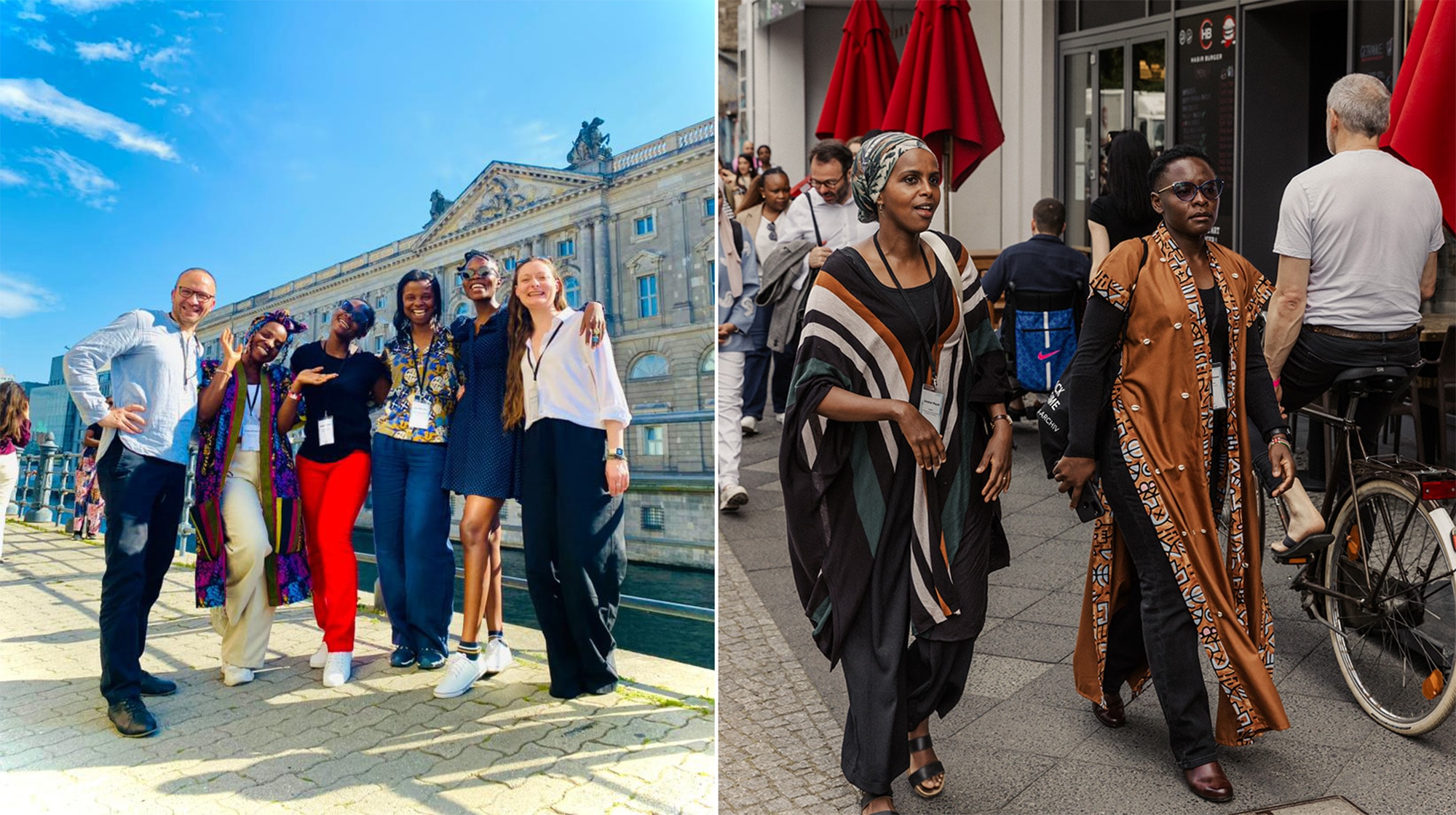
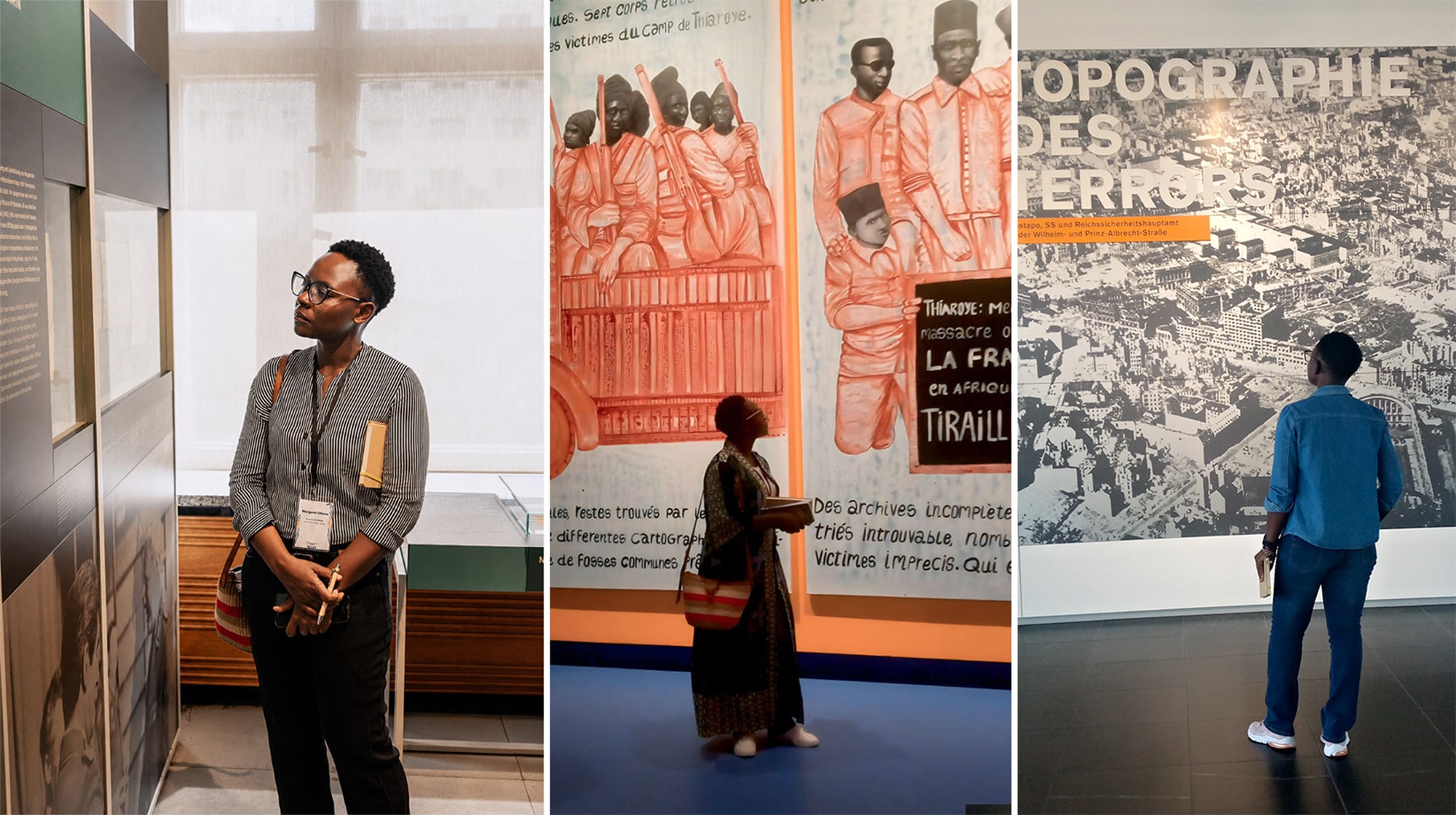
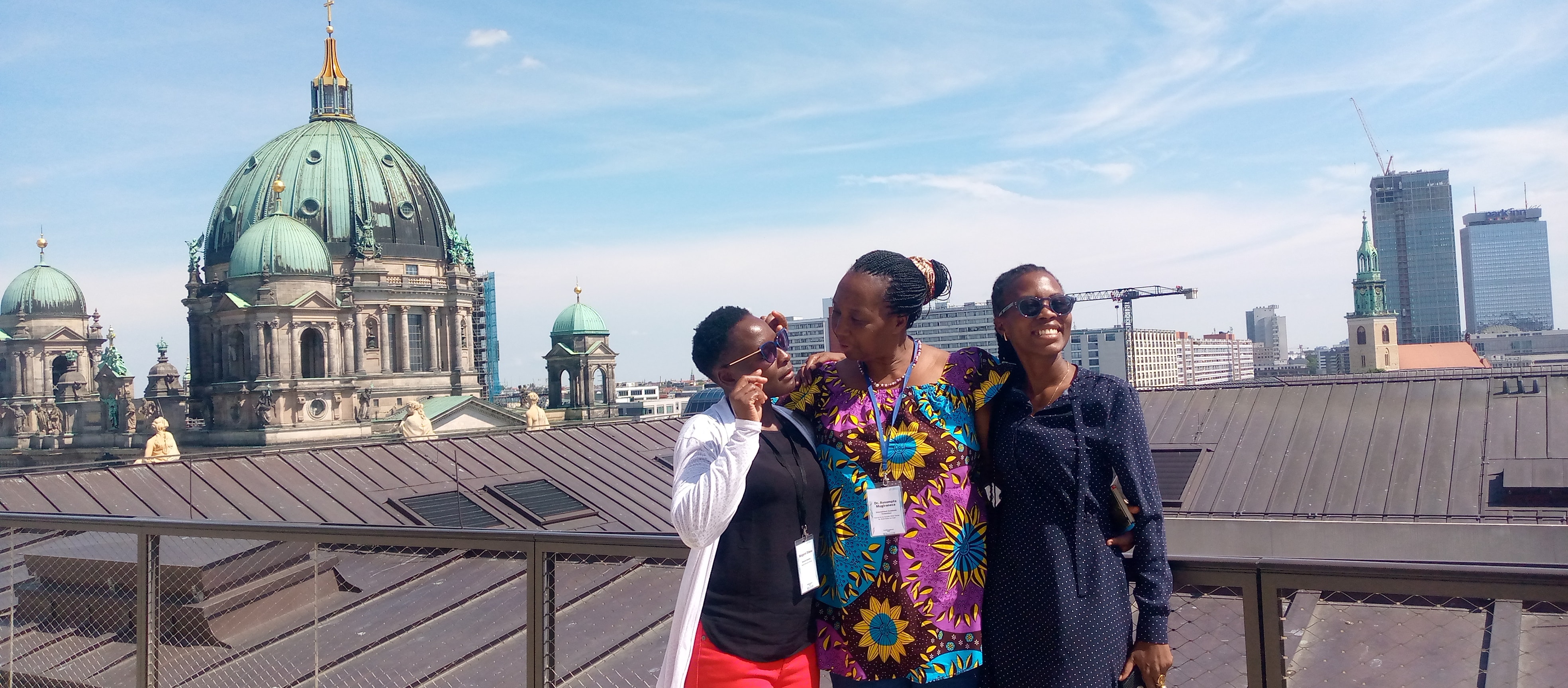
If Module 1 gave me the questions, Berlin gave many of them a physical presence. Walking through Berlin, I encountered memory not only inside museums but across the city itself. Visits to the Topography of Terror, the Memorial to the Murdered Jews of Europe, the Memorial to the Sinti and Roma Victims of National Socialism, Haus der Kulturen der Welt, the Stasi Museum and sites connected to the Berlin Wall offered different ways of confronting difficult histories. At the Haus der Kulturen der Welt for instance, we experienced extensive research and a contemporary art project addressing the systematic marginalization of colonial troops, particularly the African soldiers who made up the majority of the 250,000-strong "Army B" that liberated Southern France and Europe from Nazi Germany during World War II. Walking through and taking in all these sites, what stayed with me was how deeply remembrance is woven into everyday life.
These sites are not removed from the city. People encounter them while walking to work, commuting, visiting other places or simply moving through their neighbourhoods. Memory becomes part of the public landscape and consequently, part of the public consciousness.
At the Topography of Terror and other sites, I was struck by the variety of ways through which difficult histories are communicated: exhibitions, guided tours, educational programmes, seminars and digital technologies. It reminded me that memory work cannot rely on a single form of engagement if it is to remain meaningful across generations and accessible to different audiences.
The Stolpersteine offered another powerful reminder of the importance of individuality in remembrance. These small brass plaques, embedded in pavements across the city, return names and stories to the places where people once lived. They make it difficult to reduce victims to statistics. They restore, in a small but significant way, the individuality of people whose lives were violently interrupted. Here, one thought stayed with me long after the day ended: remembrance is not simply about preserving the past. It is also about creating spaces in the present for reflection, dialogue, learning and responsibility.
And perhaps this is where museums and memorial sites become particularly powerful. They do not merely tell us what happened. At their best, they ask us what we do with that knowledge.
Whose heritage? Whose authority?
Some of my most thought-provoking encounters in Berlin came through conversations around restitution and provenance. At the Humboldt Forum, a session on restitution and provenance research opened another dimension of the questions I had been carrying. We explored the complex work of tracing object histories and the ethical, legal and practical challenges involved in determining how collections were acquired and what responsibilities institutions have towards source communities.
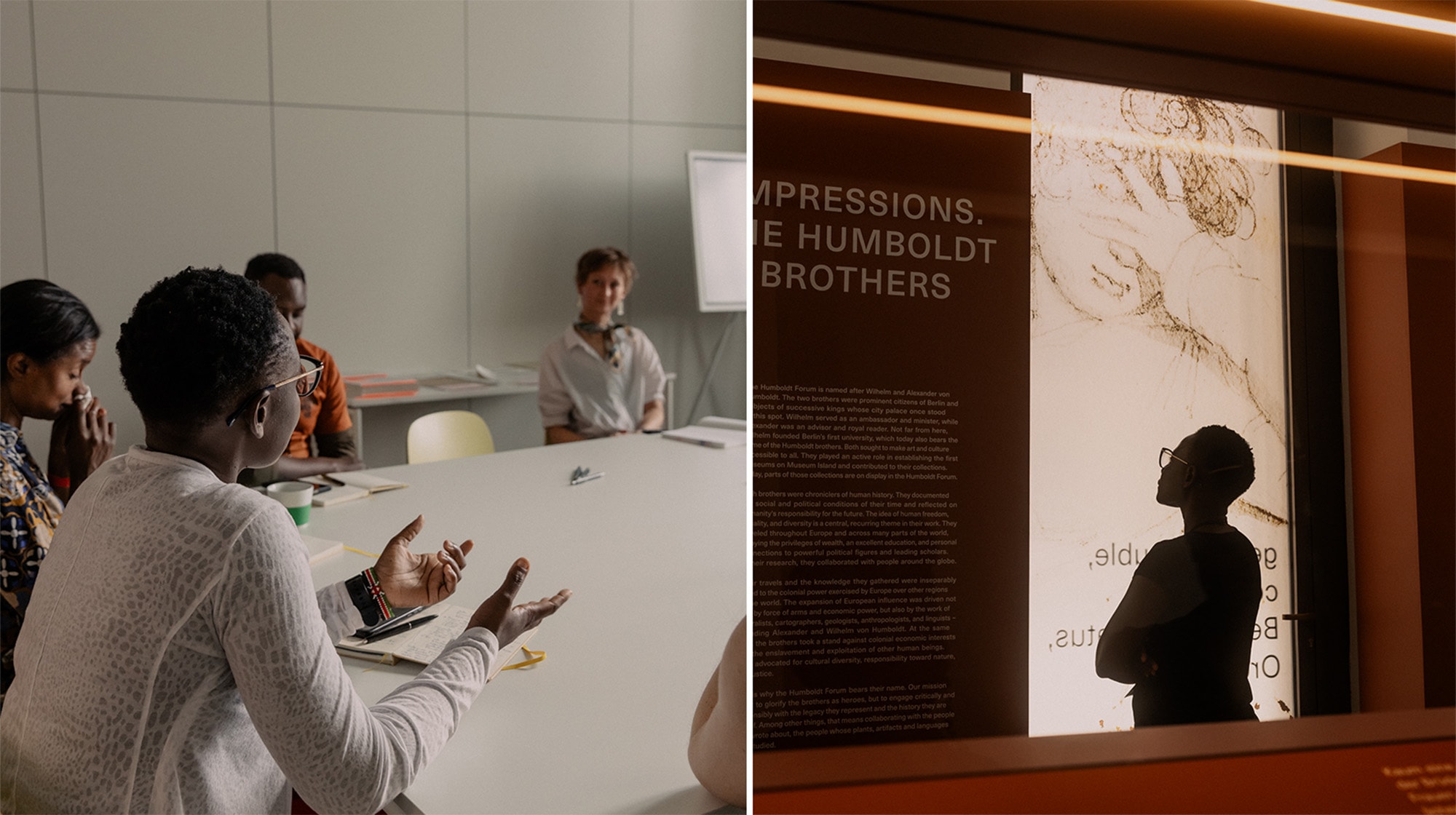
For me, this became especially personal when I encountered the talking mats from Lamu. Seeing heritage connected to a place and people much closer to home while standing in a European museum created a powerful moment of reflection. Suddenly, questions around provenance, ownership, interpretation and restitution were no longer abstract discussions. They were connected to histories, communities and cultural expressions that form part of the broader East African heritage landscape. It reminded me that an object can have multiple lives and meanings. Its presence within a museum is only one part of its biography.
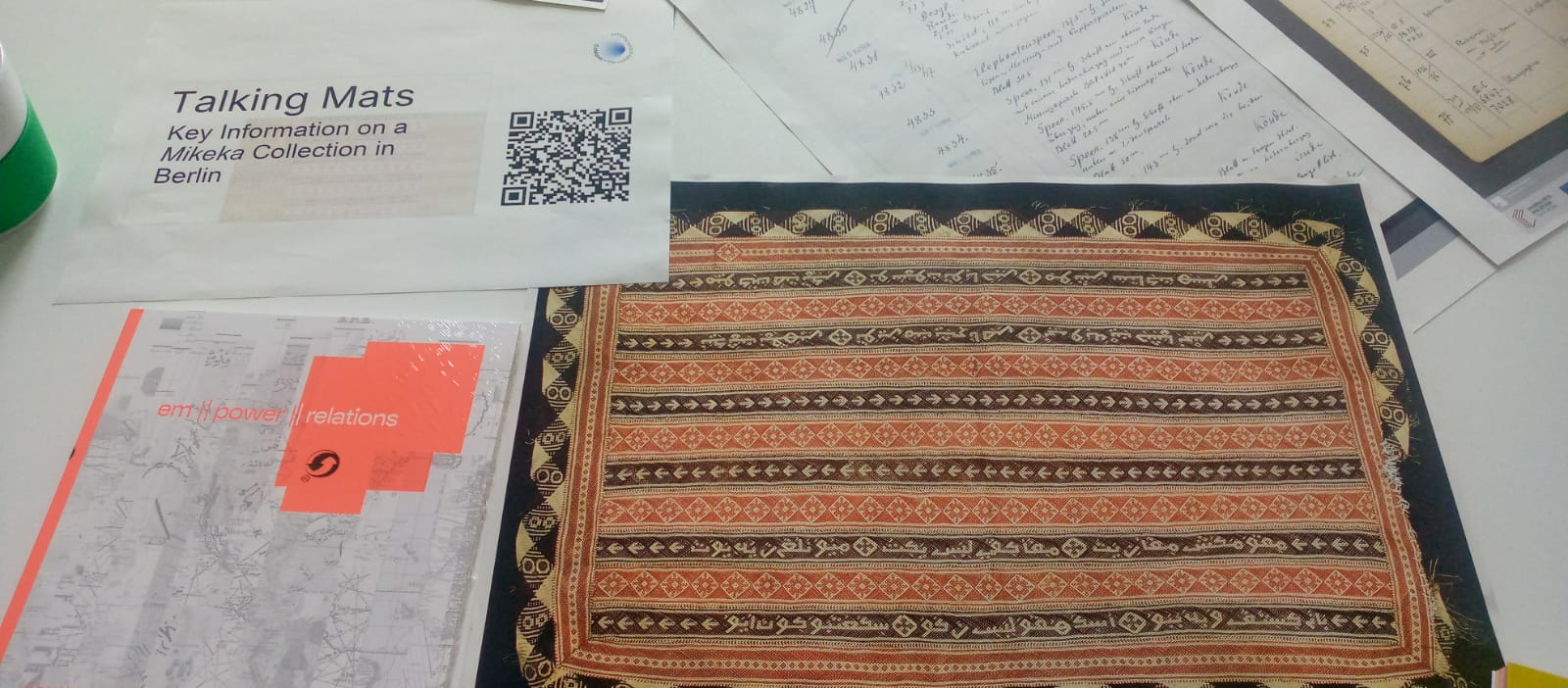
This raises yet another important question: When we speak about heritage, whose relationship to that heritage are we recognizing? And perhaps even more importantly: whose authority are we recognizing? These questions have implications far beyond restitution. They reach into the everyday work of museums—how collections are documented, how stories are interpreted, how knowledge is produced and who is invited to participate in that process.
The digital museum is not free from these questions
These reflections followed me into conversations about digital transformation. A session on Shaping Digital Museum Futures: Digital Transformation and Museums explored the enormous possibilities that digital technologies offer museums: greater access to collections, increased visibility of heritage, new forms of interpretation and opportunities to reach audiences who may otherwise remain excluded from museum spaces.
One question stood out: Who owns digital heritage?
Digitization can make collections more accessible, but accessibility does not automatically mean equity. Behind every digital collection are decisions about ownership, copyright, data security, metadata, representation, infrastructure and access. There are also questions of digital inequality. Who has the technology to access these collections? Whose knowledge is digitized?
Who determines what information accompanies an object? Who controls the systems through which that knowledge is stored and shared?
With these questions, the conversation moves beyond the technology itself. The challenge therefore, is not simply for museums to become digital. It is to become digital ethically, inclusively, sustainably and in ways that remain accountable to the communities connected to the heritage being digitized.
For someone with a deep interest in digitization and heritage documentation, these are questions that I will continue to carry with me.
Reimagining leadership from the community outward
Our conversations on museum leadership brought many of these questions together. We were challenged to ask museums some deceptively simple questions:
Why are we here? Who are our dominant audiences? Does our work have value for the communities around us?
Do local communities see themselves reflected within our spaces and processes?
Are we receptive to other perspectives? Do we listen enough?
And, perhaps most importantly, who speaks, and whose voice do we amplify?
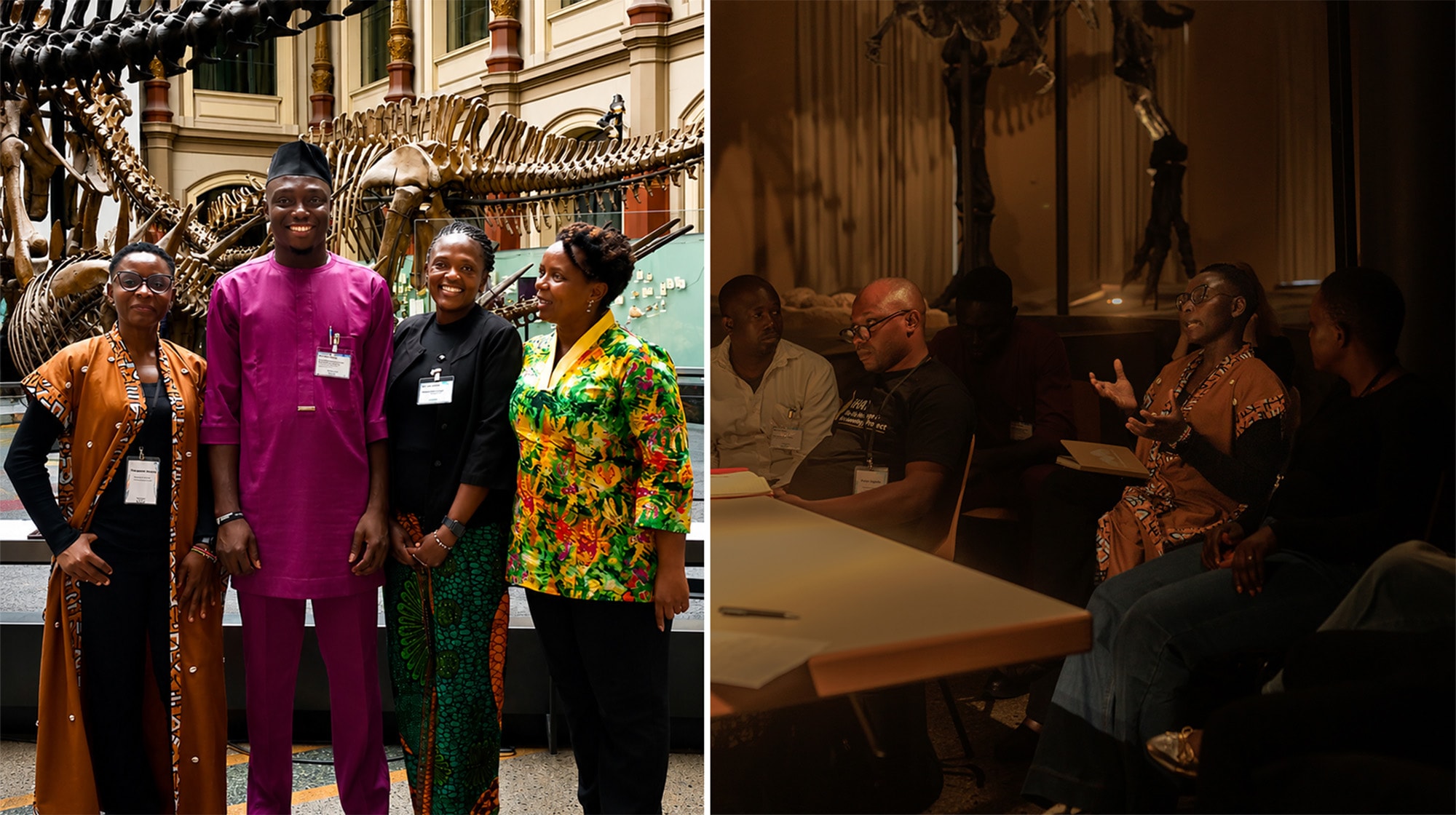
These questions are particularly important within museum contexts in the Global South, where perceptions of museums can sometimes be shaped by histories of exclusion, institutional distance and the perception that museums primarily serve elite, academic or international audiences. Meaningful community involvement can change that relationship.
But meaningful involvement requires more than occasional consultation, community events or inviting people to participate in predetermined programmes. It requires museums to reconsider where knowledge resides and who has the right to shape institutional priorities. It also requires leadership that is capable of navigating complexity: negotiation, advocacy, policy engagement, institutional diplomacy, governance and changing political and social realities. Reimagining museum leadership, therefore, is not simply about managing museums differently. It is about reconsidering how power operates within them.
Learning beyond the classroom
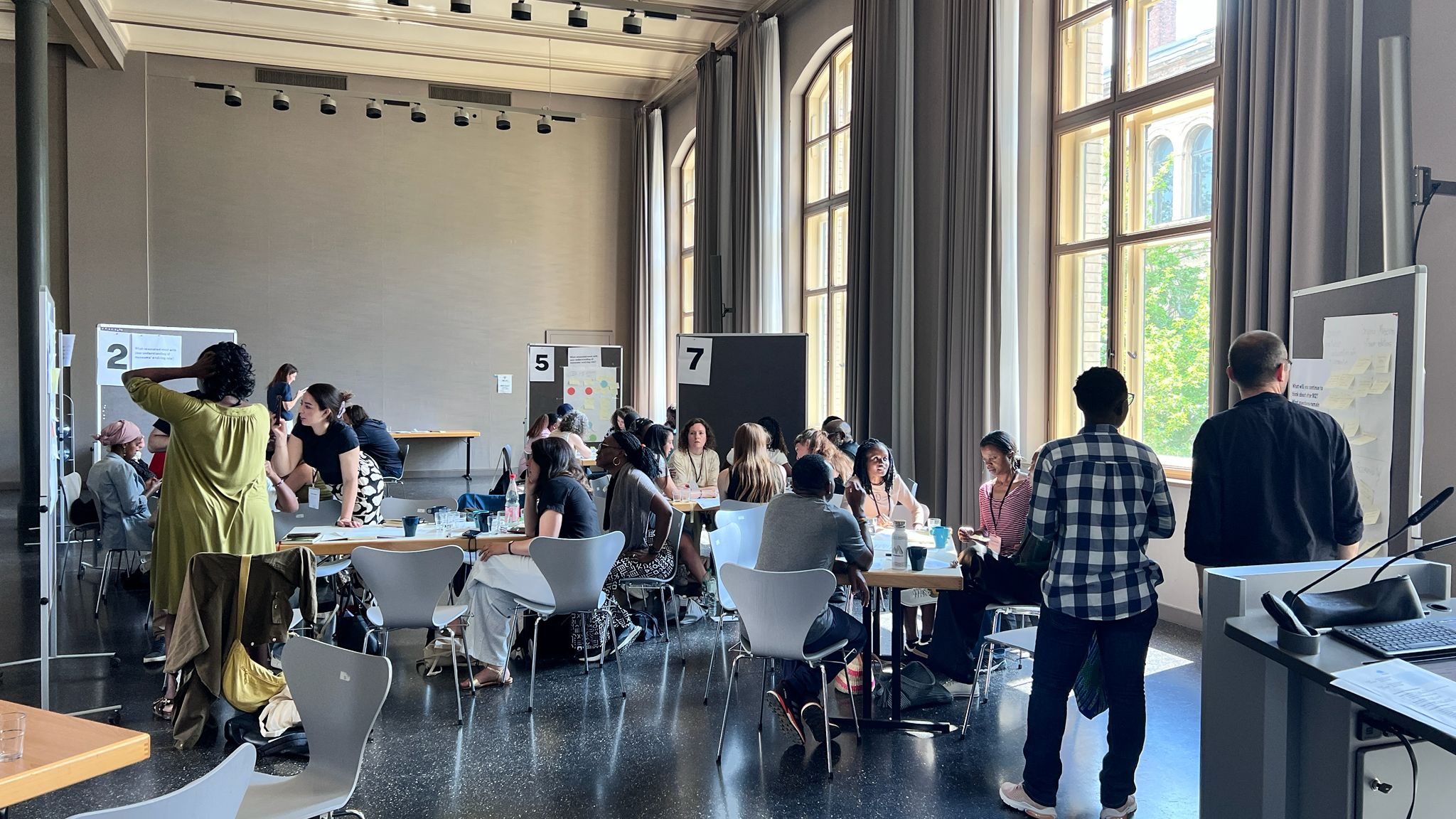
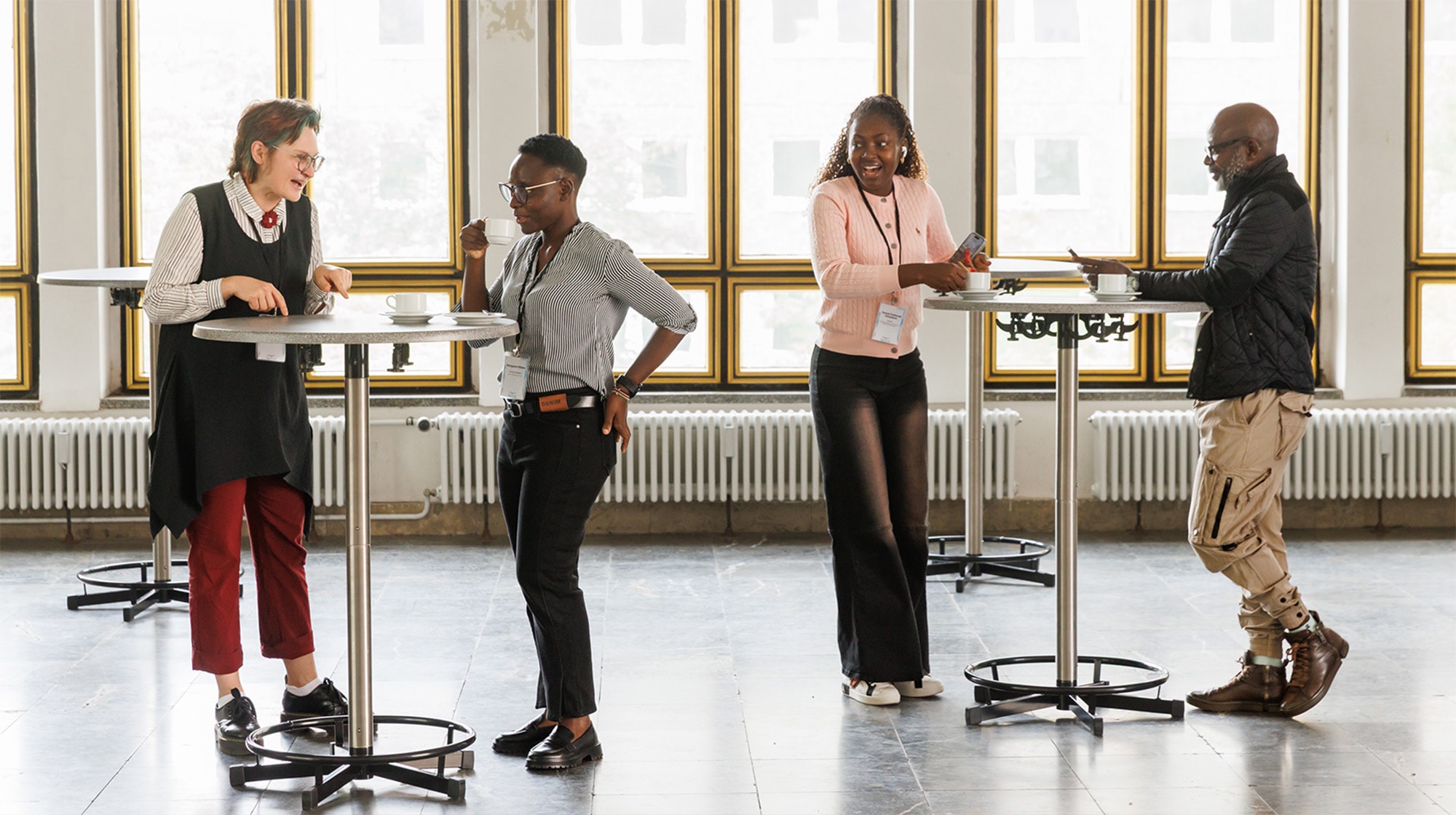
One of the unexpected gifts of TheMuseumsLab was discovering that some of the most meaningful learning did not necessarily happen during formal sessions.
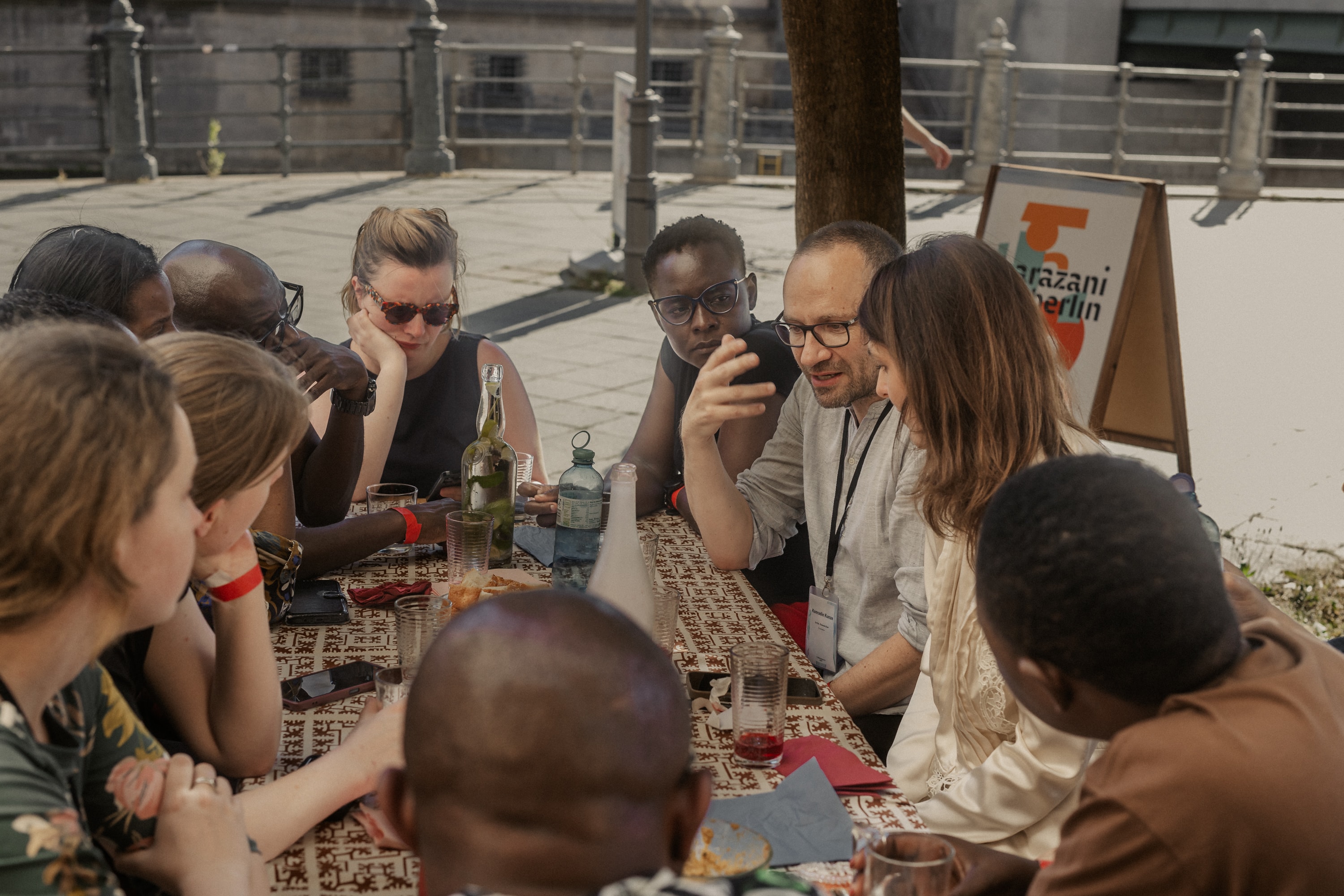
It happened over meals. On buses and trains.
During walks through Berlin.
In conversations between colleagues from different countries and professional backgrounds.
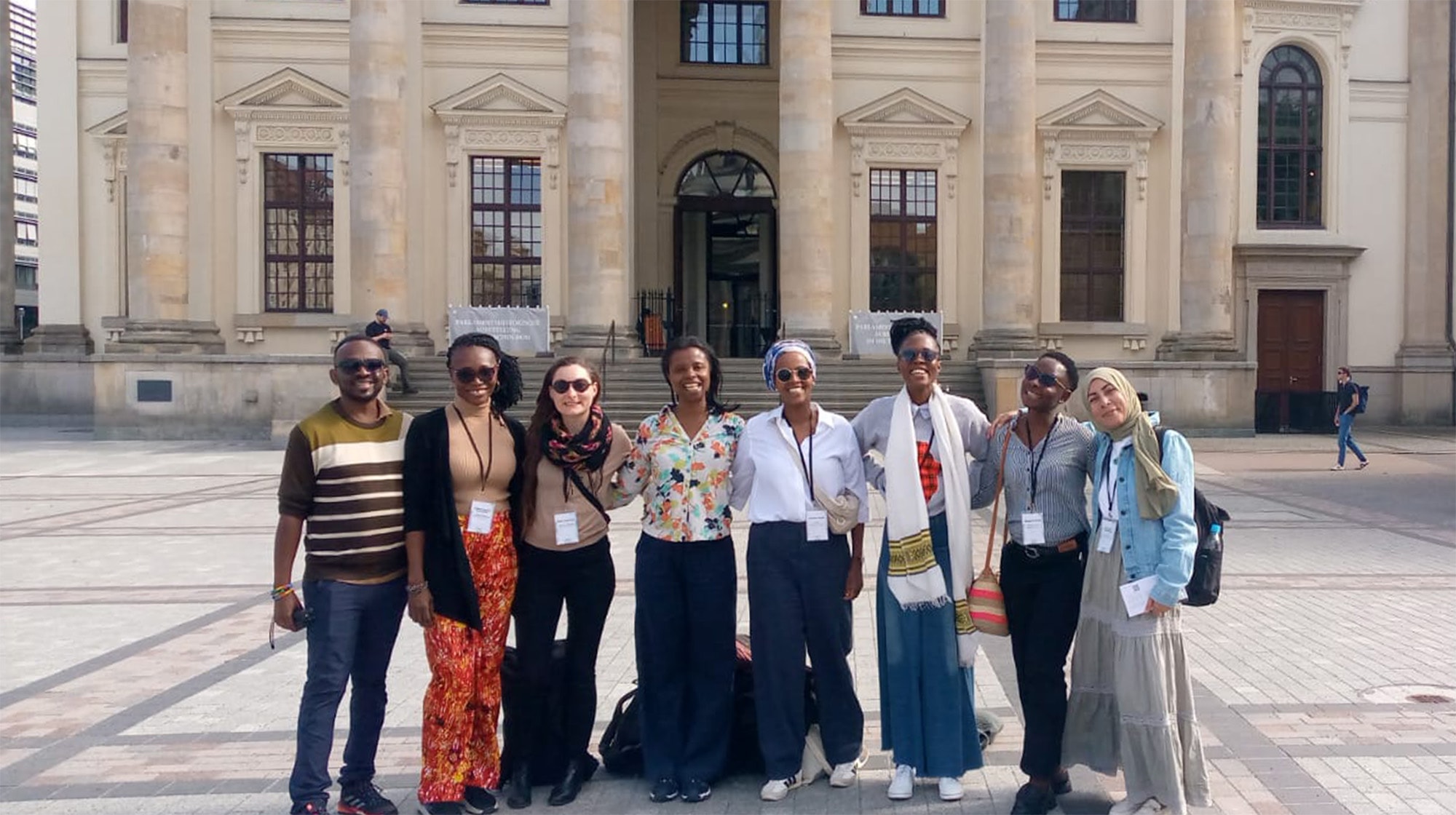
The 2026 cohort brings together 50 Fellows from 31 African and European countries, with experiences spanning curation, conservation, research, community engagement, restitution, digital innovation and other areas of museum and heritage practice. Our different experiences sometimes led us to see the same question differently. And that was precisely the value. Joint learning is not about arriving with the same answers. It is about creating enough space for our assumptions to be challenged and our perspectives expanded.
In that sense, the fellowship itself modelled something I value deeply in museum practice: knowledge does not only move from expert to audience. It can move horizontally, through relationships, lived experience and shared reflection. This has perhaps been one of the most important affirmations of my own commitment to community-centred practice.
From reflection to practice
The real test of any fellowship, however, begins after the formal programme ends.
What do we do with what we have learned?
For me, the answer increasingly lies in connecting reflection to practice. At Thimlich Ohinga World Heritage Site in Migori, Kenya, I am currently involved in a two-year project focused on intergenerational knowledge transfer, climate resilience and community empowerment. The project seeks to transfer indigenous drystone masonry knowledge to 48 local young people while strengthening their involvement in heritage conservation. But conservation is only one part of the ambition.
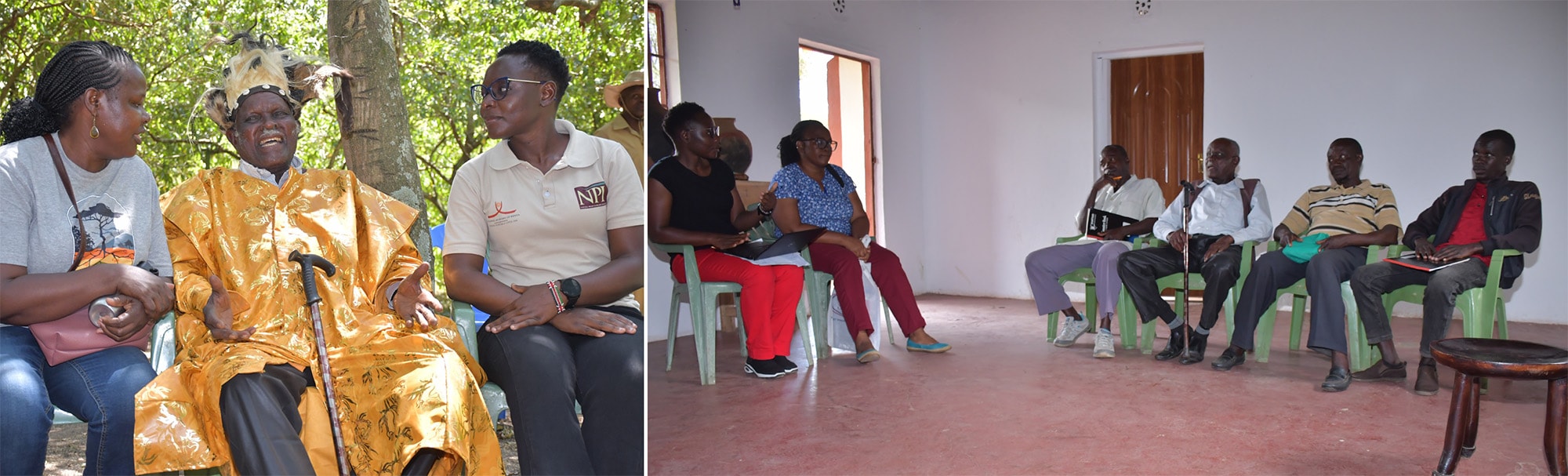
The project is also exploring how heritage can create opportunities for communities to participate as guides, storytellers, dancers, cultural practitioners and potentially, through other locally appropriate nature-based initiatives. Life skills and entrepreneurship form part of the training because I do not see heritage conservation and community development as separate conversations. For me, this is what community-centred heritage practice begins to look like in practice.
It means recognizing communities not simply as audiences or beneficiaries, but as knowledge holders, decision-makers, custodians, participants and potential beneficiaries of the heritage they help sustain. It also means acknowledging that community-centred practice is not always simple. It requires negotiation. It requires institutional flexibility. It requires resources, trust and long-term relationships. And it requires us to ask whether participation is genuinely redistributing opportunities and agency, or simply creating the appearance of inclusion.
These are questions I expect to explore further through an upcoming Heritage Management Organization training on Community and Economic Development in October, where I will continue thinking through the relationship between heritage, community participation and sustainable local development. The learning, in other words, continues.
The unexpected ripples
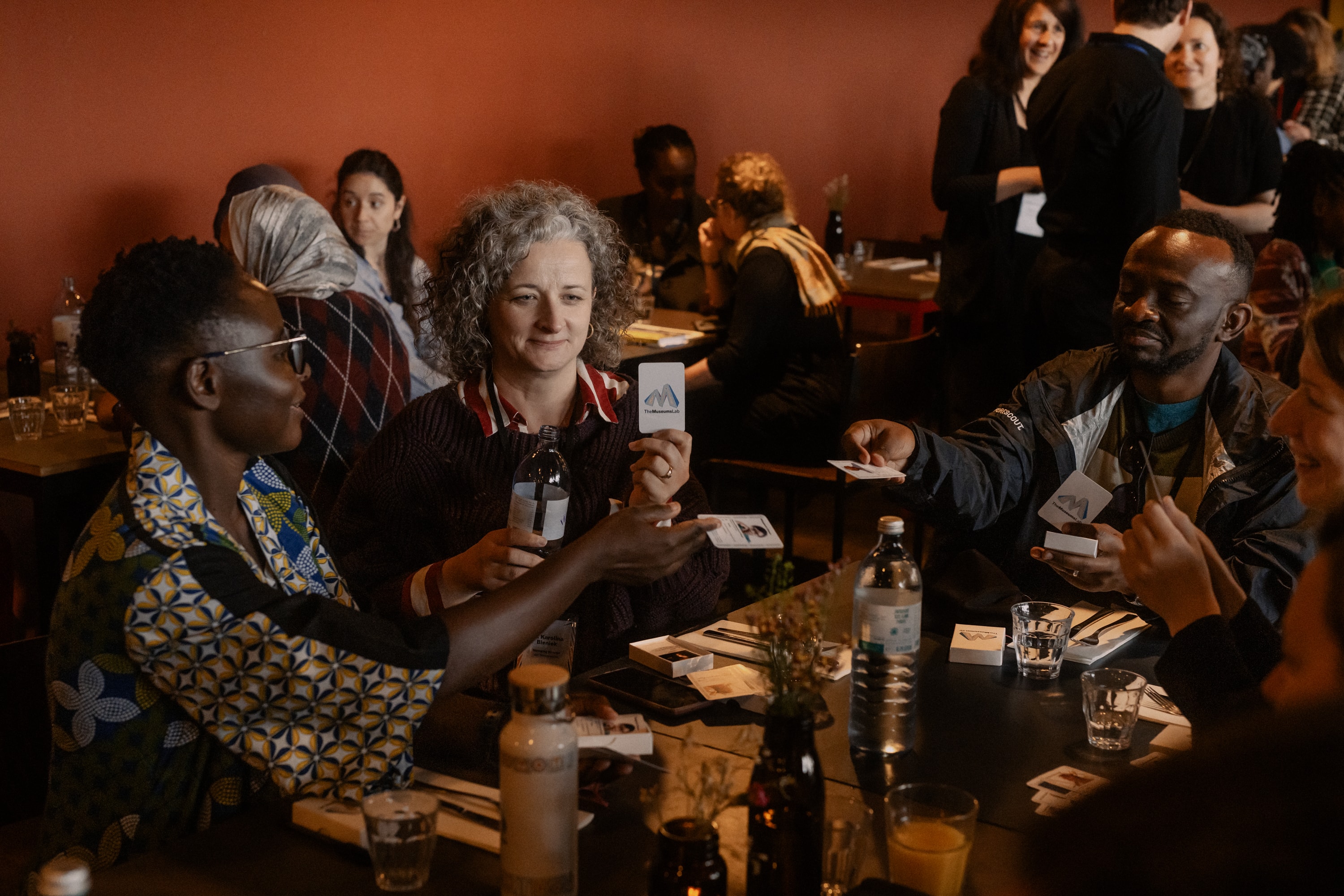
Perhaps one of the most beautiful aspects of TheMuseumsLab has been discovering that learning does not always produce immediate answers. Sometimes it produces relationships, questions and possibilities whose significance becomes visible only later. One such opportunity has been my selection as a Critical Friend for “Negotiating African Futures: An Exhibition Project,” a collaboration involving the University of Bonn and Futurium in Berlin. The role will give me an opportunity to contribute perspectives on representation, community-centred practice and African agency as the project develops.
I see this not simply as an additional professional opportunity, but as one of the unexpected ripples of the conversations and relationships cultivated through TheMuseumsLab. It is a reminder that meaningful networks are not simply about exchanging business cards or adding contacts. They can become spaces from which new forms of collaboration, learning and professional contribution emerge. And perhaps this is what makes the fellowship feel larger than its formal modules.
The journey, however, is far from over. This September, I look forward to extending these reflections through the fellowship residency at Juffureh Village Museum in The Gambia, where I hope to learn from a heritage context deeply rooted in community, memory and lived experience. I am particularly excited about the opportunity to explore how museums and heritage spaces can remain connected to the communities whose histories they hold, and how heritage can contribute to identity, dialogue and local development.
From Juffureh, the journey continues to Kigali, Rwanda, for Module 3, bringing together the cohort once again for another opportunity to learn, question, exchange and imagine together. If Berlin has taught me anything, it is that the most meaningful learning often continues beyond the formal programme—in the relationships we build, the questions we carry and the possibilities that emerge along the way.
Building futures from memory
As I look back on the journey from the online conversations of Module 1 through Module 2 in Berlin, I realize that I am carrying fewer easy answers—but better questions. Who gets to tell our stories? Who decides what is remembered?
Who has the authority to interpret heritage? Who owns the data when heritage becomes digital? Who is the museum really for? And what does it actually mean to put communities at the centre?
These questions are interconnected.
Whether heritage is encountered in a memorial, an exhibition gallery, an archive, a digital database, a historic site or a community, questions of voice, authority, access and belonging remain.
Perhaps that is why the theme Building Futures from Memory resonates so strongly with me. Memory is not only about looking backwards. The ways in which we remember, preserve, interpret and share heritage influence the futures that become possible. If museums decide what is worth remembering, they also influence whose experiences become visible. If museums determine whose knowledge is authoritative, they influence whose knowledge is carried forward. If museums create space for communities to participate meaningfully, they create possibilities for people to see themselves not only in the heritage being preserved, but in the futures being imagined.
For me, this is where the future of museums lies. Not simply in becoming more digital. Not simply in building bigger exhibitions. Not simply in attracting more visitors. But in becoming more relational, participatory, accountable and relevant to the communities whose histories they hold. TheMuseumsLab has reminded me that building such futures requires imagination, courage and, perhaps above all, a willingness to listen.
As I continue to do what I love best at the National Museums of Kenya, I carry with me the memories of Berlin, the questions of Module 1, the many conversations of Module 2 and the relationships that will continue beyond the fellowship. I carry practical questions and a determination to have museums as spaces of inclusivity, belonging, dialogue and care. Because perhaps the future of museums is not only about what institutions preserve. Perhaps it is also about who gets to shape what comes next. And perhaps building futures from memory begins with making space for people to see themselves—not only in the heritage we preserve, but in the futures we imagine together.
The Author
Margaret Otieno
Research Scientist
National Museums of Kenya
TheMuseumsLab Fellow 2026
Related Articles
A Week in Many Voices: Fellows Reflect on Module 2
Six days, many encounters: In a series of short clips, Fellows look back on Module 2 in Berlin and share the moments, thoughts, and conversations that stayed with them.
Read more
Museum of the Futures
On Remembering Forward: Archives as the Ground from Which Futures Grow — an essay by workshop facilitator Ouassima Laabich
Read more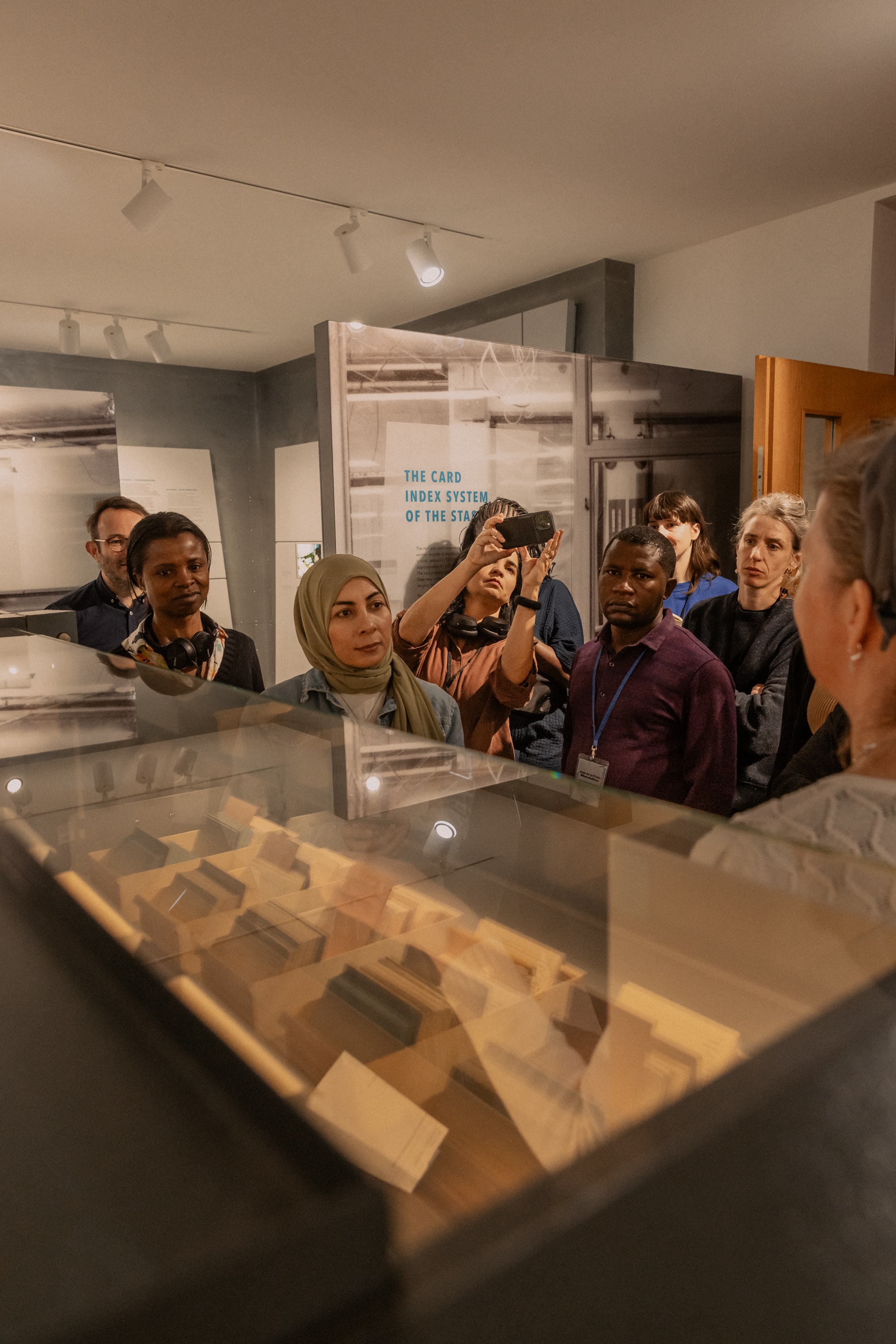
Who Is Missing from History? Museums cannot change the past, but they can change who becomes visible within it.
In her reflections on Module 2, Fellow Dr. Samar El Khamisy explores how museums preserve overlooked voices, confront difficult pasts, and shape public understanding.
Read more