Museum of the Futures
What if a museum could breathe?
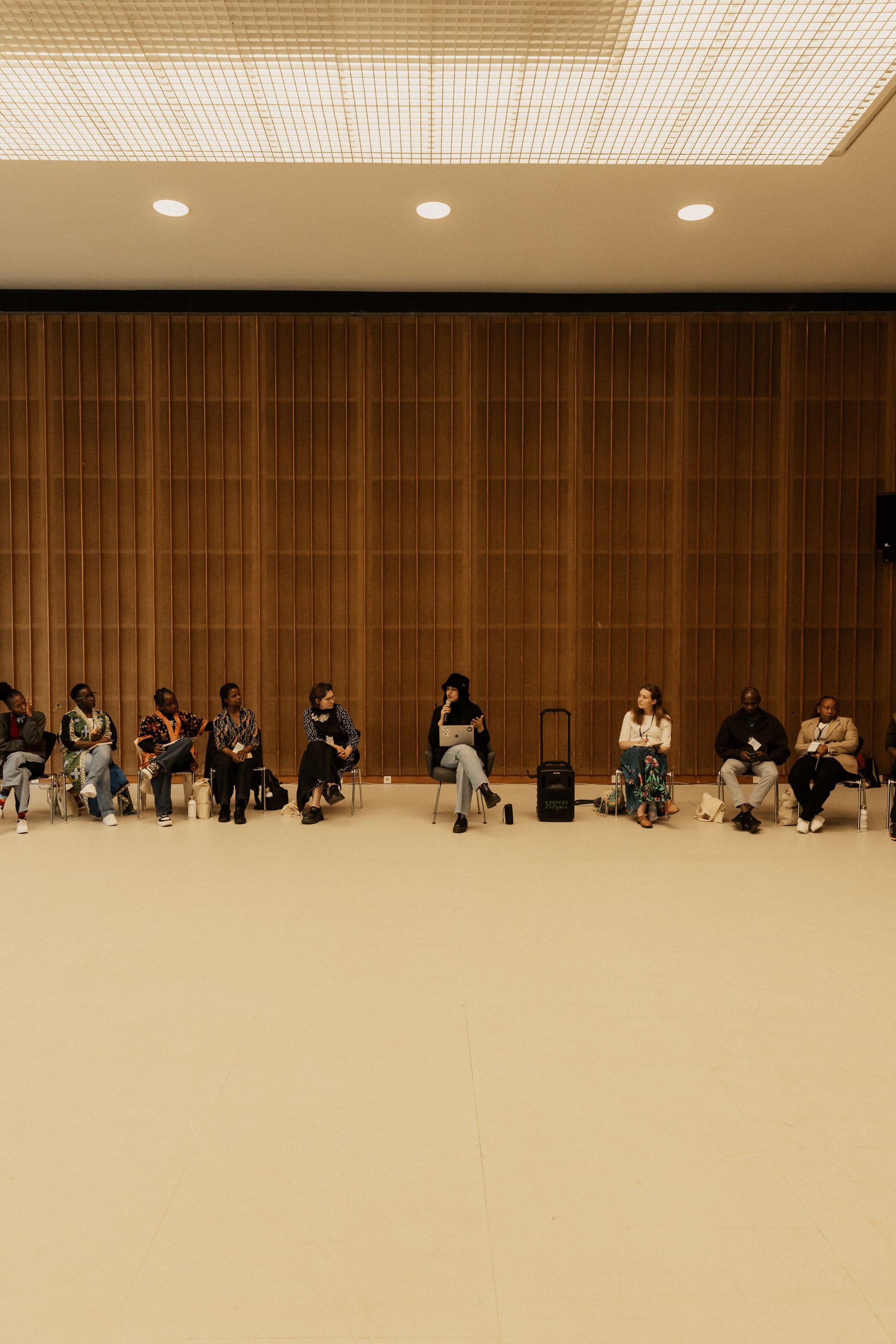
This was one of the first questions we sat with, in a room full of people who hold institutions in their hands every day. People who curate, who research, who fundraise, who repair, who write the texts that hang next to objects, who decide what enters and what stays out. I was invited to facilitate, but really I was there as a fellow traveller. We were going somewhere together, into a future that did not yet exist, and the only way to find it was to imagine it.
The invitation was simple, and deceptively so: what would a more just, more inclusive museum of the future look like? We let it become a felt, sensed, embodied vision. Something we could almost touch.
What unfolded was so much richer than I had hoped.
We began with the question of contradiction. Someone said it early: the future we long for is one that holds its complications openly. We do not want museums that pretend to have resolved their colonial pasts by adding a plaque. We do not want institutions that perform reconciliation while their storage rooms still hold what was stolen. The futures we imagined were full of cracks and frictions and unresolved tensions, and that was the point. Justice arrives bruised, complicated, alive.
This was, for me, one of the most important moves of the day. The political scientist Isabella Hermann has developed the concept of Anti-Dystopia, the idea that imagining better futures requires us to start inside the catastrophes we are actually living in, the climate crisis, social inequality, technological disruption, while refusing the fatalism that turns dystopia into a permanent mood. Anti-dystopia is the space between utopian fantasy and dystopian resignation. It allows for imperfection. It allows for grief and joy at the same table. It allows for the contradiction of a beautiful object that was also taken, of a healing institution that still has to apologise.
And then we arrived at the question: what is a museum if not a kind of archive?
In our work at SUPERRR Lab, Elisa Lindinger and I have been reflecting for some time on the politics of archiving. Archives are collections of things, of written, spoken or sung records, of seeds and fossils, of art and books and beauty, of the most terrible and the most wondrous of our histories. They are born of a desire to preserve, and to this end they freeze time. But here is what is often missed: archives speak as much of the present and the future as they do of the past. To archive knowledges and materials in the present leads to remembering in the futures. What we hold today shapes what becomes thinkable tomorrow.
The museum is one of the most powerful archives a society builds. And like every archive, it carries the imprint of those who made it. Historically, this imprint has been colonial. Ethnographic museums swelled with objects torn from their contexts, re-interpreted, re-classified, re-evaluated from a perspective that erased the knowledge it claimed to preserve. The museum, in its colonial form, was a machine of forgetting disguised as a practice of remembering.
A future museum, we imagined, would refuse that inheritance. It would understand archiving as a political act. It would ask, again and again: who is present in the making of this collection, and who is absent? What positionalities and situated knowledges shape what we hold and how we hold it?
The people doing the archiving, my mentor Prof. Fatima El-Tayeb has reminded me, become part of the archive. There is no neutral position. There is only the decision to make one's decisions visible.
And when communities decide to archive themselves, on their own terms, it becomes an act of resistance. A disruption of hegemonic memory cultures. A claiming of the power to decide what is worth remembering, and therefore what can grow forward into the future.
Then there was technology.
A future museum, we imagined, would use technology in service of life and learning. The cameras would not watch us. The algorithms would not predict our behaviour to sell us postcards. The digital infrastructures would belong to the institution and its communities, refusing the extractive logic of the platforms that have shaped so much of our digital lives. There would be space for sensing, for slowness, for the kind of attention that screens usually take from us.
The digital archive at the heart of such a museum would carry its own politics. Who designs the data structure? Who decides which tools to use? Who interprets the original sources, and on what basis? Whose work is paid, whose is volunteered, whose is outsourced and rendered invisible? Even something as seemingly mundane as the assignment of user roles, administrator, moderator, editor, user, carries a politics. It implies different levels of worthiness and power. A future museum would make these decisions transparent, and in doing so would model what it means to remember responsibly.
We talked about restitution. As a posture rather than a single event. A way of being in the world that asks, again and again: does this belong here? On whose terms is it held? And if we cannot return it tomorrow, what is the relationship of care, accountability, and contact that we owe in the meantime?
The objects in our imagined future museums had biographies. They were known. Where they came from, who held them, how they arrived, what they were used for, what was severed when they were taken, what is being repaired. The museum became a site of ongoing relationship. A place that holds, with its hands open.
And then, perhaps the most beautiful turn. We imagined museums as places where the body comes alive. And we imagined archives that were sensual.
Why should the act of archiving be silent and sterile, we asked. Why should a museum smell only of polished floors and air conditioning? When you hold an old magazine in your hands, how does it feel? Is there a particular smell connected to it? What stories arise from these sensory moments? A future museum, we said, would document not only its objects but the sensory relationships that emerge between materials and the people who tend them. Smell becomes part of the archive. Touch becomes part of the archive. The grandmother who taught you how to fold the cloth becomes part of the archive.
We let go of the image of hushed reverence and aching feet, of whispered voices in cold halls. We imagined museums you could move through with all your senses awake. Where children could touch, where elders could rest, where there were smells and tastes and textures, where memory lived not only behind glass but in the air, in the food, in the soundscape, in the floor beneath your bare feet if you wanted them bare.
A future museum, we said, is revitalising. It returns something to the bodies of those who enter, especially those bodies who have been told, in a thousand ways, that institutions like these were never built for them.
I want to be honest about something. Imagining felt difficult for some people in the room, at first. There were silences. Doubts. The pull of realism. The voice that says, yes but the budget, the trustees, the politics, the lack of staff.
I understand that voice. I respect it. The constraints are real. And yet, what kept emerging was the recognition that imagining is itself the first political act. If we do not allow ourselves to dream the museum we want, others will continue to design museums for us, around us, through us, without us. Saidiya Hartman has taught me that the policing of imagination is one of the most enduring forms of oppression. The voice that whispers be realistic is rarely just our own. It is often the voice of every closed door we have walked past.
Critical futures thinking offers us a useful concept here. The futures researcher Sohail Inayatullah speaks of used futures, futures that have been handed to us by others and that we run after without noticing they were never made for us in the first place. Ziauddin Sardar reminds us that our futures can be colonised long before they arrive. The hyper-technologised museum, the corporate-sponsored museum, the tourist-extracting museum, these are used futures. They have already been imagined for us. The work of this gathering, of any gathering like it, is to begin imagining otherwise.
This is, I believe, where the bond becomes visible.
Archives are not only behind us. They are the soil from which futures grow. Neuroscientists have shown that remembering and imagining activate the same neural networks. We imagine from what we have already lived, read, watched, felt, been told. The archive we feed today becomes the imagination we can call upon tomorrow. Which means that the question of what we preserve, what we honour, what we make accessible to future generations, is also the question of what they will be able to dream.
A museum, in this sense, is a future-machine. It does not only preserve. It permits. It shapes the field of what becomes thinkable. To remember forward is to understand archiving as an act of imagining, and imagining as an act of remembering. The two are bound to each other. Each gathering, each curation, each act of restitution, each digital decision, is also a gesture toward the kind of world that can be dreamed next.
What we created together that day was a constellation of longings. A set of textures, postures, refusals, openings. A first draft of an archive that does not yet exist, an archive of what could be.
I left the room feeling something I have come to recognise as a kind of quiet hope. The hope that says: we have started. We have begun to feel the shape of what we want. And that feeling, that embodied knowing, becomes part of our memory. The next time someone asks what a just museum might look like, we will have a sense of it. We will have something to begin from.
This is, I think, what museums of the futures will need most. People who have already, somewhere, in some room, allowed themselves to imagine. People who have felt the future in their bodies before it existed anywhere else. People who refuse to wait for permission to dream their institutions otherwise.
What if a museum could breathe?
It already does, in our imagination. The work now is to let it.
The Author
Ouassima Laabich
PhD Candidate, Futurist
Workshop Facilitator • Module 2 of TheMuseumsLab 2026