Designing Queer Memory: Access and Autonomy | CollabFund
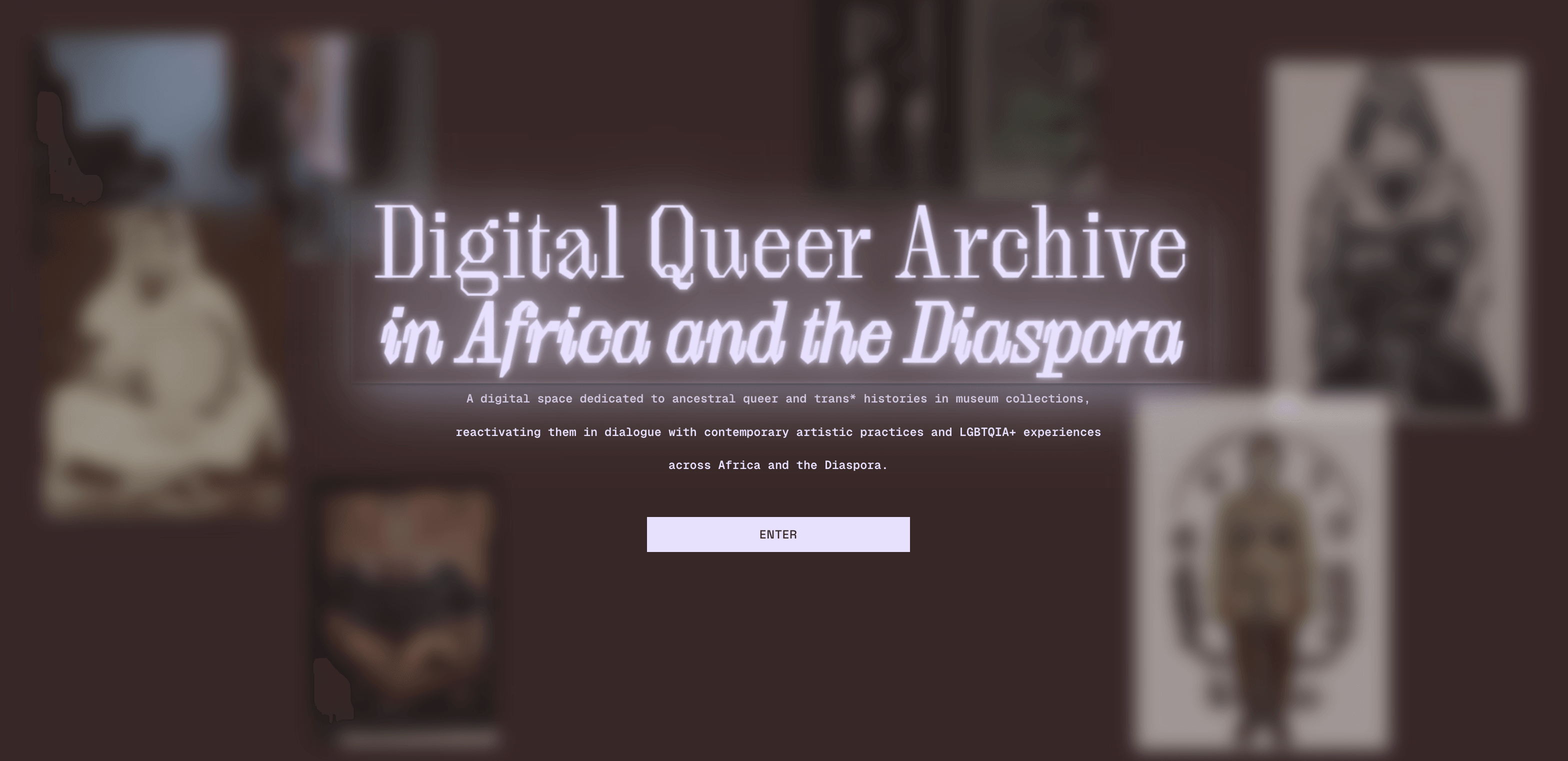
An insight into the CollabFund project Digital Queer Archive in Africa and the Diaspora by Zema and Noam Gramlich.
In a short Q&A session with project co-lead Noam Gramlich, Ethiopian artist and feminist technologist Zema reflects on the design process behind the Digital Queer Archive in Africa and the Diaspora. They discuss how design can make space for diverse queer voices without reducing them to fixed visual identities or stereotypes. Moving beyond conventional archival aesthetics, the conversation explores community participation, accessibility, digital security and autonomy, highlighting how designing a queer archive is not only about representation, but also about creating infrastructures that preserve and sustain queer memory and knowledge.
1. What drew you to this project?
A lot of my work as a feminist tech researcher and designer focuses on shifting marginal experiences with technology to the center focus. A great deal of my work in queer organising spaces has been to explore more authentic ways of presenting queer art, media and knowledge in ways that don't feel extractive or disconnected from its communities.
So, what drew me to this project was that it didn't seem that way. It wasn't necessarily about mining communities for stories to present a particular narrative, but rather about working alongside communities, where contributors were actively involved in the process and able to present the work they wanted to submit.
2. What was your approach to designing the website?
My approach to designing the homepage has largely been informed by questions of accessibility, usability, and how information can be presented as clearly as possible. From the beginning, I wanted to think about how people would encounter and navigate the archive, what information they would need, and how that information could be organized in a way that felt intuitive.
An important part of this process has also been considering the different contexts in which people might access the website, particularly the regional challenges around internet connectivity, varying network speeds, and cybersecurity. I wanted to ensure that the archive would be relatively lightweight, load efficiently, and remain accessible to people using different devices and internet connections.
3. How do you develop a visual language that reflects the diversity of queer experiences across Africa and the diaspora without relying on stereotypes?
When starting this project I understood what the archive needed to be and what it shouldn’t. I see the archive's visual language as a kind of framework that allows the contributions to exist alongside one another while maintaining its distinct presence. The contributions come from different people, with different perspectives and different mediums, and I wanted the design to be flexible enough to accommodate that diversity.
The intention was to create something visually coherent but also restrained, where the design facilitates access to the material: the contributions should always remain at the center of the experience.
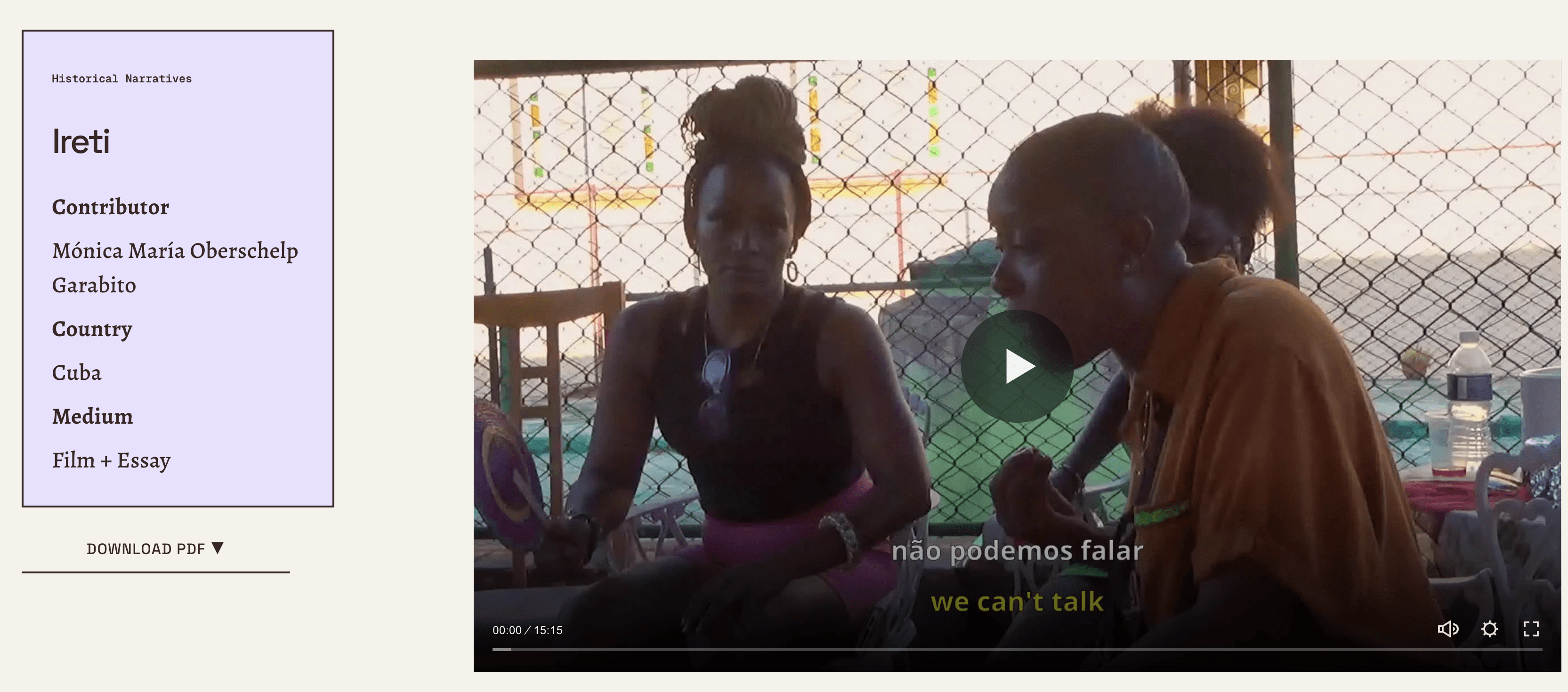
We decided to take a more typography-led approach because we didn't want to create a visual identity that tried to define what it means to be queer and African. There isn't one central visual language that can represent an entire continent, especially considering the diversity of experiences, cultures, and identities within it. We wanted to avoid reducing that complexity to a particular aesthetic or set of symbols. Instead, we chose a simpler, more typographic visual language that allows space for these different identities and experiences to exist without trying to visually define them.
4. How can graphic design challenge traditional ideas of what an archive should look like?
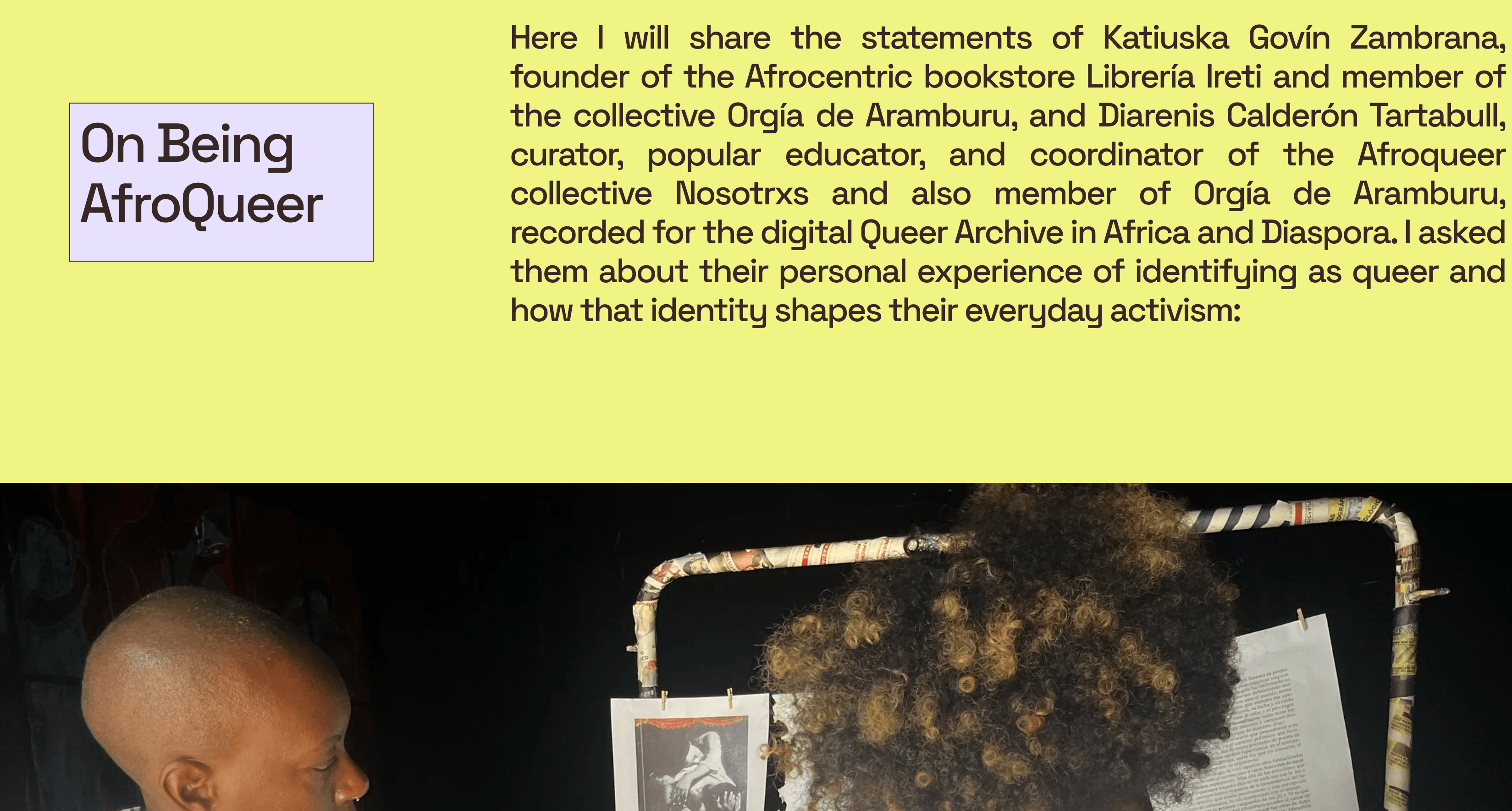
Rather than approaching the archive through conventional archival aesthetics, our design decisions are primarily informed by questions of functionality, legibility, usability, and accessibility. We are concerned with how different users encounter and navigate the archive, and how its structure can accommodate diverse accessibility needs, mobility requirements, devices, and internet conditions. This also involves considering loading speeds, data security, and the technical infrastructure necessary to sustain the archive over time.
Using a [dot]africa domain is very much a political decision to firmly ground this archive as being a part of Africa's native digital infrastructures. But at the same time, the use of a [dot]africa domain requires us to think even deeper about security and long-term access to the archive. Given the potential risks of censorship, domain suspension, or external interference, we are considering safeguards that can protect the archive's continued existence and accessibility. These considerations extend to our choice of digital platforms and service providers. For example, our decision to register domains through an ethical provider like Greenhost reflects a commitment to data protection, transparent and non-predatory pricing.
To put it simply, accessibility is not simply a question of interface design, but also of digital autonomy, infrastructural resilience, and the long-term preservation of queer histories and knowledge.
The Authors
Zema
Designer
Noam Gramlich
Co-Project Lead
TheMuseumsLab Alum
The initiative TheMuseumsLab CollabFund is funded by the Kulturstiftung des Bundes (German Federal Cultural Foundation).

Related Articles
Building a Queer Digital Archive: First Steps | CollabFund
The Queer Digital Archive Project moves into its next phase, working with selected contributors, a designer, and museum partners to develop a digital space for queer histories, identities, and cultural narratives across Africa and the African diaspora.
Read more
Collage for Care: A Methodological, Intentional, CareFULL, Weaving of Perspectives across Africa and Europe | CollabFund
In a joint reflection, Mutanu Kyany’a and Lena Stammarnäs share how they brought together twenty voices from Africa and Europe to explore care in museum practice.
Read more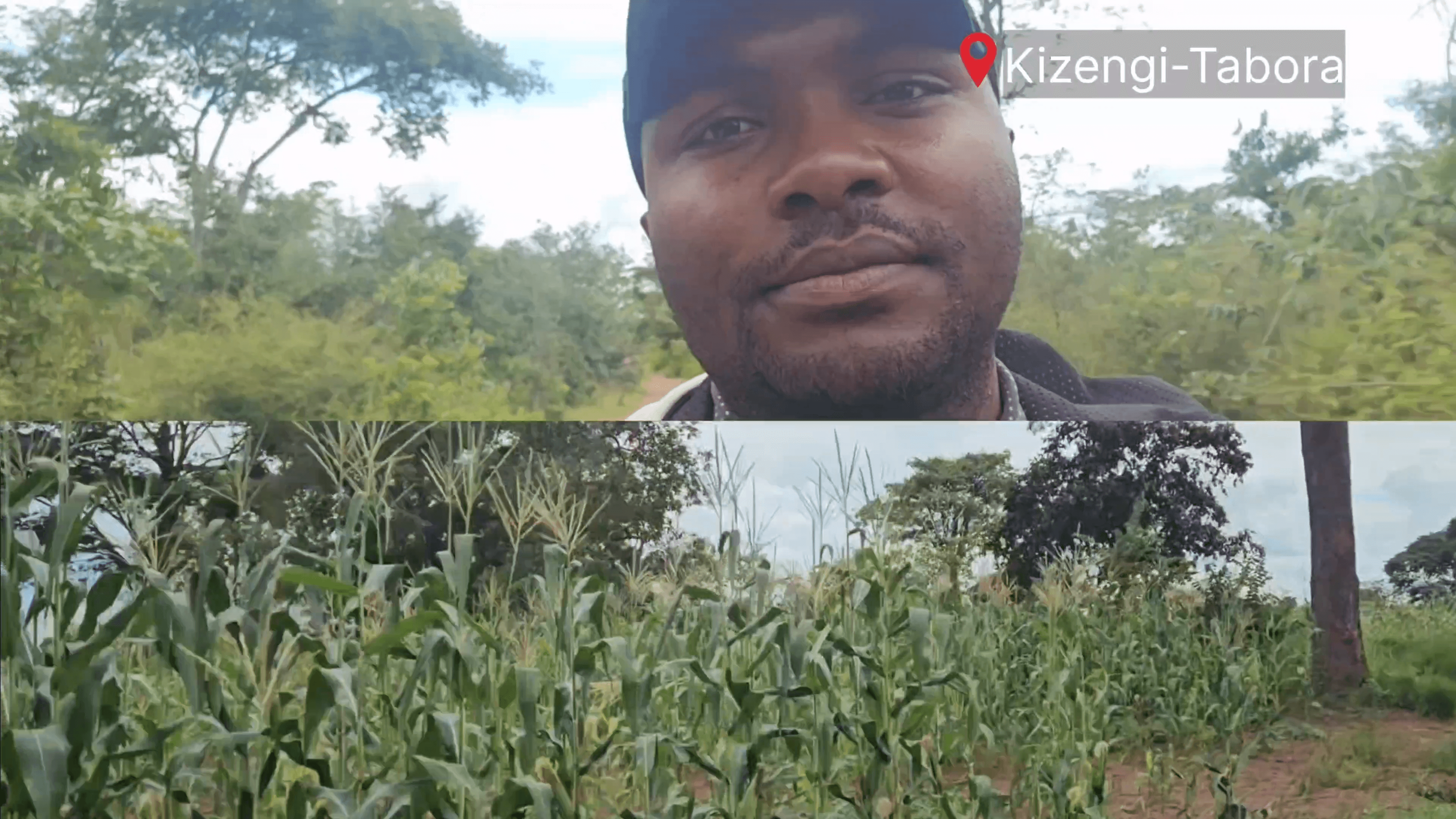
Community Collaboration and Provenance Research in Tanzania | CollabFund
A video insight by Eliabu Mbonimpa on a field journey through Tanzania retraces the routes of Slovenian collector Stanko Grom. Through conversations with local communities, museum professionals, and artists, the project Tracing Colonialism opens new perspectives on the collection and its contemporary relevance.
Read more