Tracing Aquatic Ecologies in the Okavango Delta | CollabFund
An insight into the CollabFund project Digital Archive Footprints by Atang L.S. Arnold
Since the beginning of our research project, we have held bi-weekly meetings, which have been instrumental in strengthening team communication and ensuring steady progress. These consistent engagements have allowed us to remain aligned, share insights, and refine our research direction collaboratively.
So far, I have had the opportunity to review collections shared by our collaborators. Through this process, I observed that Botswana has limited archival material within German institutions. However, the few records I have accessed have been valuable in helping me narrow and define the scope of my research.
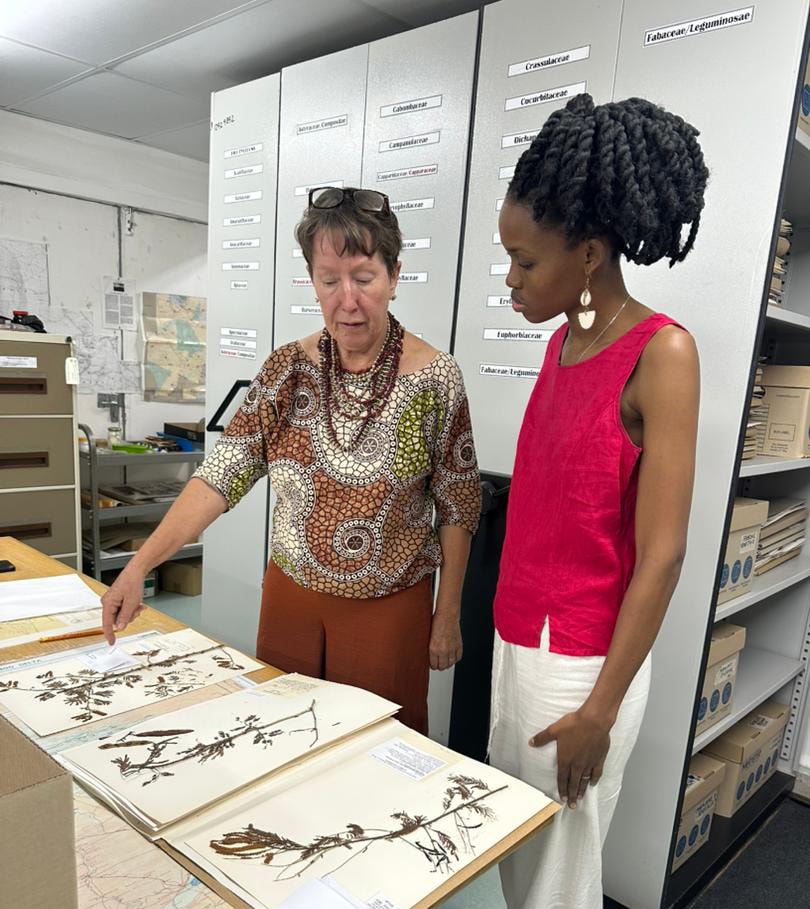
Now three months into the project, I have also conducted field-based research at the University of Botswana – Okavango Research Institute (ORI) in Maun. During this time, I have been working closely with a botanist while exploring the herbarium archives and collecting relevant data to support our study.
Water remains the central thread throughout my research. In the context of the Okavango Delta, water is not only a resource but the lifeline of the entire ecosystem—shaping biodiversity, sustaining plant and animal life, and determining patterns of survival and adaptation. It is a continuous conversation within my work, informing both the ecological and cultural dimensions of the study.
As part of this focus, I am exploring the Thamalakane River and the Boro River as key channels within the Delta system. These waterways serve as critical sites for observing water levels, seasonal changes, and their direct impact on plant species and overall ecosystem resilience. Through this, I aim to better understand how fluctuations in water availability influence species survival and the broader environmental balance.
My specific area of interest is centered on aquatic plants, particularly water lilies, which exist in different regional variants across the Delta. These plants are not only ecologically significant but also serve as indicators of water health and environmental change. Alongside this, I am also studying freshwater snails (scientifically referred to as gastropods), which further contribute to understanding aquatic ecosystem conditions.
Our research is still ongoing, with a broad focus on plant species and mammals, while my work continues to trace the interconnected relationship between water, plant life, and survival within the Delta.
The Author
Atang L.S. Arnold
Lead Researcher
TheMuseumsLab Alumna
This initiative is funded by the Kulturstiftung des Bundes (German Federal Cultural Foundation).
