From Remote Preparation to Meeting in Person: Digital Archive Footprints | CollabFund
An insight into the CollabFund project Digital Archive Footprints by Billy Fowo, Karolin Heinle, and Melissa Niyonkuru.
Before arriving in Berlin, Billy travelled to Limbe, Cameroon, to conduct field research at the Limbe Botanical Garden, tracing colonial-era records and reconnecting with local knowledge-holders. When we finally met, we were stepping into a densely packed week: museum visits, collection tours, a digitisation workshop, roundtable discussions, and an exhibition opening brought us into contact with many different people, institutions, and perspectives.
In the following reflections, three members of the team focus on one aspect that stayed with us and raised questions we are exploring.
Billy Fowo (Savvy Contemporary):
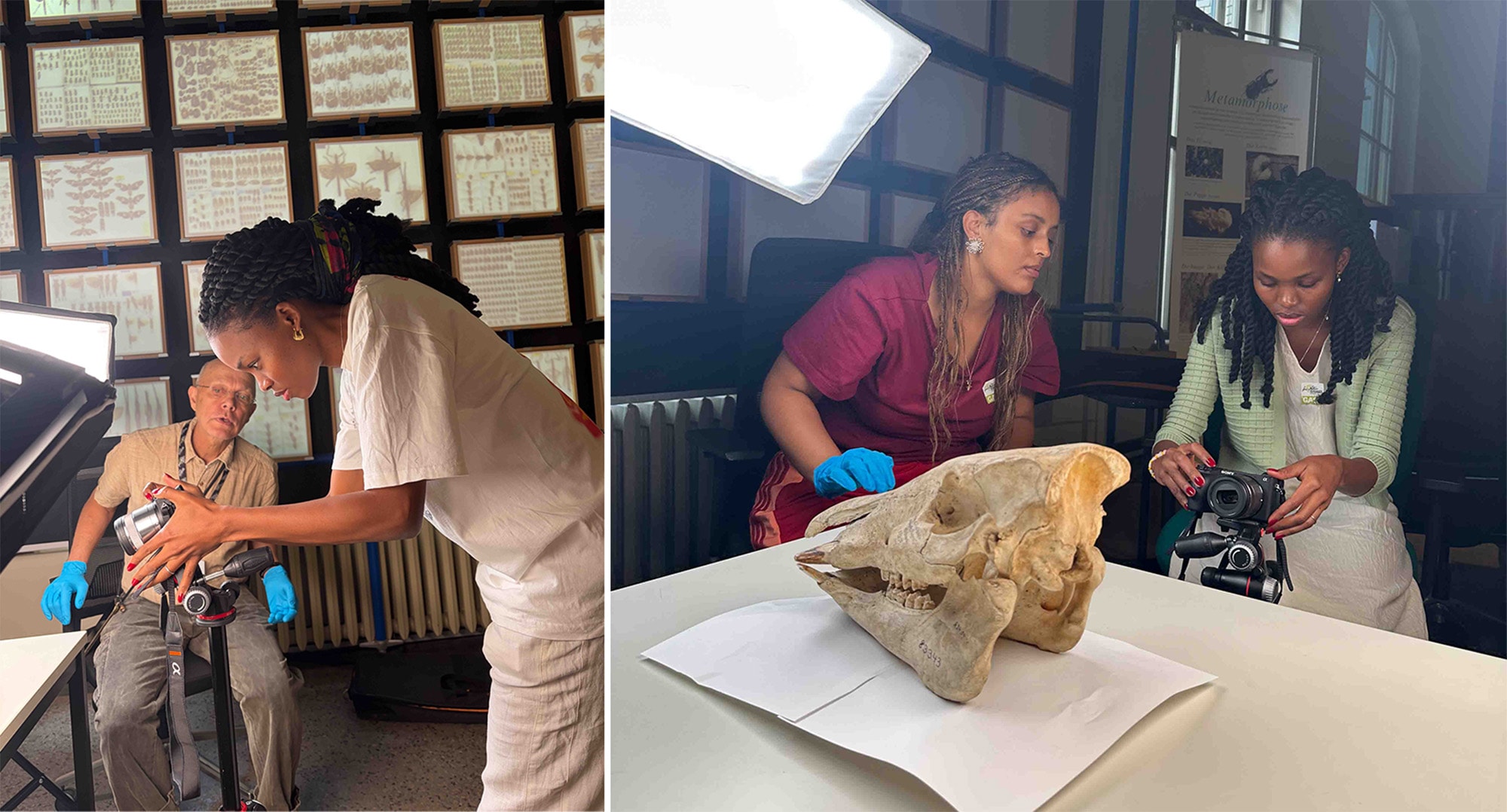
My trip to Limbe was one realised with a huge feeling of anticipation. For some time now, I had been interested in the history of this coastal city located on the shores of the Atlantic, and most particularly in the fact that it still harboured colonial vestiges, notably the Limbe Botanical Garden. Beyond the fact that it was one of the few existing botanical gardens in Cameroon, it turns out that the Limbe Botanical Garden was one of the first institutions created by the Germans in 1892 — when the city was still named Victoria under German colonial rule — and to date it remained one of the few functioning botanical research institutions. Arriving there was therefore making a step closer to the material traces of that history. My aim was to encounter archives, photographs, plant records, correspondence, maps, and other documents that might allow me to reconstruct the Garden's past from the place where that history had unfolded.But once I began looking, I encountered an unexpected absence. The Garden was there, but much of the material I needed for my research was not. Conversations with the Botanical Garden director and one of the conservators quickly made me aware of the fact that much of what I was looking for was now scattered across the whole world, particularly in the West. Indeed, from being a German colony to later being placed under British and French protectorate after World War One and until Independence in 1960, Cameroon, similar to several other African countries, had paid the price of successive occupations by Western powers and on a tangible level, that meant working in certain instances with the complete lack of material culture.
The question then was: how does one navigate this absence — or even better, how does one start to reconstruct these fragmented pieces in order to get the bigger picture? It is in that vein that a return to source communities and homegrown solutions became the only obvious answer, because absence or fragmentation was not equal to non-existence. Through a project done two years ago with SAVVY Contemporary, I was able to reconnect with a group of botanists, farmers, researchers and students whose core agenda was exactly to challenge this idea of non-existence. Foregrounding practices that connect the human to nature, this group had initiated an integrated farming and gardening project that in its essence fostered the creation, dissemination and preservation of local knowledge systems.
By the end of my research trip to Limbe, it was quite obvious that the work ahead was non-exhaustive and that the only way forward was to ensure cross-disciplinary dialogue and a fair share of resources. What I mean by resources is the financial means put into place to facilitate mobility, access to collections, and digitisation efforts, but most importantly the exchange of know-how on a horizontal level such that both academic and non-academic knowledge can co-exist and inform each other for the advancement of research.
Karolin Heinle (MfN)
My role in preparing the week was to make the collections accessible to the others: researching possible objects, compiling lists from the collection databases, and sharing them with the group so they could select what they wanted to work with.
The lists were rather dry and not particularly illustrative — there were no images, just names, places and other bits of information. But they did provide a first overview of collections that have already been catalogued. And they revealed interesting differences: there is a lot of material relating to Cameroon, for example, while little or nothing appears for Botswana. But what about collections that have not yet been digitally catalogued? There, finding relevant objects becomes much more difficult.
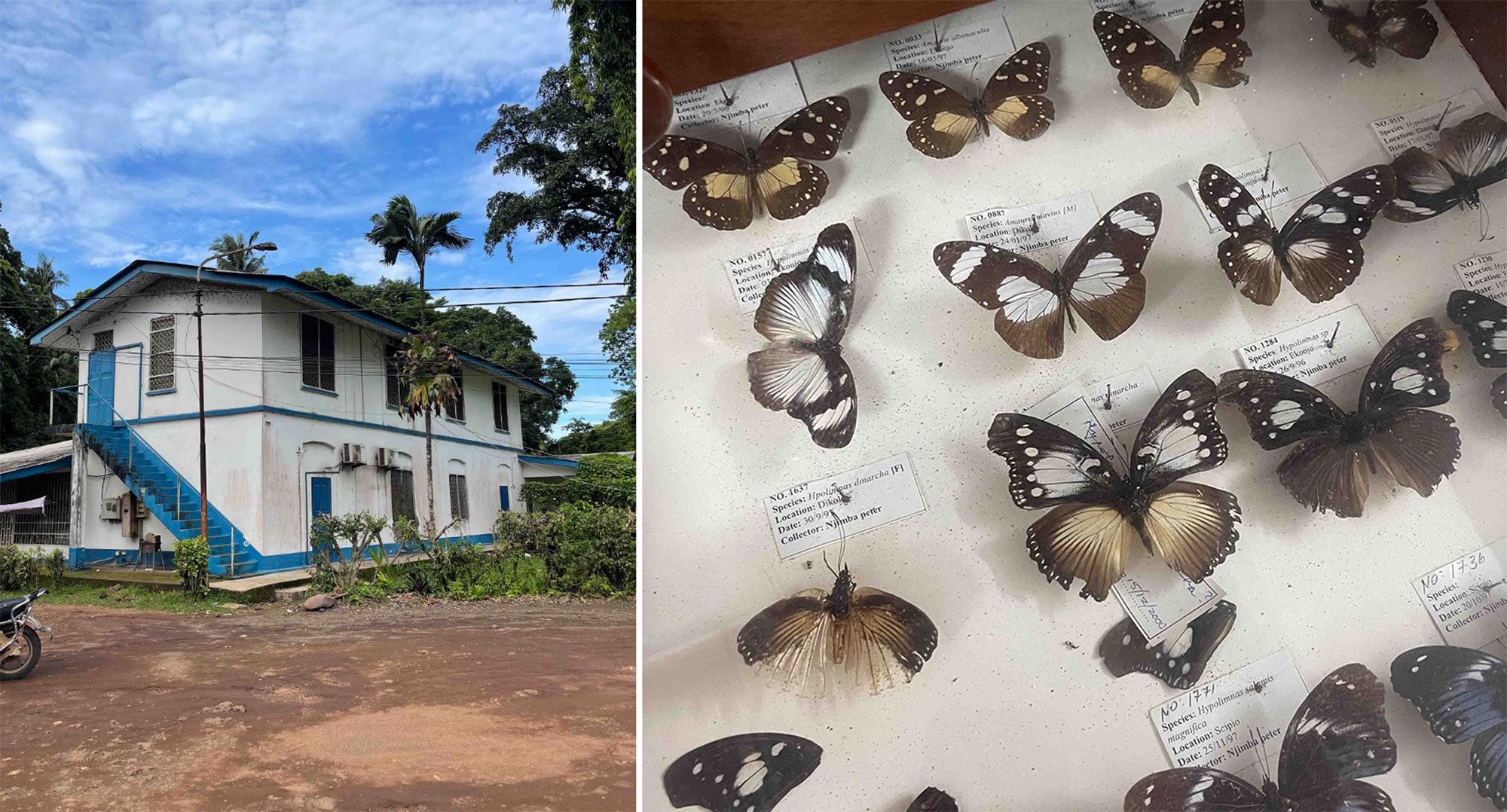
The museum is currently undergoing renovation, which makes physical access more complicated as well. And the collection managers, who know the collections best, have limited time and our request is one of many. Even when we suspect that relevant objects might be there, finding them can require a great deal of time and detailed knowledge. We may well have butterflies from Rwanda in the collection, for example, but to find them, we would need to look at the labels pinned alongside the specimens. In some butterfly drawers, this could mean removing every specimen just to make the labels visible.
At the same time, this is what made the database lists so intriguing to me. They are only a starting point, but they raise questions about what might be hidden behind the entries — and make you want to see the objects, read their labels and search the archives for the stories connected to them.
Melissa Niyonkuru (Milele Museum)
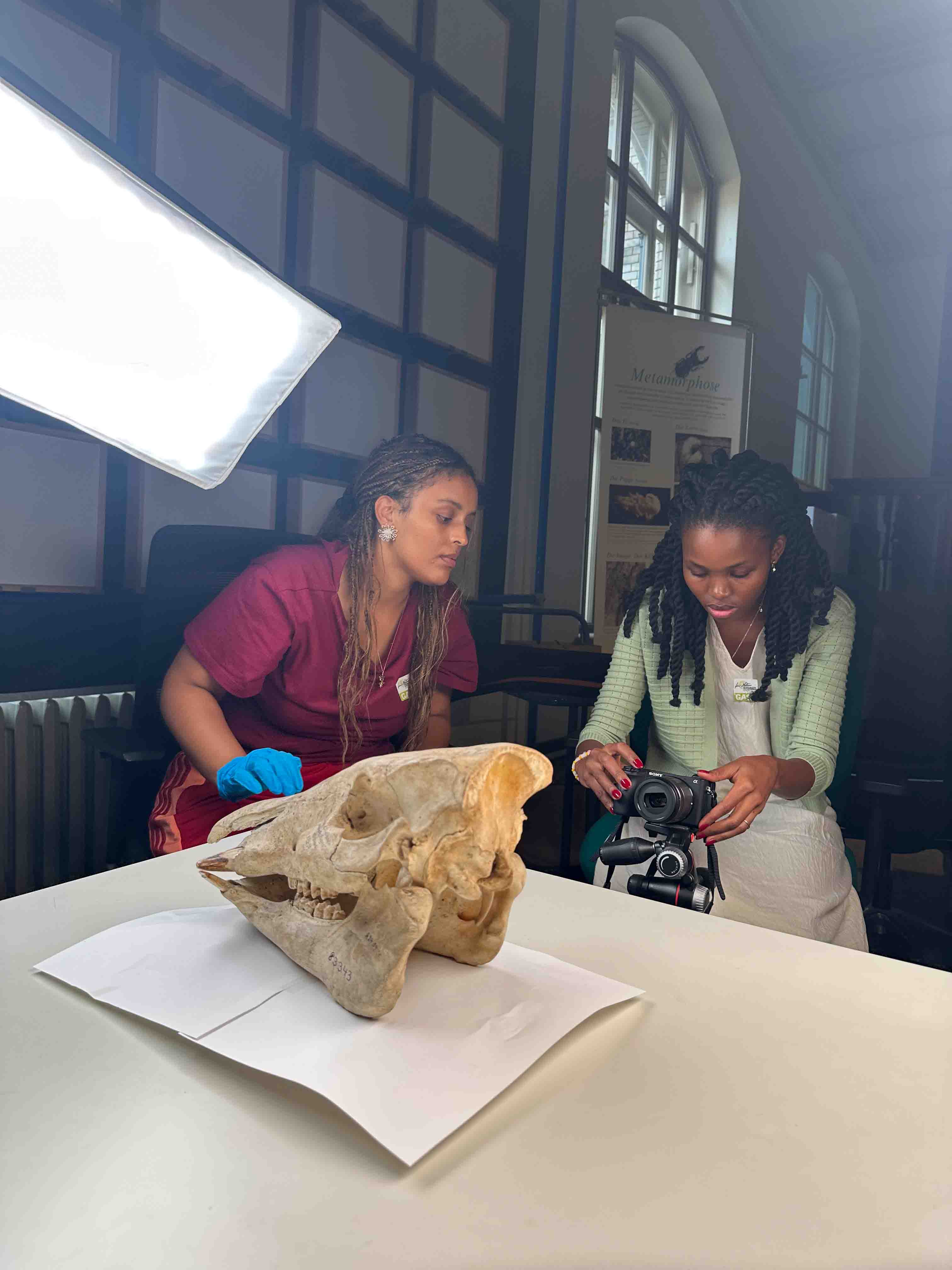
Finally, after weeks of check-ins through a screen, we got to see each other in person and to see, touch, and experience the collection we had only encountered through spreadsheets until now. When we founded Milele Museum in 2021, this kind of exchange was always part of the vision. Restitution is a process where, I believe, the most crucial aspect is the connections made between communities of origin. Africa holds diverse histories and stories, but walking through a mammal collection, I couldn't help noticing the similarities. You could look at a hundred different types of taurus and find two that are nearly identical, only to discover they come from different countries. And because you recognise one from your own, you begin to imagine: what region was it from? What did that landscape look like at the time? And, inevitably, I found myself wondering whether it was truly necessary, for scientific reasons, to bring all of this into one place. These were the questions I sat with as I moved through the halls.
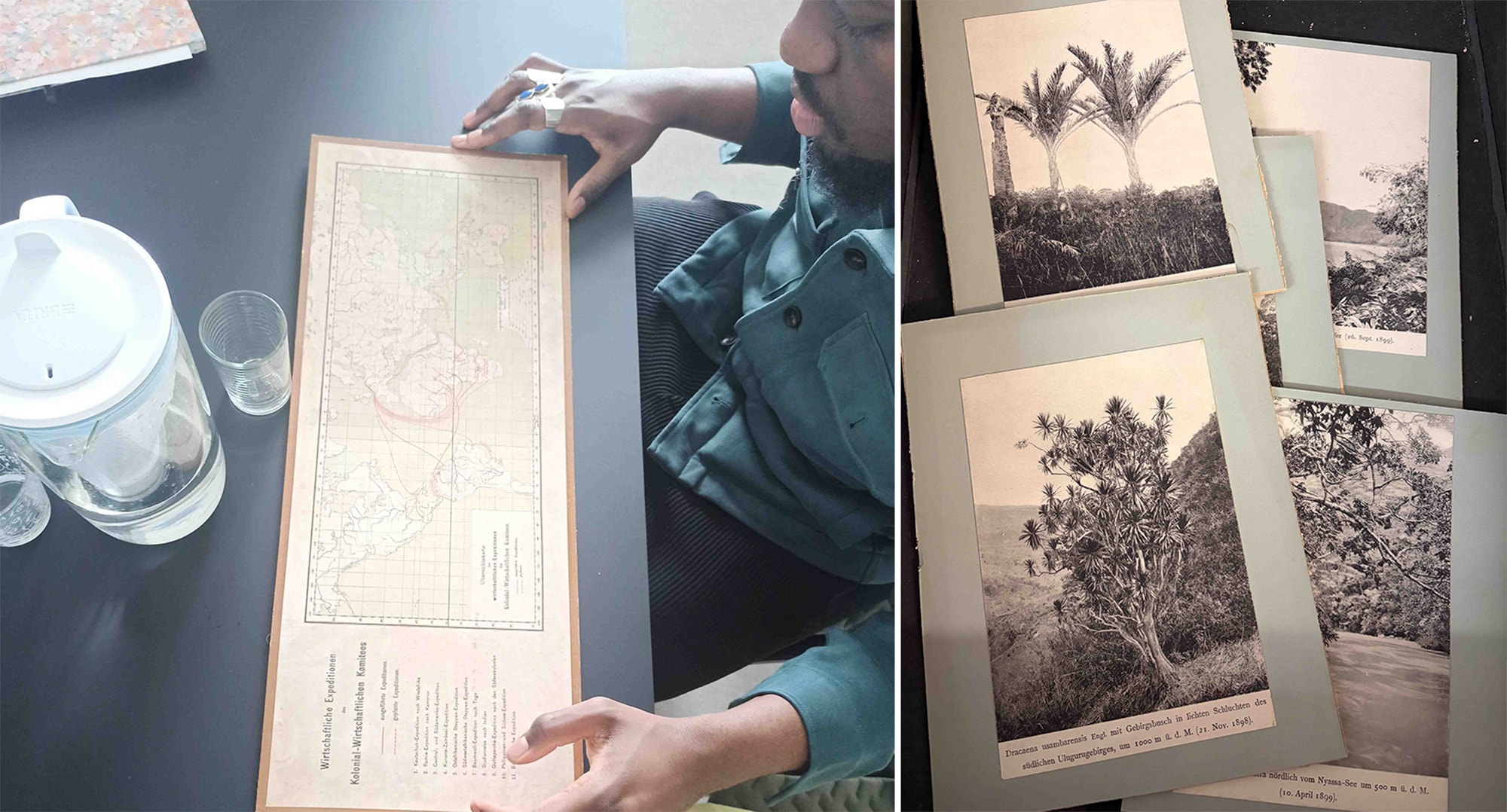
Beyond the mammal collection, we had the opportunity to visit the Botanical Garden, which is currently under renovation. Even so, we were honoured to receive a tour of the archives, moving through records from our respective countries, sharing with each other what we recognised, what felt familiar, and what remained distant. It is a particular kind of feeling to have that exchange, and one I would love for anyone who wants to connect with their heritage to experience.
The technical side of the trip was equally significant for the next phase of the Milele Virtual Museum. My own prior experience with 3D scanning had been limited to mobile applications like Polycam. During the workshop we explored Polycam alongside other tools, comparing quality and ease of use, and also spent time working with more advanced, high-end software, which was new territory for all of us. What I valued most was being able to go through each step ourselves. A central part of this project is sharing what we learn back with our communities, working within the resources and infrastructure we each have access to. Experiencing the gap between a mobile app and professional-grade equipment firsthand gave me something concrete to bring back, and I am looking forward to letting others move through that same discovery as we work together toward digital storytelling and community ownership.To close our time in Berlin, we had the opportunity to lead a roundtable discussion at TheMuseumsLab Forum, sharing our progress and opening the floor to thoughts and perspectives from colleagues across the network on how they navigate sensitive and geographically distant heritage within their own fields.
The Authors
Billy Fowo
Project lead
TheMuseumsLab Alumnus
Karolin Heinle
Project lead
Cooperation Partner
Melissa Niyonkuru
Project lead
TheMuseumsLab Alumna
The initiative TheMuseumsLab CollabFund is funded by the Kulturstiftung des Bundes (German Federal Cultural Foundation).
