Who Is Missing from History? Museums cannot change the past, but they can change who becomes visible within it.
"They helped liberate Paris. But when the victory was celebrated, they were no longer welcome."
"They were asked to hand over their uniforms to white French soldiers... somehow whitening history."
These two sentences stayed with me long after I left my first visit of Module 2 at the Tirailleurs: Trials and Tribulations exhibition at Haus der Kulturen der Welt (HKW) in Berlin.
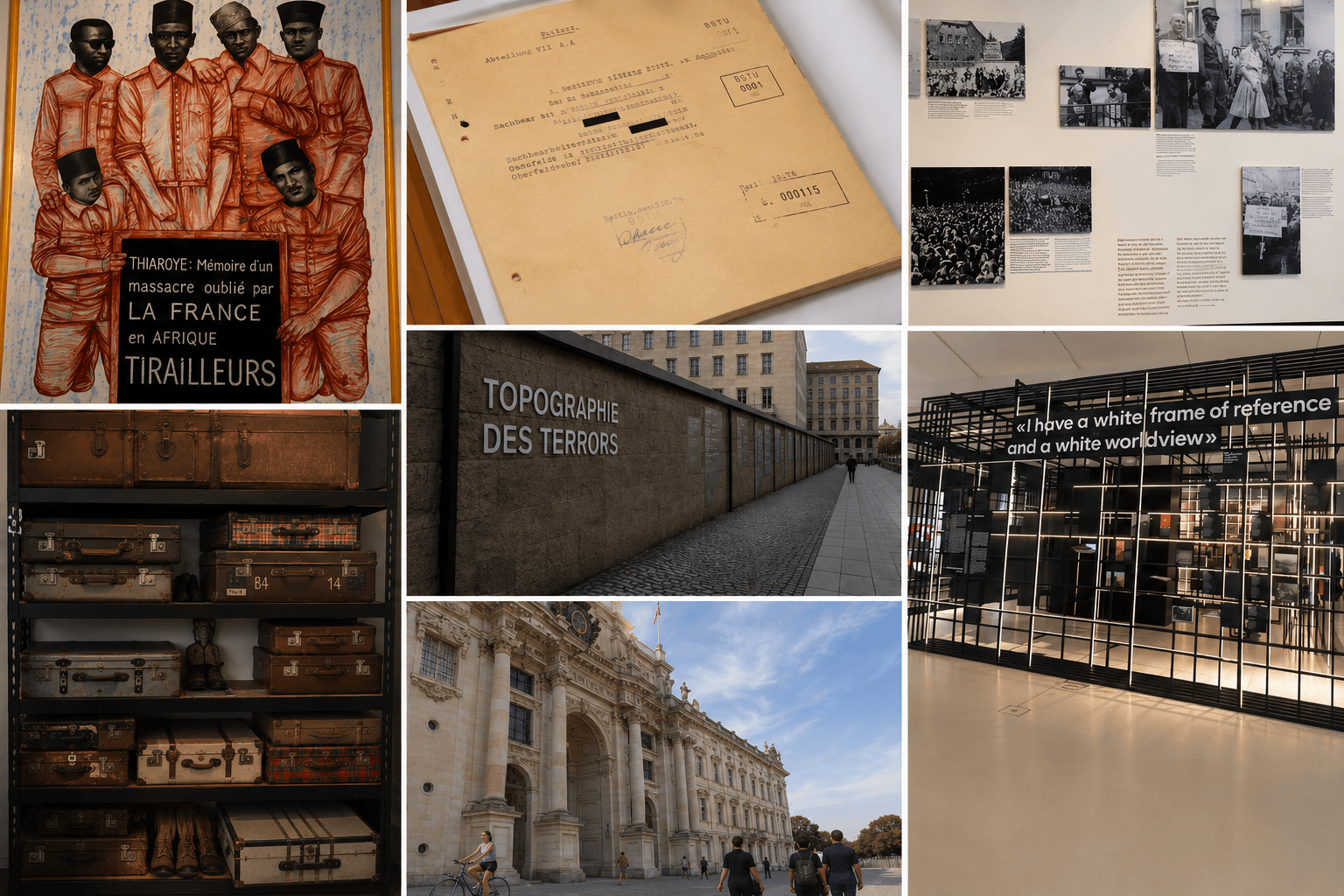
On the first day of Module 2, we visited Tirailleurs: Trials and Tribulations, curated by Paz Guevara at HKW. Rather than telling a familiar story of the Second World War, the exhibition invited us to see history through the experiences of the African Tirailleurs, soldiers who fought for France, helped liberate Europe, yet were gradually erased from the narratives that followed.
One story, in particular, stayed with me. A former schoolteacher joined the war hoping that his service would one day give his children the education he had always dreamed of providing. Like many African Tirailleurs, he believed that the end of the war would finally bring dignity, recognition, and the wages he had earned. Instead, the Thiaroye Massacre became a symbol of betrayal.
For decades, the full story remained buried beneath incomplete archives and official narratives.
Only when hidden archival documents resurfaced did the massacre begin to receive the historical attention it deserved. At that moment, I realized that archives are not simply collections of documents. They can restore memory, reveal the truth, and open the door to accountability.
As I left the exhibition, I realized that the question was no longer about forgotten soldiers. It had become a much larger question, one that would accompany me throughout the rest of the week:
Who is missing from history?
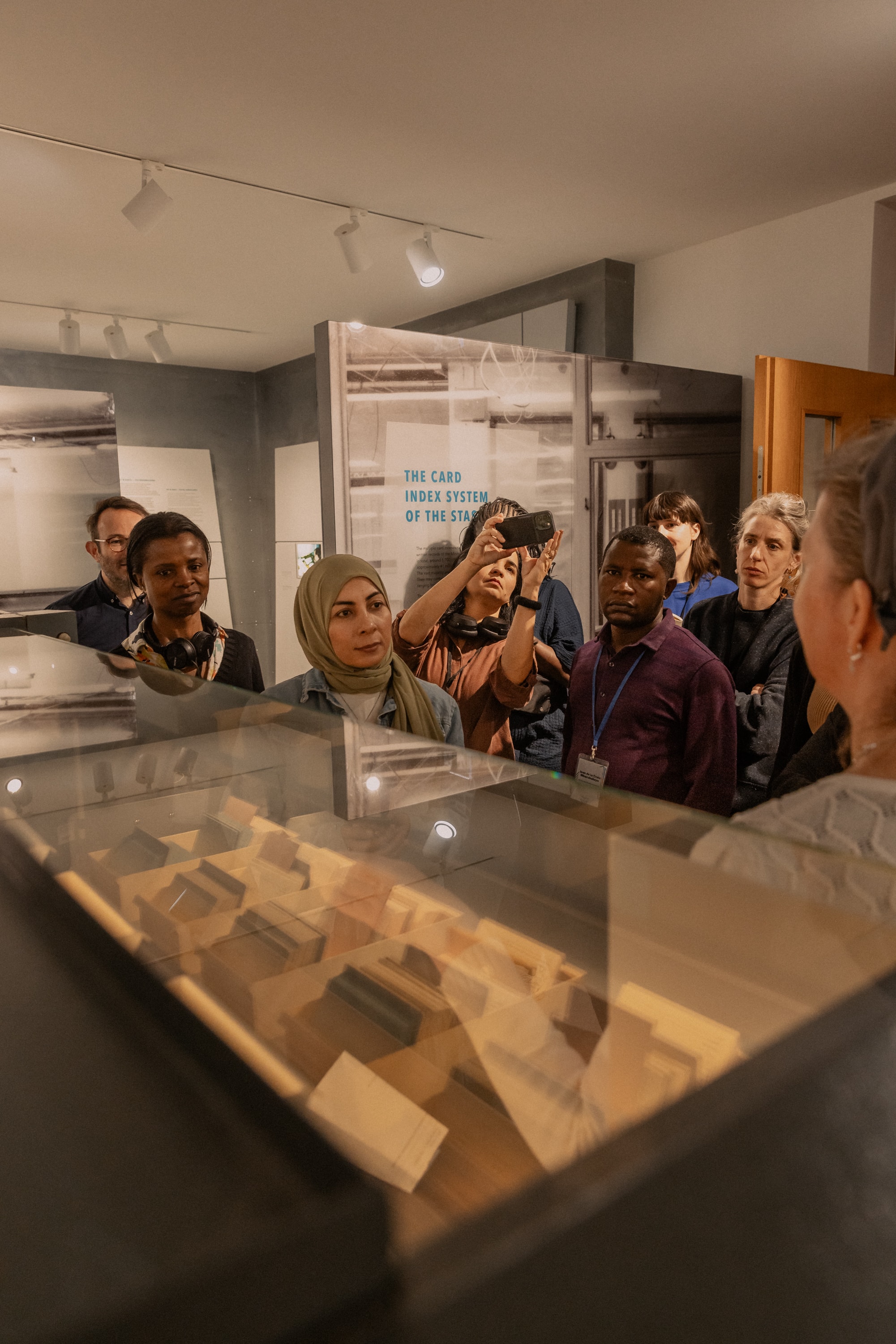
The following day, another place offered a different perspective on memory. At the Stasi Records Archive, I discovered that remembering is not only about uncovering forgotten stories. Sometimes, it is about allowing people to finally read the stories that had been written about their own lives.
Unlike the hidden archives of the Tirailleurs exhibition, these archives were preserved, protected, and eventually opened after German reunification. What was once created to monitor, control, and silence citizens has become one of Germany's most powerful tools for confronting its past.
During the visit, one sentence immediately captured the purpose of the archive:
"This was a place of oppression."
Yet today, the same place serves a completely different purpose. It invites people to ask difficult questions, confront painful truths, and better understand how authoritarian systems shaped everyday lives.
One of the most striking ideas was that these files were never created to preserve history.
They were created to control society.
Every index card, every report, and every personal file represented a system that documented political opinions, friendships, workplaces, religious activities, and even ordinary aspects of daily life.
After reunification, however, the meaning of these records changed completely. Instead of controlling people, they became a way for people to understand what had happened to them.
As one archivist explained: "People wanted to know what had been written about them."
That sentence stayed with me.
Imagine discovering, years later, that your private life had been documented without your knowledge. Even more painful was learning that, for some people, those reports had been written by trusted friends, colleagues, or even members of their own families. Some discovered that family members or close friends had informed on them.
What impressed me most was that the archive does not present these files as absolute truth.
Throughout the visit, we were reminded that: "The files do not always tell the truth."
Documents are evidence, but they still require context, interpretation, and critical reflection.
I was equally struck by the ethical responsibility of the archive. Although people have the right to access their own files, sensitive information about others is carefully protected.
The archive reminds us that confronting the past also requires respecting the dignity and privacy of those whose lives are recorded within it.
Throughout the visit, one question stayed on my mind, and before leaving, I asked it:
"How would you feel if you discovered that your father had informed on you?"
The room fell silent for a moment.
That question made me realize that the legacy of authoritarianism is not only preserved in archives or official records. It lives in broken trust, fractured families, and memories that continue to shape people's lives long after the regime has disappeared.
As I left the Stasi Records Archive, I realized that archives preserve more than documents. They preserve the difficult conversations that societies must continue to have if they truly want to confront their past.
By the third day of Module 2, I found myself asking a different question. After exploring forgotten memories and opening hidden archives, we arrived at a place that challenged me to think not only about what happened, but how it became possible. We visited the Topography of Terror, built on the former headquarters of the Nazi regime's security institutions.
"The headquarters of terror were never hidden." That sentence stayed with me throughout the visit.
What struck me most was the realization that terror was not organized in secret. It operated through institutions, laws, and administrative systems in the heart of Berlin. The exhibition showed how, once power became concentrated and justice lost its independence, persecution gradually became part of the machinery of the state.
One testimony stayed with me long after I left the exhibition. A Jewish woman described arriving at the Riga Ghetto after days of transport. She recalled entering houses where the food was still on the tables, but the people had already disappeared. That single image captured the human cost of persecution more powerfully than any number or statistic ever could.
I left the exhibition with one lasting thought: when institutions stop protecting people and begin protecting ideology, injustice can slowly become ordinary.
If the Topography of Terror helped me understand how persecution was organized, the Exile Museum asked a different question: What happens after people are forced to leave?
One image has stayed with me ever since. The curator asked us to imagine exile as a glass thrown onto the floor. The shards scatter in every direction. Families, memories, languages, friendships, and identities are carried across the world. The museum cannot put the glass back together, but it can patiently gather the fragments and help us understand the stories they still hold.
Another sentence displayed during the visit quietly captured the same feeling: "I do not have another land."
Without referring to one specific place or one particular story, those words expressed something universal. Exile is not only about crossing borders. It is about carrying the memory of home, even when home is no longer within reach.
What impressed me most was that the museum is not only preserving history. It is creating a space where people, including future generations, can see their own stories reflected, ask questions, and understand that behind every exile is a human life, not just a historical event.
Those words stayed with me long after I left the museum. They made me think differently about museums themselves. If museums can preserve memory, can they also confront the histories behind their own collections? That question followed me to the Humboldt Forum.
Before discussing contested collections, we were invited to understand something even more fundamental: the building itself. Standing on a site that has been repeatedly demolished, rebuilt, and reimagined, I realized that architecture can also carry memory. Every political era left its mark on this place, and every generation has debated what should remain, what should be rebuilt, and what should be remembered.
What struck me most was that these debates were never only about architecture. They reflected different understandings of identity, history, and responsibility. Whether we agree or disagree with the choices made here is not the most important question. What matters is that these choices have become part of history themselves, one of its many narratives, and another lesson preserved for future generations to question and reinterpret.
As Module 2 came to an end, I realized that I had not simply visited museums. I had encountered places that challenged me to listen more carefully, question more deeply, and rethink what museums can be.
Each visit left me with a different question. Forgotten soldiers asked who deserves to be remembered. Hidden archives showed that truth sometimes waits patiently to be rediscovered. A former headquarters of terror revealed how institutions can shape history. Exile reminded me that a homeland can survive in memory, even when it is lost in reality. And finally, the Humboldt Forum demonstrated that museums must also be willing to question their own histories.
I arrived in Berlin expecting to learn about museums.
I left thinking about people.
Because, in the end, museums are not defined by the objects they display, but by the stories they choose to preserve.
Museums may not change the past. But they can change who is remembered.
The Author
Dr. Samar El Khamisy
Curator and Archaeologist
Egyptian Museum – Ministry of Tourism & Antiquities
TheMuseumsLab Fellow 2026