The Launch of Decolonising Practices | CollabFund
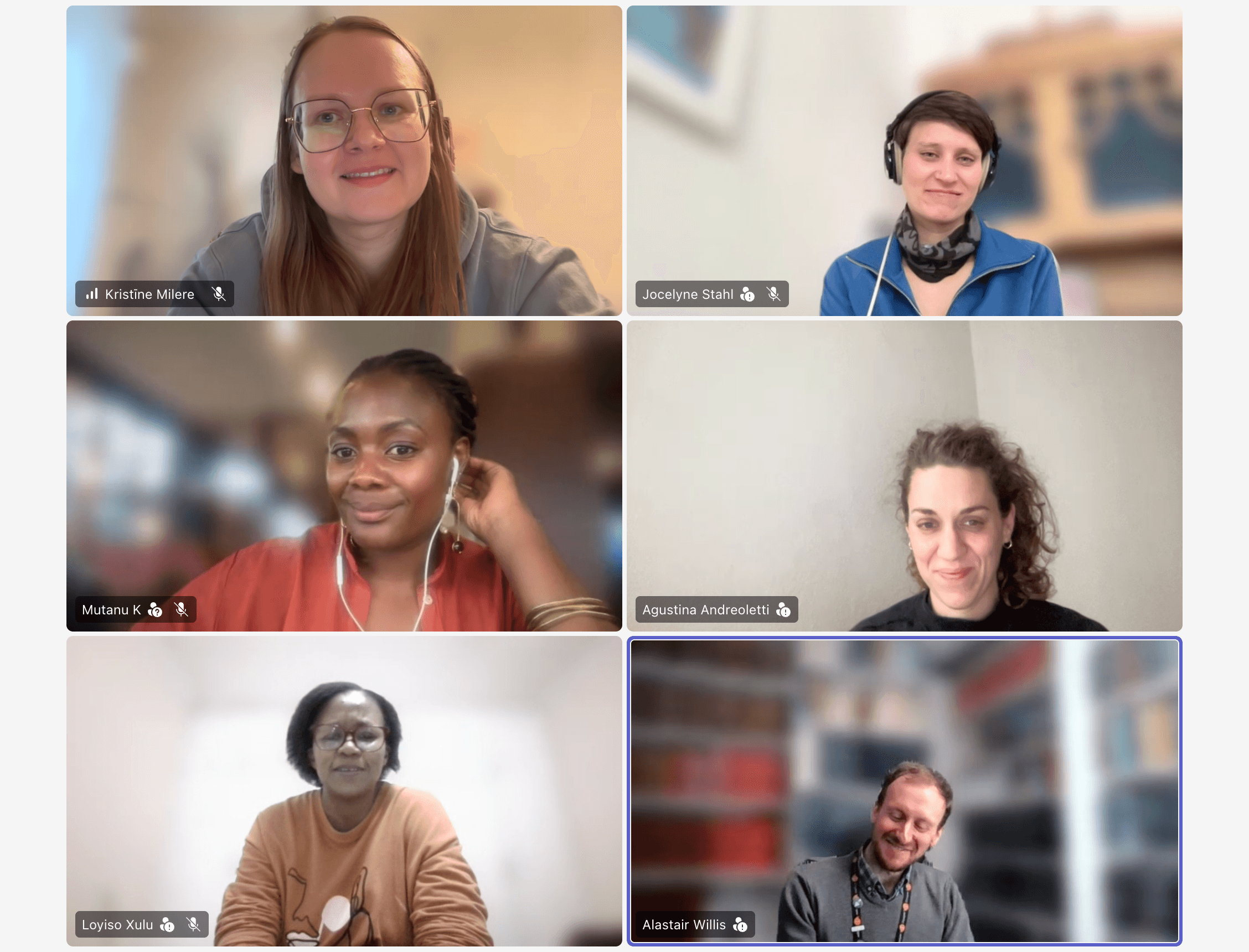
An insight into the CollabFund project Decolonising Practices: Online-Platform and Participatory Pavilion by Loyiso Maqwabe Xulu, Kristīne Milere, Takudzwa Pasipanodya, Jocelyne Stahl and Alastair Willis.
The Online Platform www.decolonisingpractices.org has launched! After some intense months of productive discussions, design development and programming, we are online.
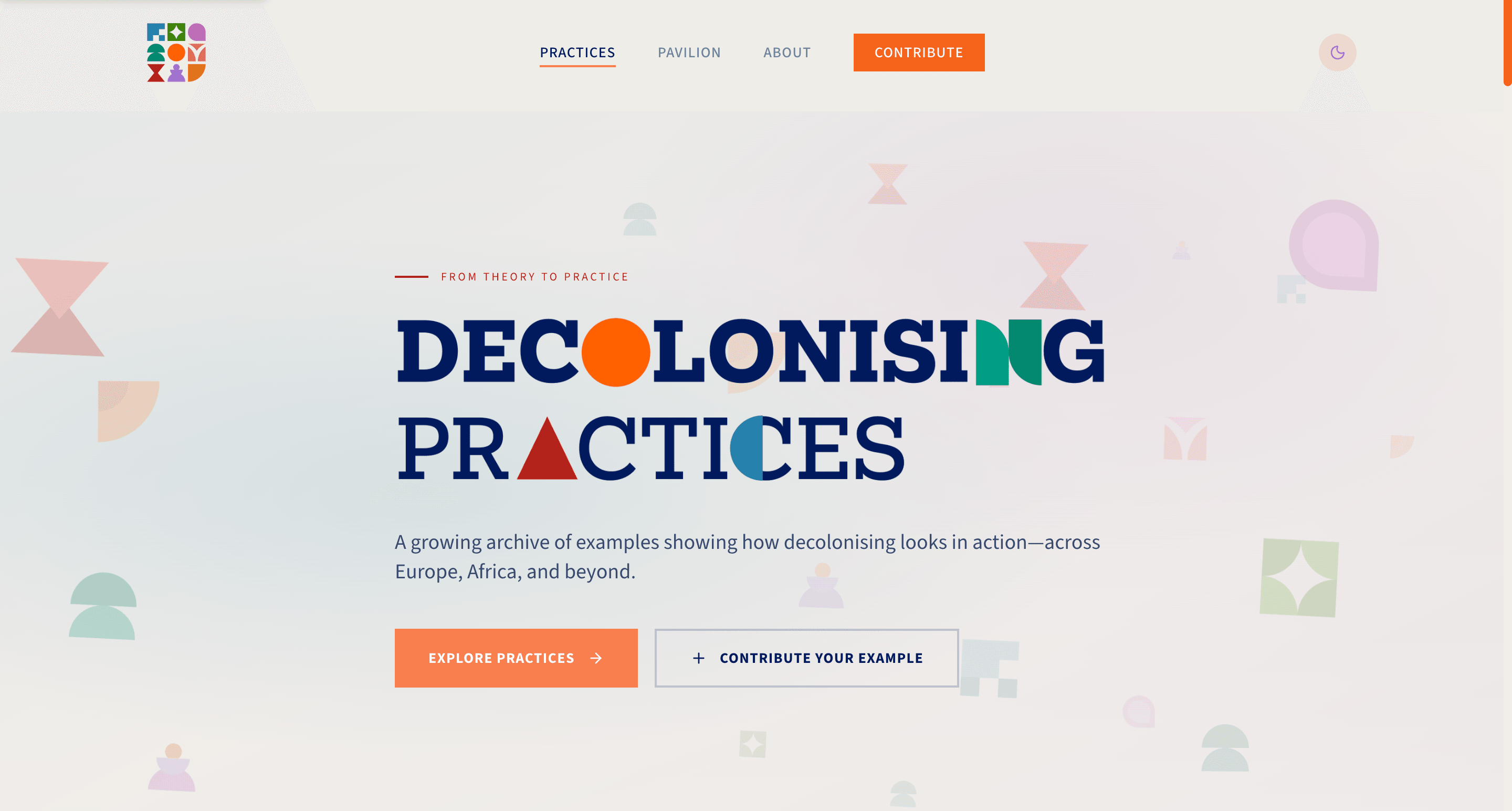
A website is something we use every day. It has become routine to open a browser and benefit from what other people have programmed. To develop a concept and to programme a website yourself is suddenly outside your daily routine – at least for the team members of this project. But the daily routine of using websites is exactly the reason why we wanted to put up this project online: museums worldwide have their websites online, museum practitioners all over the world use the internet to work on new projects. But where do we exchange ideas about our work online? Where can we find inspiration by looking at other practitioners’ work and learn from each other – especially when it comes to decolonising approaches? Decolonising Practices aims to provide exactly that: a growing archive of examples showing what decolonising looks like in action – across Europe, Africa, and beyond.
Creating a website is not as easy as the daily routine of using websites. We are looking back on several months of intense work, first discussing the concept of the website, then gathering material that should be uploaded, reviewing these with a group of advisors to the project, and of course designing and programming the website. Along the way, we worked with several amazing individuals who helped to shape the project. We were able to profit from the large TheMuseumsLab Network and invited Nathalie Keurmeur from the cohort 2022 and Mutanu Kyany’a from the cohort 2025 to advise the project. We are very thankful that they could contribute their expertise in digital work and provided us with feedback on the first draft of the website. Together with us, they discussed workflows and scenarios of how people can contribute to the site and how we will work respectfully with their contributions. From this process with our advisors, we learned that big questions are hard to tackle, but sometimes smaller feedback and thoughtful exchange can be just as valuable and bring a project like this even further. The greatest help in this project came from the designer Tasneem Elnour and the developer Daniel Felipe Moreno Niño. Only thanks to their constant availability, creativity and profound knowledge Decolonising Practices could grow! Working with such creative minds showed how content development, design and programming overlap and influence each other. One example of this was the process of logo development: in the beginning we came up with a huge list of categories that decolonising practices could be divided into. We thought of it as a growing list, as categories can be something fluid or might need to be extended. When the designer Tasneem developed the first drafts of the logo, she used the categories as something that shapes its design and actually provides a deeper meaning behind the visual language of the project. She filtered and transformed our thoughts of somehow working with colours and forms and somehow working with categories into a strong visual that now stands for the project. In the process we narrowed down the long list of categories to a short list that gives enough space for possible sub-categories if needed. This way, not only the visual appearance, but also the content improved, both influencing each other.
Working with an international group of museum practitioners, advisors, a designer and a developer shaped the project to a large degree. We were limited to virtual meetings for our working processes, but we have managed to develop a respectful and trustful working relationship – something that is not always easy when one is limited to online contact. It may have helped that the project team shared the experience of being part of TheMuseumsLab 2023 cohort, and also for some of our collaborators TheMuseumsLab was a trusted connection we shared.
To celebrate the launch, we were invited to the Museum Ideas Conference in London to introduce the project and host the first Participatory Pavilion! Read more about the pavilion and our conference experiences soon! Until then, you are welcome to browse through www.decolonisingpractices.org and to contribute examples!
The initiative TheMuseumsLab CollabFund is funded by the Kulturstiftung des Bundes (German Federal Cultural Foundation).
